
The Hill
Stocks soar, oil prices fall on tentative agreement to end Iran war
Skip to content
Stocks rose on Monday after the U.S. and Iran reached a tentative deal to end hostilities, with oil prices falling ahead of the potential opening of the Strait of Hormuz.
Futures for the S&P 500 were up more than 1.2 percent as of just after 9 a.m.
Nasdaq futures, meanwhile, were up nearly 2.1 percent. Futures for the Dow Jones Industrial Average were up nearly 1.1 percent, continuing a monthslong surge that has resulted in the index reaching its highest point of the year.
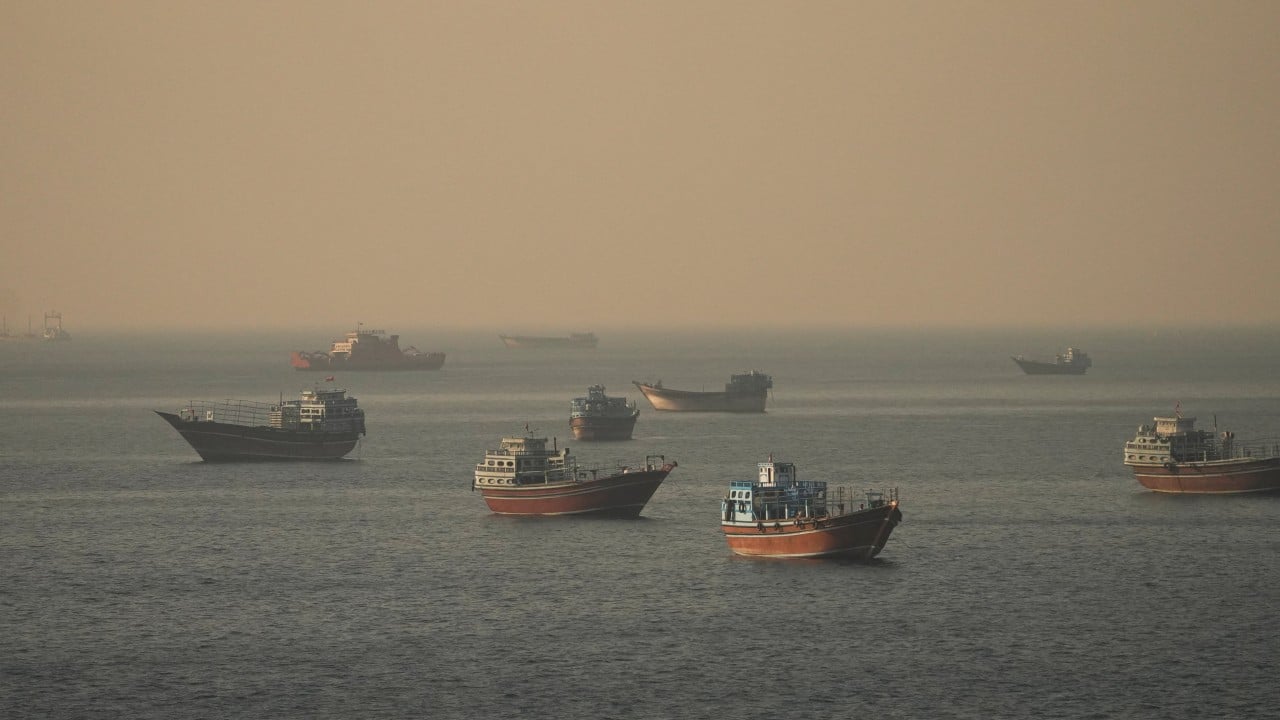
Oil prices also fell in anticipation of the possible reopening of the Strait of the Hormuz. The Iranian military has restricted transit through the key waterway since the early days of the war with the U.S. and Israel, leading to a global energy shock.
The price of West Texas Intermediate Crude, the benchmark for North American markets, was down more than 5.1 percent to $80.49 as of just after 9:30 a.m. ET. Brent Crude, the benchmark for global markets, was down more than 4.7 percent to $83.21.
President Trump, who is on the way to a Group of 7 meeting in France, said Monday that ships “are starting to move, many loaded up with Oil” out of the strait.
“They are going along the Southern ‘Highway,’ which is totally safe, secure, and pristine,” the president wrote on Truth Social. “There are other areas of travel, also!!!”
But just two ships are actively transiting the waterway, according to hormuzstraitmonitor.com. That is down significantly from the typical daily activity of 60 vessels.
Trump announced the deal on Sunday, writing on Truth Social that the U.S. would end its naval blockade of Iranian ports in exchange for Tehran ending its restrictions on the Strait of Hormuz.
The agreement also reportedly calls for the U.S. to release $25 billion in frozen Iranian assets, and for Iran to neither produce nor acquire nuclear weapons. The deal also sets up future negotiations over the Islamic Republic’s nuclear deal.
Pakistani Prime Minister Shehbaz Sharif, who has mediated talks between Washington and Tehran, said Sunday that an official signing ceremony will take place on Friday in Switzerland.
“I think we’re still figuring out the logistics of who’s going to attend that signing ceremony,” Vice President Vance told Trey Yingst of Fox News. “I certainly plan to be there, but it’s possible the president himself could be there.”
But while Iranian officials have said that the agreement applies to Israel’s military campaign in Lebanon against Hezbollah, an Iranian-backed militant group, Israeli officials have stated otherwise since the deal was announced.
Israeli Defense Minister Israel Katz in a Monday statement said his country would not withdraw from security zones in Lebanon, Syria and Gaza.
“The IDF [Israel Defense Forces] will continue to defend our borders and our citizens from the peak of Mount Hermon, the mountains of Lebanon, the areas of our land in the Samaria region, and most of the territory of Gaza — against the threats posed by jihadist forces and organizations, as a central lesson from the events of October 7,” Katz wrote.
Tags
brent crude
Donald Trump
gas prices
gas prices
Iran
Iran conflict
Iran deal
Iran deal
Iran war
Israel Katz
Israeli Defense Minister Israel Katz
JD Vance
Nasdaq
oil prices
Oil prices
Pakistani Prime Minister Shehbaz Sharif
President Trump
Strait of Hormuz
Trey Yingst
U.S.
Vice President Vance
War with iran
West Texas Intermediate Crude
Copyright 2026 Nexstar Media Inc. All rights reserved. This material may not be published, broadcast, rewritten, or redistributed.
View original source — The Hill ↗
Related stories

The New York Times
PoliticsJun 15, 2026 · 1 min
The Look of Patriotism at Trump’s U.F.C. Fight
The New York Times
South China Morning Post
PoliticsJun 15, 2026 · 1 min
Trump, Vance electronically sign peace memorandum with Iran, US officials say
South China Morning Post

TASS
PoliticsJun 15, 2026 · 1 min
US, Iranian chief negotiators may meet in Geneva on June 19 — Iranian foreign minister
TASS

Al Jazeera
PoliticsJun 15, 2026 · 1 min
Lebanon Latest: Cautious optimism after ceasefire deal
Al Jazeera