Indian Express
Despite Rs 140-crore flood-control project, Hindmata remains prone to waterlogging
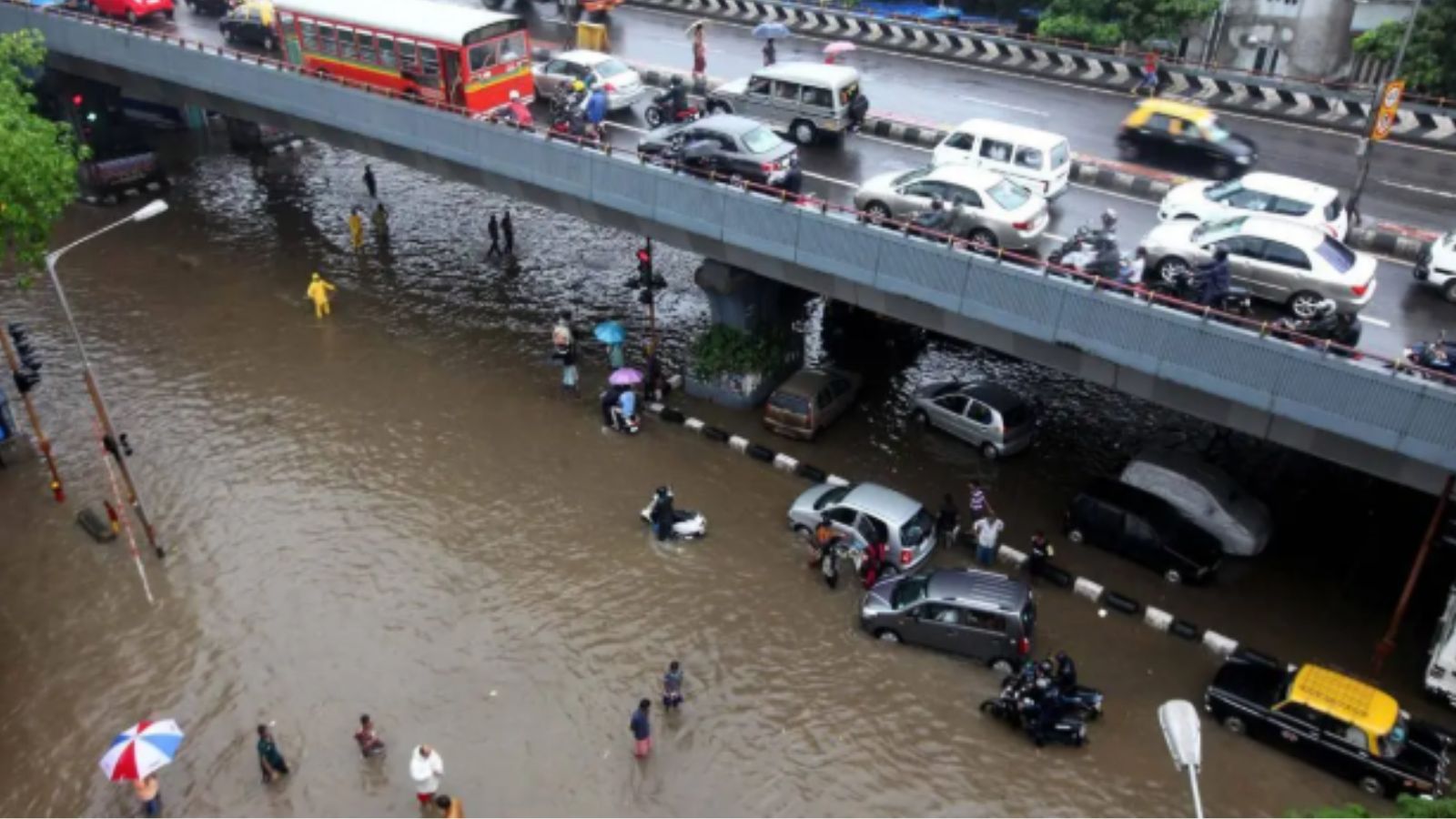
Drawing lessons from the intense waterlogging witnessed during the previous monsoon season, the Brihanmumbai Municipal Corporation (BMC) has stepped up measures at the Hindmata junction, with the civic body set to deploy two additional dewatering pumps to tackle flooding at the chronic waterlogging spot.
Situated along Dr Babasaheb Ambedkar Road, the low-lying junction near Hindmata Cinema is infamous for waterlogging during the monsoon.
“Currently, there are seven active dewatering pumps at the Hindmata sump pit. This year, we have deployed one additional dewatering pump at Hindmata, while another pump has been placed at the St Xavier’s Ground sump pit,” a senior civic official told The Indian Express.
Each dewatering pump has the capacity to remove up to 3,000 cubic metres of water per hour. The additional pumps will be activated during extreme rainfall events when heavy downpours batter the area within a short duration.
“The new pumps have been kept on standby for extreme events. In cases of flooding, a total of seven pumps, along with the two additional pumps, will draw water from the junction and empty it into two holding ponds. On one side, floodwater will be transported through a 1,600-mm line into the holding pond at Pramod Mahajan Garden, while on the other side, accumulated water will be emptied into the holding pond at St Xavier’s Ground,” an official said.
Floodwater from the two holding ponds is eventually discharged into the Cleveland pumping station and the Britannia pumping station.
The increase in the number of pumps comes after three separate instances of flooding at the junction last year. The first was reported on August 16, when nearly six inches of water accumulated at the location for about an hour.
Story continues below this ad
Traffic was again affected on August 18 and 19, when waterlogging persisted for nearly five hours and nine hours respectively.
While the BMC attributed the flooding to more than 150 mm of rainfall within a short period, the incidents drew criticism over the failure of systems despite a Rs 140-crore project by the civic body to tackle the problem.
What makes Hindmata susceptible to flooding?
Like many chronic flooding spots in the city, Hindmata is situated on a lower gradient, making it a saucer-shaped basin where rainwater flows in and accumulates.
The problem was compounded by the long distance to the Britannia pumping station, where floodwater was previously discharged.
Story continues below this ad
“Earlier, accumulated water would be discharged directly to the Britannia pumping station, which is more than 7 km away from it. As a result, water took much longer to recede, especially during days of heavy rainfall,” an official said.
According to civic data, 32 flooding incidents have been reported at Hindmata over the last seven years, with 2020 recording the highest number at 12.
How has the BMC attempted to address the problem?
Over the years, the BMC has implemented a series of measures, including the commissioning of the Britannia stormwater pumping station in 2015.
In 2021, the civic body launched a Rs 140-crore project that led to the creation of holding ponds and augmentation of stormwater drainage lines.
Story continues below this ad
“With the creation of holding ponds, water recedes much faster,” a BMC official said.
“Since the project was implemented, incidents of waterlogging have reduced significantly. Instead of moving directly towards the Britannia pumping station, floodwater is first diverted to the holding ponds, reducing the duration of flooding. Earlier, it would take an average of six to seven hours for water to recede. Now, the duration has come down to around an hour,” the official said, adding that no major flooding incidents were reported in 2024.
However, the low-lying junction remains vulnerable during extreme rainfall events.
Last week, Mumbai Mayor Ritu Tawde inspected monsoon preparedness measures at several flood-prone locations, including Hindmata, and directed officials to activate pumps at the earliest sign of water accumulation.
View original source — Indian Express ↗
Related stories

TechRadar
TechnologyJun 15, 2026 · 1 min
Collapsing floorboards, vaulting over tables, and dodging arrows
TechRadar

AllAfrica
TechnologyJun 15, 2026 · 1 min
Africa: Jazz Legend Abdullah Ibrahim Dies
AllAfrica

Indian Express
TechnologyJun 15, 2026 · 1 min
After $2-trillion debut, options open tomorrow for Elon Musk’s SpaceX – What that means
Indian Express

The Guardian
TechnologyJun 15, 2026 · 1 min
Should we ban social media for under-16s? – podcast
The Guardian