Times of Israel
Gulf states could be left in the lurch and exposed by the US-Iran deal
Analysis
After being caught in the crossfire of a war they didn’t want, wealthy Arab states are now ‘subjected to what amounts to blackmail’ from both Iran and the US, experts say
DUBAI, United Arab Emirates (AFP) — After bearing the brunt of Iran’s attacks in a war they never wanted, the US-Iran deal has left Gulf states feeling exposed to proxies and missiles and frustrated with an unreliable US ally, analysts said.
Tehran’s aerial salvoes and blockade of the Strait of Hormuz have posed an existential threat to the Gulf countries and their economic model.
The memorandum of understanding due to be signed this week will not permanently end the war. It buys negotiators another 60 days, extending a state of uncertainty that is bad for business.
The agreement shies away from key Gulf security concerns, forcing countries in the region to seek their own channels with Iran to protect their interests as they face an emboldened neighbor while US President Donald Trump is eager to end the war quickly, experts have said.
Everything suggests that the memorandum “will almost certainly fail to address the Gulf states’ core security concerns over Iran’s offensive military capabilities, notably its missiles, drones, and regional militia networks,” said Hasan Alhasan of the International Institute for Strategic Studies.
Get The Times of Israel's Daily Edition
by email and never miss our top stories
By signing up, you agree to the terms
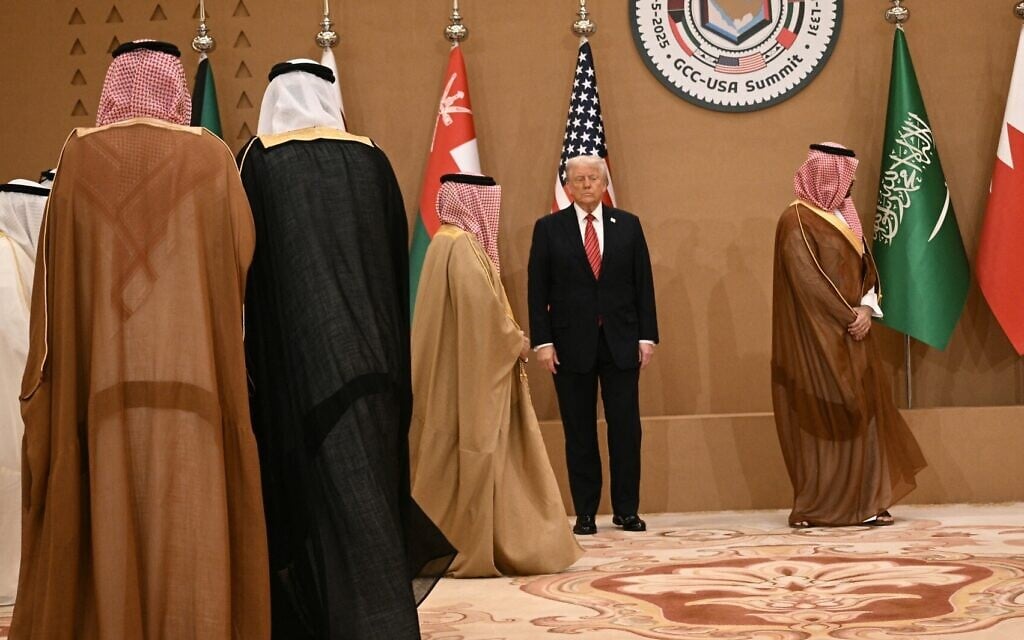
Gulf leaders have long had close ties to Trump. They showered him with praise, pledged to invest billions in the American economy, and courted his entourage.
But as the US security umbrella faltered, they were “left to fend for themselves,” according to Andreas Krieg, a security expert at King’s College London.
Key demands
When Trump withdrew from the 2015 nuclear deal, Gulf states supported that move. They had long complained the deal failed to involve them and address Iran’s missile program and proxies.
Now, they are faced with a temporary solution that again brushes those concerns aside.
Karim Bitar, a lecturer at Sciences Po in Paris, said it appeared the deal had been “negotiated hastily and that Iran made significantly fewer concessions than in 2015,” adding that Gulf states “have reason to be skeptical.”
Iran has agreed to reopen the Strait of Hormuz, a key Gulf demand after the blockade choked off their oil and gas exports.
But the waterway was only blockaded because of the war.
Further, tying the ceasefire to Lebanon and other conflicts grants Iran’s proxies “immunity against further Israeli attack or even attempts by national governments to disarm or integrate these armed factions,” Alhasan said.
Since a shaky April 8 ceasefire, Gulf states have reported sporadic attacks.
Turn toward dialogue
The United Arab Emirates has not reported fresh attacks in about a month, and has since mellowed its previously hawkish tone on Iran.
“During that high-intensity period of aggression from Iran, the UAE matched that with rhetoric to try to establish some kind of deterrence… but the UAE is a pragmatic actor,” said Gulf International Forum director Dania Thafer.
As an agreement seemed close, the UAE also went for de-escalation, she added.
Media reports alleged that the UAE moved billions of frozen funds to Iran in exchange for a halt in attacks on its territory, which Abu Dhabi has denied.
Qatar, host of the largest US base in the region, refused to enter negotiations under Iranian fire, but it hosted in May an Iranian delegation to discuss the release of frozen funds after the truce.
A diplomat told AFP Qatari negotiators engaged in “17 hours of intensive negotiations” in Tehran ahead of the announcement of the deal on Monday.
Qatar “played a role trying to secure Gulf interests” during the talks, according to Thafer.
Saudi Arabia, which seeks stability as it pushes to diversify its oil-reliant economy, has also deepened a regional alignment with Pakistan, Egypt, Qatar, and Turkey to bolster diplomatic efforts.
In the crossfire
Gulf states have found themselves stuck between a wounded but emboldened Iran and an unreliable alliance with the US.
Chatham House Middle East expert Neil Quilliam said the war showed the limits of American power.
Meanwhile, Iran “has survived and overcome the US and Israeli decapitation campaign and also demonstrated that it can strike back and use Hormuz for leverage,” he said.
In an interview with The New York Times on Sunday, Trump suggested Gulf states pay for American protection against Iran.
“The Gulf states are being subjected to what amounts to blackmail by both Iran and the United States,” Alhasan said.
“Iran will likely continue to hold the Gulf states and Strait of Hormuz hostage… to its nuclear negotiations with the United States,” he said.
“Trump is exploiting the threat posed by Iran to pressure the Gulf states into giving in to his demands.”
Thafer said Trump was trying to show Washington could still deter Tehran.
“Iran is weaker, but in some ways emboldened, because it had the opportunity to test the limits of US power… in the worst-case scenario, and they survived it,” she added.
If you’d like to comment, join
The Times of Israel Community.
View original source — Times of Israel ↗
Related stories

The Punch
PoliticsJun 15, 2026 · 1 min
Iyabo Obasanjo returns to PDP days after dumping APC
The Punch

The New York Times
PoliticsJun 15, 2026 · 1 min
Dan Sullivan Namesake Is Disqualified From Alaska Senate Ballot
The New York Times

TASS
PoliticsJun 15, 2026 · 1 min
Lukashenko says conflict with Iran is US’ ‘fatal mistake’
TASS

The Hill
PoliticsJun 15, 2026 · 1 min
Carville: Trump ‘going to walk away’ from presidency by next Easter
The Hill