South China Morning Post
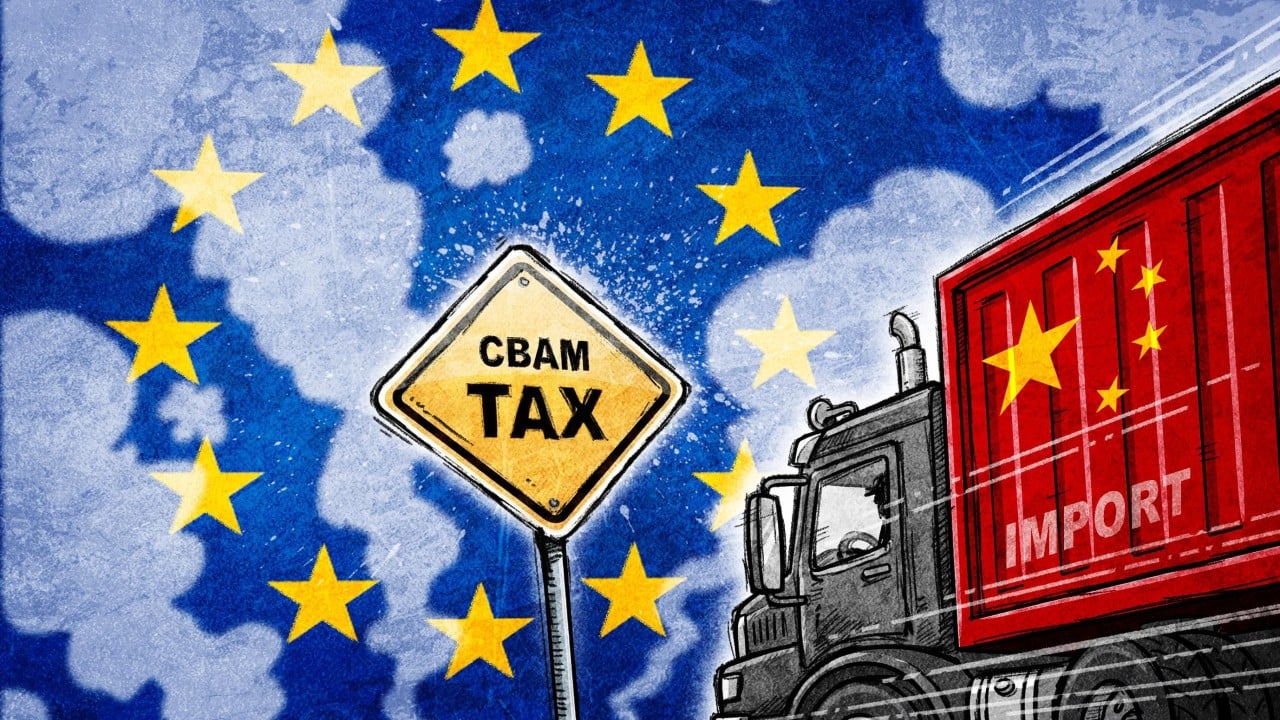
EU carbon tariff sows havoc in China as steel firms grapple with ‘absurd’ rules
As trade tensions between Beijing and Brussels continue to rise, China’s firms in the European Union have been forced to walk a delicate tightrope: expanding their presence in the lucrative market while grappling with heightened regulatory hurdles and rapid geopolitical shifts. In the first part of this three-part series, we look at a new, complex EU carbon tariff system that has business owners scratching their heads.
Neil Miao has been exporting metal hardware to Europe for years. But earlier this year, his purchase orders began arriving with a new document that threatened to throw the deals into disarray.
It was a complex, multi-tabbed spreadsheet demanding row upon row of technical data: from exact factory coordinates to the carbon intensity of upstream materials. Miao’s small company in northern China’s Hebei province had no ability to track – or often even understand – the metrics.
But that did not matter to the firm’s German client. Unless the form was completed, the cargo would not clear European customs, Miao was told.
Miao is among hundreds of thousands of global manufacturers scrambling to adapt to the European Union’s Carbon Border Adjustment Mechanism (CBAM) – a carbon tariff system that entered its implementation phase in January.
The new regime aims to prevent “carbon leakage” by ensuring any products entering the European Union face the same carbon-related costs as domestically made goods. But in China, many producers say the policy is creating mountains of red tape while often failing to achieve its stated goals.
The situation has created a dilemma for China’s steel firms, which dominate global production but are mired in a vicious domestic price war. With many already struggling with squeezed margins and regulatory uncertainty, they are now weighing the costs of compliance against the potential loss of a major export market.
View original source — South China Morning Post ↗
Related stories
Engadget
TechnologyJun 15, 2026 · 1 min
Xbox is reportedly closing Ninja Theory, Double Fine and Compulsion Games
Engadget

The Guardian
TechnologyJun 15, 2026 · 1 min
It’s common to hear there’s ‘no money’ in healthcare. But sometimes it’s management that’s lacking | Ranjana Srivastava
The Guardian

TechRadar
TechnologyJun 15, 2026 · 1 min
Xiaomi unveiled an EV feature that Tesla promised back in 2014… but it could make charging a lot easier
TechRadar

TechRadar
TechnologyJun 15, 2026 · 1 min
Quordle hints and answers for Tuesday, June 16 (game #1604)
TechRadar