
Hacker Noon
Solana’s Next Big Test Is Making Crypto Feel Normal to Use
Solana can be broken down into a few basic facts: it's fast , pretty cheap to use, and very popular. Now that's a fair summary, but it's more of a teaser; the real story is a whole lot deeper. By 2026, Solana was well on its way to becoming the crypto wild west, a place where everyday apps are actually being tried out in real life. The truth is, it's a big deal, because let's be honest, most people are still put off by crypto. It's just so clunky : all those wallets, seed phrase nonsense, approval screens to get past, bridges to figure out, those dreaded gas fees, and on top of all that, you need to have the patience of a saint to get anything done. Even the simplest transaction can be a bit scary if you're new to all this. For crypto to ever really go mainstream, it needs to become a whole lot less intimidating. People should be able to whip out their phone or just use their credit card and make a payment without having to worry about what's going on underneath the surface. They should be able to set limits on their spending, use their mobile app, manage their subscriptions & send a few bucks to a mate without getting bogged down in all the technical stuff. That’s Why Solana's definitely worth keeping an eye on. It's one of the places where all these ideas are being tried out in real time, & that really is some exciting stuff. Why Solana Keeps Showing Up In Consumer Crypto Consumer apps need to feel quick and simple. Users expect payments to go through quickly, fees to stay low, and apps to work without making them think about network traffic or transaction errors. Solana’s design helps with that: its low fees make small payments easier to use, fast settlement makes apps feel smoother, and its higher transaction capacity gives developers room to build products where users may need to make many small actions on a blockchain. That is useful for payments, rewards, subscriptions, creator tools, fintech apps, and automated services. Solana still has rough edges, like the rest of crypto. But when developers talk about making blockchain apps feel closer to normal web or finance apps, Solana keeps appearing because it is built for frequent use. The SOL Price Has Its Own Story Network activity and token price can move separately, and before we look at what could make Solana a practical network for real-world use, it’s important to understand that price action does not always follow development. Solana can have stablecoin growth, payment experiments, tokenized assets, AI integrations, and subscription tools while SOL still behaves like a volatile crypto asset. That is because SOL’s price can react to many things at once, including liquidity, macro conditions, ETF flows, Bitcoin sentiment, technical levels, and general market appetite. Trader positioning can also look different from price action. For example, according to Capital.com trading data, demand for SOL remained heavily one-sided on its platform, with 95% buyers versus 5% sellers shown on its Solana price prediction page. That figure works best as a sentiment snapshot since it shows how Capital.com clients were positioned at that moment. It should be treated as one data point, rather than a direct guide to where SOL goes next. Network activity reveals what people are actually building and using. The price of a token shows what the market thinks a SOL is worth at any given moment. While these two storylines often overlap, they don't always march to the same beat, so to speak. Stablecoins Are The Boring Use Case That Actually Works Stablecoins are one of crypto’s most practical use cases. A stablecoin is a token designed to track the value of a normal currency, usually the US dollar. That makes it easier to send money, settle payments, trade, or hold a digital dollar balance inside an app. Solana’s May 2026 ecosystem roundup reported that stablecoin supply on the network surpassed $16 billion during the month. That gives Solana a stronger claim as a payments and settlement network. The recent examples are useful too. For example, Western Union’s USDPT stablecoin went live on Solana through Anchorage. https://x.com/solana/status/2051263551470227705?s=20&embedable=true SoFi made SoFiUSD available to nearly 15 million customers , with support for Ethereum and Solana. Cash App also added USDC support, with Solana included. Taken together, these examples make Solana’s stablecoin story feel more practical. This is where the chain starts to look like financial plumbing that regular apps could use in the background. Tokenized Assets Push Solana Into Real Finance Stablecoins help move money. Tokenized assets bring traditional finance closer to blockchain apps. A tokenized asset is a real-world asset represented on a blockchain. That could include treasuries, funds, equities, commodities, or other financial products. The idea is simple. Instead of keeping these assets only inside traditional systems, tokenization makes them easier to move and use inside blockchain-based products. According to Solana’s own May 2026 ecosystem roundup, its real-world asset ecosystem passed $2.8 billion in value. The same roundup said Solana accounted for 97% of cumulative onchain tokenized equities spot trading volume. Data taken from RWA.xyz shows the ecosystem value to be around $2.7B currently , with Blackrock and PRIME as some of the largest RWA assets on the network by total value. Those figures should be read carefully because they come from Solana’s own reporting. Even so, they show the direction Solana is moving in. It is becoming part of the conversation around digital finance, alongside payments and consumer apps. AI-Agent Payments Are Where Things Get Weird This is where the story gets more unusual. In May 2026, the Solana Foundation partnered with Google Cloud on Pay.sh, a system that lets AI agents discover APIs, check prices, and pay using stablecoins on Solana. https://x.com/solana/status/2051700526002176027?s=20&embedable=true In plain English, software could pay for software. An AI tool might need access to a data service, cloud tool, API, or automation product. Instead of waiting for a person to set up billing each time, it could check the price and pay with a stablecoin. This is still early and it may take time before this becomes common. But it is an interesting experiment because AI tools may need payment systems that can handle small, fast, automatic transactions. That is the type of problem Solana is trying to solve. Subscriptions Make Crypto Feel More Like Normal Apps Subscriptions are another crucial piece of the puzzle that gets sorted out. Most online services have already got the hang of recurring payments, billing permissions, spending limits, and all the rest. You can expect automatic renewals and the works. But with crypto apps, it's still a manual process; users have to approve each transaction one at a time, which can make the whole thing feel clunky and time-consuming. Solana's subscription and allowances feature is something special, since it lets you set up recurring billing and spending limits right on the blockchain. Plus, it's got some real-world uses: You can do things like monthly subs, payroll, sending cash to content creators, giving an app permission to spend money on your behalf, setting a budget for an AI robot, and putting a cap on your spending. Okay, so the details might sound a bit techie at first, but basically it's pretty straightforward. A normal user should be able to say 'yes' to a monthly fee, set a budget , or let an app spend money within limits without having to do it all over again from scratch every single time. That's how you start to think of crypto as part of a normal, everyday app experience. Solana’s Bigger Test Is Whether Crypto Can Fade Into The Background Solana is definitely worth keeping an eye on because it offers us a glimpse of what consumer-level crypto might look like when blockchain technology starts to become faster, cheaper , and a heck of a lot easier to use. For instance, you can use stablecoins in your fintech apps, and tokenized assets can bring the traditional finance world into the blockchain realm. And then there's the potential for AI agents to start paying for services, or for subscriptions to make these crypto apps feel a lot more like regular software, you know, the kind of thing you'd find on a normal website. Plus mobile wallets can make using crypto so much easier outside of the usual desktop-based world. Now, don't get me wrong , Solana is still facing a whole bunch of challenges: the tech side of things, regulatory hurdles, market volatility and plain old execution problems, not to mention the usual crypto price swings. But Solana has still become a useful example of what happens when a blockchain starts to grow beyond just being a token store and becomes a proving ground for things like payments, apps, automation, and all sorts of other financial infrastructure. That's the Solana story worth paying attention to. \
View original source — Hacker Noon ↗
Related stories

Engadget
TechnologyJun 15, 2026 · 1 min
Xbox is reportedly closing Ninja Theory, Double Fine and Compulsion Games
Engadget

The Guardian
TechnologyJun 15, 2026 · 1 min
It’s common to hear there’s ‘no money’ in healthcare. But sometimes it’s management that’s lacking | Ranjana Srivastava
The Guardian
TechRadar
TechnologyJun 15, 2026 · 1 min
Quordle hints and answers for Tuesday, June 16 (game #1604)
TechRadar
TechRadar
TechnologyJun 15, 2026 · 1 min
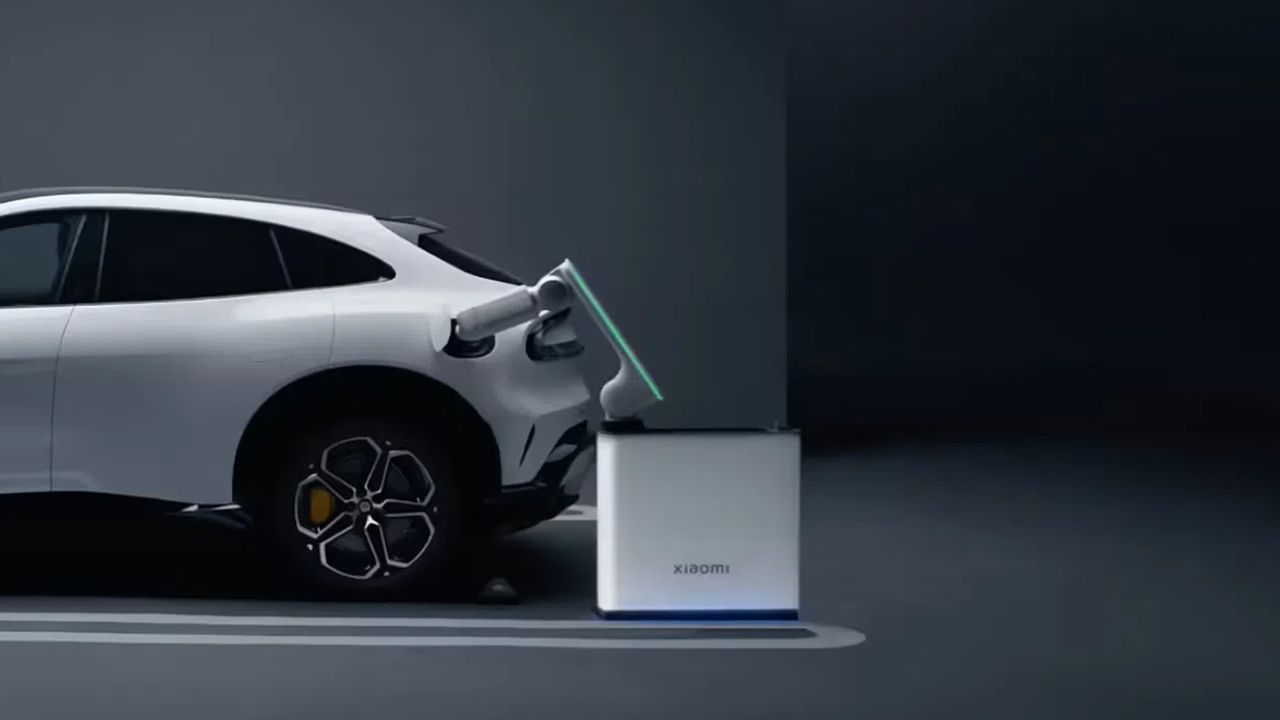
Xiaomi unveiled an EV feature that Tesla promised back in 2014… but it could make charging a lot easier
TechRadar