CNA
CNA··6 min read
No 'alien buildings': FDAT Architects' Francis Goh on the importance of designing spaces that belong
People
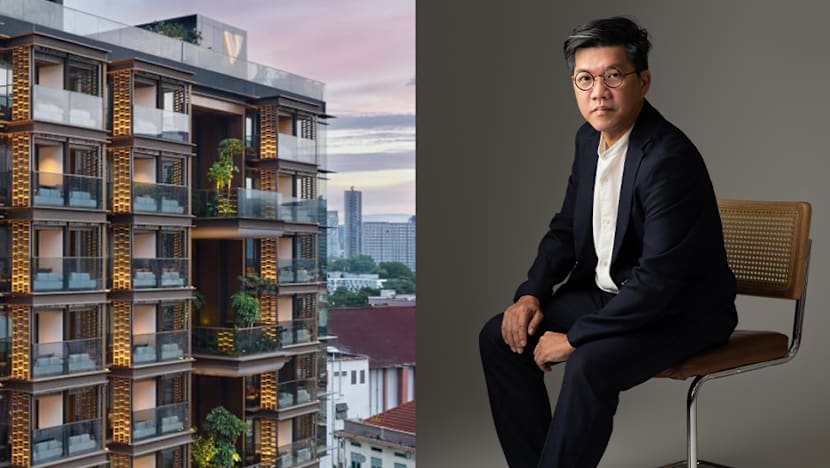
Francis Goh shares the lengths he guides FDAT Architects to design buildings that respect a site’s context.
New: You can now listen to articles.
This audio is generated by an AI tool.
16 Jun 2026 06:00AM
(Updated: 16 Jun 2026 06:11AM)
Peruse FDAT Architects’ portfolio and you’ll be hard pressed to find an “alien building” – at least this is what its co-founder and director Francis Goh would like to believe. He isn’t referring to structures that look out of this world though. Instead, he means that their projects respect the urban fabric and silhouette.
“Good architecture is inseparable from the context of a development’s site,” he elaborated. This acknowledges that the neighbours matter, as does the area’s history. Consideration for the human scale is to be had too. It results in buildings that stand comfortably in relation to the environment, their occupants and passersby.
This philosophy has guided FDAT Architects since Goh and his business partner, Donovan Soon, established the practice in 2013. “Many developments understandably focus on maximising a site’s potential and fulfilling the client’s brief,” said Goh.
“For us, however, architecture should also respond to the neighbourhood around it. We begin by understanding the history of a place, its surrounding buildings, and how people move through and experience the area.”
Among the most recent projects that embody this is the 10-storey, 128-room Varel Singapore, a Tribute Portfolio Hotel along Selegie Road. Another is an office building in Aljunied and, in the pipeline, a mixed-use development at the junction of South Bridge Road and Hongkong Street.
UNITING BUILDINGS ACROSS TIME
Goh shared all this and more during an interview at Saga Bar in Varel Singapore, which soft launched in April this year. The soft-spoken, bespectacled architect revealed that getting to work on this project literally felt like a homecoming, since he has been living along the nearby Handy Road for the last decade. “The client and I both share the same memories of the neighbourhood,” he said.
Since no “aliens” are allowed, Goh started by designing the hotel’s silhouette to complement its neighbours. The first two floors have a language of their own, defined by three extrusions on the upper level he calls “pavilions”, fringed with greenery and highlighted through a combination of terracotta-inspired materials, reflective glass, and tropical landscape planting.
Rather than forming a continuous podium, the pavilion forms frame a series of intermediate spaces between indoors and outdoors. These allow landscaping, daylight and natural ventilation to become part of the guest experience. The warm, earthy tones establish a connection with the surrounding historic district, while the reflective glass introduces a contemporary layer that captures changing light, greenery and city views throughout the day.
In doing so, it appears like a separate section of the hotel that references the height of the adjacent iconic Ellison shophouse, built in 1924. “From a distance, the perspective we are trying to offer is the articulation of the urban fabric extended onto our building,” he explained. “It is part of our way of making it more human-scale, so that when people walk around, they don’t feel overwhelmed by a tall structure.”
Functionally, it means Varel can incorporate different concepts within them. For instance, Saga Bar sits in one and can easily be closed off to host a private event without disturbing hotel guests. Another is the al fresco dining area of the restaurant Hathaway Autograph.
Above that, the rest of the hotel towers, marked by balconies in almost every room to evoke a residential feel in a nod to the former housing block that used to stand there. The corridors are designed like the five-foot way found in shophouses, illuminated by lamps that resemble lanterns.
Conducting the tour was Goh’s colleague, Fook Chinyee, who was in charge of the project and also a Qualified Person practising with FDAT. Delving into the details, she pointed out elements like the three sky terraces that allow for a connection with nature and the carpet designed to look like shadows cast by the canopy of a tree.
In the rooms, a screen inspired by the scissors gate traditionally found in provision shops and a bedside table-cum-lamp that references a dim sum basket continue the connection to locality.
DIFFERENT SITES, DIFFERENT SOLUTIONS
Adopting a similar approach, albeit on a smaller scale, is an upcoming project on the corner of South Bridge Road and Hongkong Street, due to be completed in 2027. When Goh was first commissioned for the project, he explored retrofitting the building. Unfortunately, a difference in the height of the floor plates at multiple points led him to decide to tear it down and rebuild.
Confronted with a blank canvas, he took walks around the neighbourhood, looking at the site from near and far to seek inspiration for a solution. Guided by the idea of no “aliens”, he soon settled on it having a series of shophouse profiles similar to the ones along Hongkong Street. Onto that, he stacked a three-storey tower with a gym, rooftop garden and offices.
From levels two to four, he designed a glass facade behind which the tenants of the different units could dress up to advertise their offerings. Screens would partially conceal any disorderliness that might result from daily operations. His decision was largely driven by how the neighbourhood is home to many dining establishments.
“I was imagining that the owner could rent out the units to a restaurateur, who could then use prominent signage to tell people about what they offer. Many F&B outlets are located in spaces that don’t permit them to do much about the facade,” enthused Goh.
Even when the brief demands a more classical direction, he tries his best to respect the site context. A building along Aljunied Road looks more like a boutique hotel but turns out to be designed for the light industry. Planter boxes that look like giant stationery holders extend out from the curvilinear facade and the entire project is distinctive for its terracotta Corten and expanded mesh elements.
“Our clients wanted to have a more classical look, but my vision was to have a structure with a lot of plants inserted between the two neighbours that have the same generic and repetitive form. The flora would reference the mature trees along Aljunied Road and continue that greenery thread,” said Goh.
Instead of Corinthian columns and mouldings, he opted for arched elements, layered depth and a dark material palette reminiscent of a modern gothic aesthetic. The Corten and mesh details were introduced to allude to the building’s industrial function. An abundance of planting spills out along each floor, their emerald tones a contrast against the colour of the facade, validating Goh’s decision of using such a bold tone.
AN INVITATION TO PAUSE
In fact, FDAT is trying to push the boundaries with planter box design. Said Goh, “We are developing a lot of them, such as for offices. We are working on a project right now where instead of having a facade, we are thinking of filling it up with planter boxes.”
He feels that the standard linear shape has the potential to be changed to create more interesting elements on a building. It could also define its silhouette and give it a more unique identity. The resulting deeper, more usable green terraces could benefit both occupants and neighbours. “There is so much more we can do than just have a token, thin strip of plants. We want to elevate Singapore’s vision of being a city in a garden,” he added.
This feasibility study taking place within FDAT is also a reflection of the way Goh and fellow co-founder Soon lead their team to do good design and, hopefully, make a positive difference to the urbanscape. Rather than a quantum leap, they prefer to evolve gradually and patiently through detailing and with the rhythm of a site’s progress.
Paired with this is their belief in respecting the site context and urban silhouette – or saying no to “aliens”. “A successful building is one that contributes to the city and becomes part of its urban fabric, rather than standing apart from it,” he emphasised.
What matters most is if their building can evoke a pause, even briefly. “Our senses are inundated with stimuli every day. We make it worse by going online and doom-scrolling,” said Goh. “If our design can hold someone’s attention for more than a few seconds – whether it is a small detail or our architectural composition – that’s already a win.”
Source: CNA/st
Related stories

The Punch
NewsJun 16, 2026 · 1 min
FG secures 150 terrorism convictions in two days — AGF
The Punch
The Punch
NewsJun 16, 2026 · 1 min
First Lady empowers 2,000 Benue women with N100m grant, unveils ICT centre
The Punch
The Punch
PoliticsJun 16, 2026 · 1 min
Natasha: Senate denies manipulating suspension report, accuses Oshiomhole of mischief
The Punch
The Punch
NewsJun 16, 2026 · 1 min
Deregistration: INEC backs political parties, seeks judgment’s stay of execution
The Punch