Indian Express
Indian Express··3 min read
How this Chahttisgarh district is using a ‘5% model’ to boost groundwater
At a time when the scorching heat and water scarcity are troubling several parts of Chhattisgarh, a quiet water conservation movement in Korea district is showing promising results. Known as the “5% model”, the initiative has contributed to a significant improvement in groundwater levels by encouraging community participation.
The model has drawn national attention. Prime Minister Narendra Modi highlighted it in his Mann Ki Baat programme in March, while Union Jal Shakti Minister C R Patil has suggested that it could be adopted as a policy across the country.
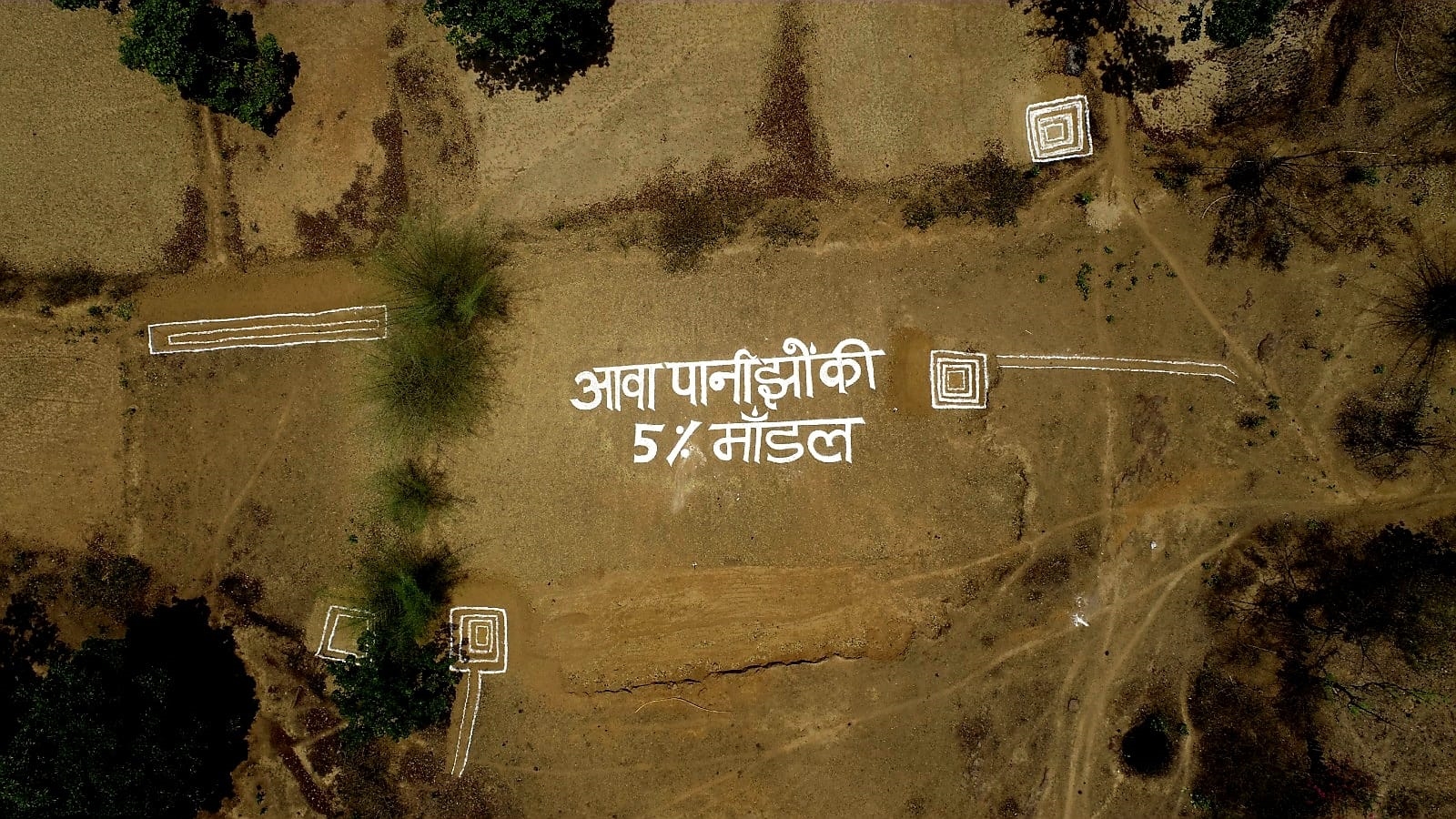
Like many districts in Chhattisgarh, Korea has been grappling with declining groundwater levels despite being located in a recharge zone. Last summer, then District Collector Chandan Tripathi launched the “5% model”, under which villagers were encouraged to dedicate 5% of their agricultural land for soak pits that help rainwater percolate into the ground.
Officials trained villagers to construct the pits, resulting in nearly 2,000 soak pits being dug between March and May last year, including more than 1,000 on agricultural farms.
The initiative gained momentum this year. Between February and May, villagers dug around 30,000 soak pits — a 15-fold increase over the previous year — largely on farms, in backyards and in kitchen gardens.
Union Jal Shakti Minister C R Patil has suggested that teh model could be adopted as a policy across the country.
“For any movement to succeed, people’s participation is essential. We began by creating awareness among villagers and explained that soak pits would not only recharge groundwater but also help retain soil moisture and improve agricultural productivity,” said Ashutosh Chaturvedi, Chief Executive Officer of the Korea Zila Panchayat.
“People saw the benefits firsthand and participation increased substantially this year. Our aim is to make water conservation a community tradition. Complaints about borewells drying up are already decreasing, and we expect the situation to improve further if more people adopt the model,” he said.
Story continues below this ad
Apart from the 5% model, the district administration has also introduced a “30–40 model”, or 30 feet by 40 feet, under which trenches are dug on barren land to arrest and store rainwater runoff.
In all, 12 water conservation interventions were undertaken last year, mostly under the Mahatma Gandhi National Rural Employment Guarantee Scheme (MGNREGS), now known locally as the Viksit Bharat–Guarantee for Rozgar and Ajeevika Mission (Gramin). The campaign was collectively branded Aawa Paani Jhonki, which means “let’s catch the rain” in the Sargujia dialect.
Measurable results
Officials say the interventions have yielded measurable results. According to data from the Central Ground Water Board (CGWB), the district’s post-monsoon groundwater level improved from 6.6 metres below ground level (BGL) in 2024 to 3.89 metres BGL in 2025.
The administration also identified two villages as model centres for water conservation, where intensive interventions were carried out.
Story continues below this ad
“For the last five to six years, water scarcity during summer has been a major issue,” said Laxman Singh, 38, sarpanch of Dohda village, which has a population of over 1,000.
“More than 100 villagers have adopted the 5% model and around 20 contour trenches have been created. Soak pits have been dug near borewells as well. The initiatives are helping, but more needs to be done. The Jal Jeevan Mission has not been very effective so far, though we are hopeful the situation will improve in the coming years,” he said.
Durgavati, 28, sarpanch of Potedand village, said several farmers and households had implemented the model.
“The situation is challenging, but we are acting before it worsens. Contour trenches are being dug, and the village pond is being deepened and desilted to increase its storage capacity. Due to poor groundwater reserves, the Jal Jeevan Mission could not be fully implemented despite pipelines and water tanks being installed. Our efforts are continuing,” she said.
View original source — Indian Express ↗
Related stories

The Punch
NewsJun 16, 2026 · 1 min
Troops rescue late General’s wife in Katsina offensive
The Punch
The Punch
NewsJun 16, 2026 · 1 min
Dangote unveils plans for Ondo industrial hub
The Punch

ESPN
SportsJun 16, 2026 · 1 min
Megatron sees record falling, Nacua as top threat
ESPN
The Punch
NewsJun 16, 2026 · 1 min
2027 battle: Opposition rages as court scraps ADC, four parties
The Punch