Indian Express
US trade advocacy body forms task force on India-US critical mineral cooperation; five priority engagement areas…
Cooperation between India and the US on critical minerals has gained impetus amid growing concerns over China’s dominance over the supply chain which the latter often use as a leverage in trade disputes. Last year, Indian industry began facing shortages of rare earth magnets when China launched a licensing regime, choking exports of rare earth elements during its trade war with the US.
While China controls 90% of global critical mineral processing, both India and the US are heavily dependent on imports of these minerals to meet their domestic demand.
Highlighting overlapping interests of the two countries, USIBC said out of 30 minerals which India identifies as “critical”, 26 minerals overlap with the US priorities. These included rare earths, lithium, cobalt, nickel, graphite, gallium, tungsten, among others.
The task force has identified five priority areas for engagement: lithium refining and cathode active materials (CAM), recycling, feedstock corridors, synthetic graphite production for battery applications, and rare earth processing and magnet manufacturing.
Lithium refining remains a critical gap in India’s battery supply chain, with the country currently possessing negligible refining capacity. As electric vehicle adoption is expected to accelerate in the coming years, building domestic capabilities in lithium refining and recycling is seen as essential to reducing dependence on imports, particularly from China.
Meanwhile, rare earth permanent magnets (REPMs) are vital components for a range of sectors, including electric mobility, renewable energy, electronics, aerospace and defence. To strengthen domestic manufacturing in this segment, India has already announced a scheme to support 6,000 metric tonnes per annum (MTPA) of integrated REPM production capacity.
Story continues below this ad
On this front, the task force will focus on fostering technology partnerships, facilitating offtake commitments and integrating supply chains into shared end markets.
Supply chain to policy regulation
According to USIBC, the task force will operate through four key workstreams. These include supply chain security, aimed at strengthening bilateral cooperation across mining, processing and manufacturing; technology and innovation, focused on identifying opportunities for joint research in next-generation materials and resource recovery from secondary sources; investment and finance, which will help identify and structure bilateral investment opportunities across the critical minerals value chain; and policy and regulation, which will support implementation of bilateral frameworks and advocate for a conducive regulatory environment for critical minerals investment.
“Critical minerals have become central to the economic and strategic priorities of both India and the US. By combining India’s industrial and processing strengths with US technology and capital, we have a unique opportunity to build resilient supply chains together. This Task Force reflects USIBC’s commitment to translating that opportunity into tangible outcomes for the bilateral partnership,” said Rahul Sharma, Managing Director, US-India Business Council India.
The taskforce brought together 17 leading US and Indian companies to identify opportunities for collaboration in processing, manufacturing, technology development, and investment, USIBC said in a statement.
India-US bilateral efforts on critical minerals
Story continues below this ad
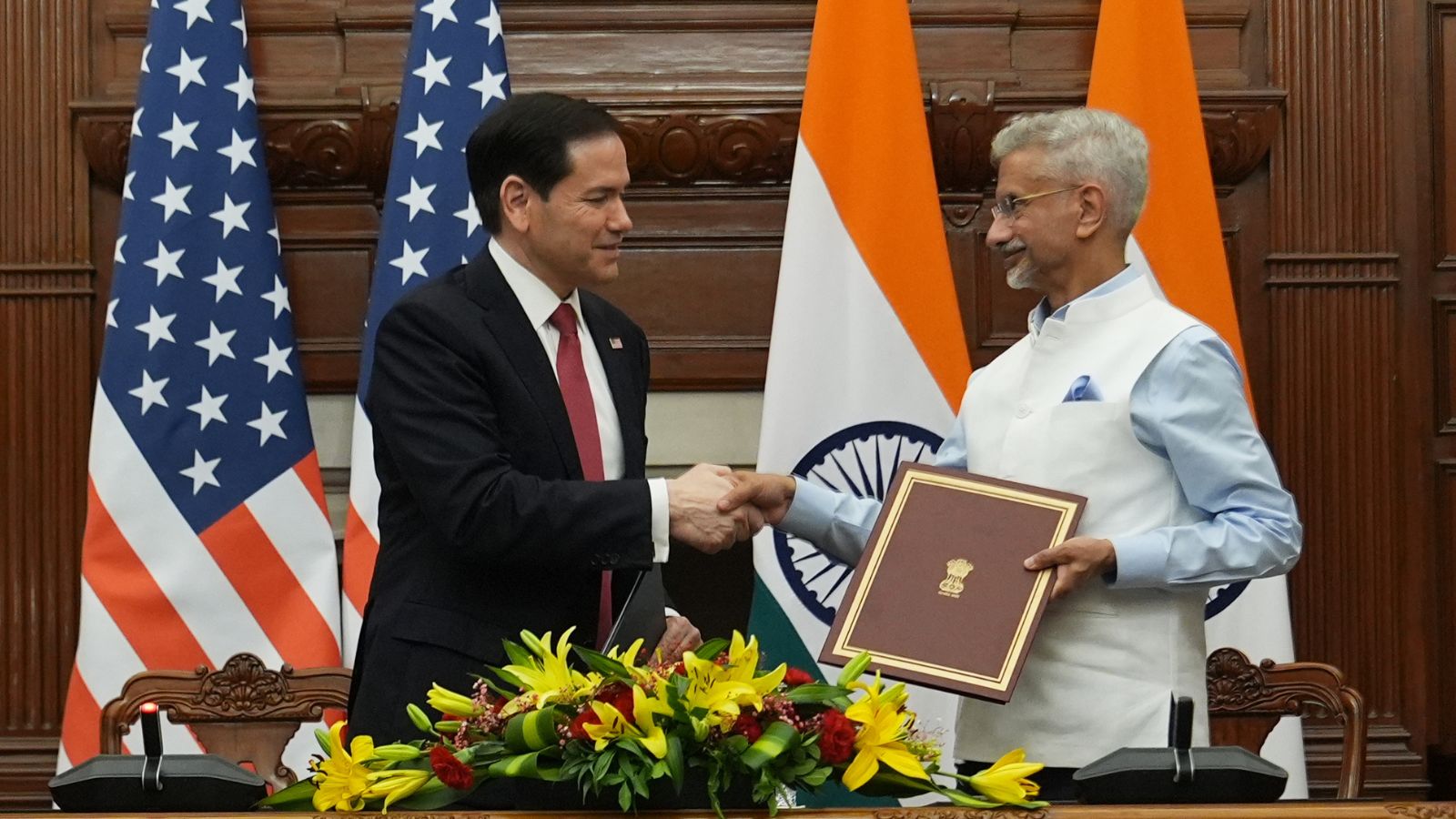
The development comes following the signing of bilateral India-US Critical Minerals Framework in May which focused on securing the supply, mining, and processing of critical minerals and rare earth elements. Minister of External Affairs S Jaishankar said that the new framework aims to deepen cooperation between the two countries across the entire critical minerals and rare-earth supply chain, including mining, processing, recycling, and related investment.
“The Framework builds on continuing India-US cooperation aimed at strengthening supply chain security in critical sectors. On 20 February 2026, India became a signatory to the US-led Pax Silica initiative,” Ministry of External Affairs had said on the development.
“Earlier, External Affairs Minister Dr. Jaishankar had also participated in the Foreign Ministers’ Meeting on critical minerals hosted by Secretary Rubio in Washington, DC on 4 February 2026. India and the US are also partnering under the Forum on Resource Geostrategic Engagement (FORGE) initiative,” the ministry added.
Cooperation on critical minerals also figured prominently during Prime Minister Narendra Modi’s official visit to the US in February 2025. Under the India-US TRUST (“Transforming the Relationship Utilising Strategic Technology”) initiative, both countries agreed to strengthen trusted and resilient supply chains in sectors such as semiconductors, critical minerals, advanced materials, and pharmaceuticals.
Story continues below this ad
“Recognising the strategic importance of critical minerals for emerging technologies and advanced manufacturing, India and the US will accelerate collaboration in research and development and promote investment across the entire critical mineral value chain, as well as through the Mineral Security Partnership, of which both the US and India are members,” the India-US joint leaders’ statement read.
Both countries also committed to intensifying efforts to deepen cooperation in the exploration, beneficiation, and processing, as well as recycling technologies of critical minerals.
“To this end, the leaders announced the launch of the Strategic Mineral Recovery initiative, a new US-India program to recover and process critical minerals (including lithium, cobalt, and rare earths) from heavy industries like aluminium, coal mining and oil and gas,” the joint statement added.
View original source — Indian Express ↗
Related stories

The Punch
BusinessJun 16, 2026 · 1 min
Oil drops to $83 after US-Iran accord
The Punch

Japan Times
BusinessJun 16, 2026 · 1 min
Goldman-backed Go soars 21% after biggest Japan IPO this year
Japan Times

Bloomberg
BusinessJun 16, 2026 · 1 min
Biocon's Mazumdar Shaw Says Firm On Track To Be Top Insulin Maker
Bloomberg

Japan Times
BusinessJun 16, 2026 · 1 min
Shippers and oil giants seek clarity on U.S.-Iran peace deal
Japan Times