Indian Express
Indian Express··4 min read
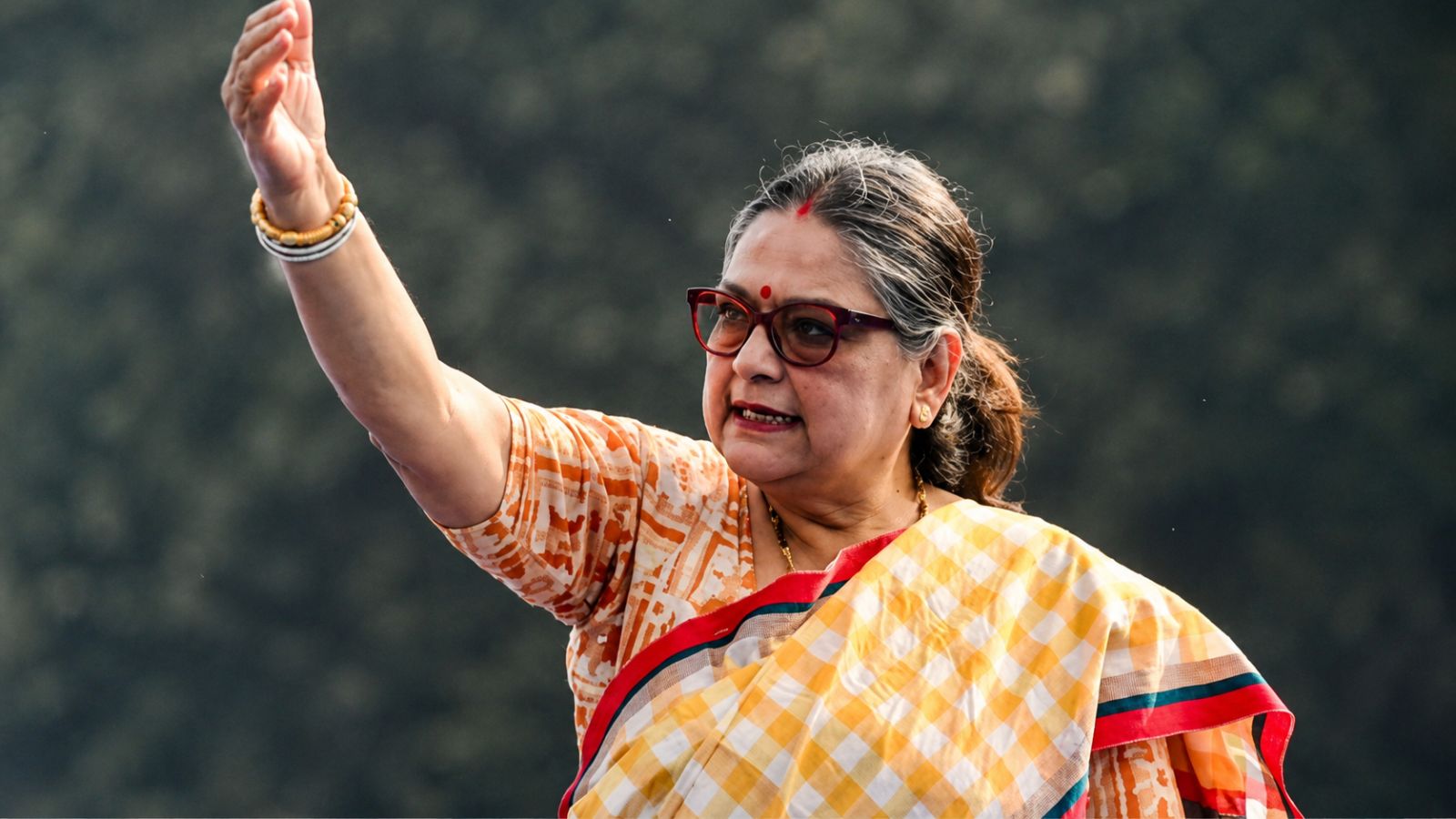
40 years a Mamata loyalist, now leading TMC rebellion: Kakoli Ghosh Dastidar’s dramatic break
After the Trinamool Congress (TMC)’s defeat in the West Bengal Assembly polls led to a rebellion among its MLAs, it was Barasat MP Kakoli Ghosh Dastidar, one of party supremo Mamata Banerjee’s closest and oldest aides, who first raised a voice of dissent in the TMC’s parliamentary party and quit from all official posts.
As a rebel group of 58 MLAs protested the party’s choice of Leader of Opposition in the Assembly, as many as 20 of the party’s 28 Lok Sabha MPs, led by 66-year-old Ghosh Dastidar, split from the TMC and sought to merge with little-known outfit Nationalist Citizens Party of India (NCPI).
On Monday, after submitting a letter to Lok Sabha Speaker Om Birla urging him to recognise the rebels as a separate bloc, Ghosh Dastidar claimed that two-thirds of the TMC’s Lok Sabha MPs had supported the split. “Two-thirds of the TMC’s MPs have given a letter to the Speaker for a separate seating arrangement. We will merge with the Nationalist Citizens Party of India and support the NDA,” she said.
Before she became a rebel leader, Ghosh Dastidar was considered a staunch Mamata loyalist, by the TMC chief’s side when she founded the party in 1998 after splitting from the Congress. Their ties go back to their days in the Congress – since 1984, when Mamata first contested a Lok Sabha election and defeated CPI(M) heavyweight Somnath Chatterjee. While Mamata was building her reputation as a street fighter, including by sustaining injuries while protesting the Left regime in Bengal, it was Ghosh Dastidar who would arrange the necessary treatments for her.
Born into a political family based out of Barasat in the North 24 Parganas district, Ghosh Dastidar is a doctor by profession, earning her degree from the R G Kar Medical College and Hospital in 1984 and completing a postgraduate degree from the United Kingdom.
Her family had been involved in state and national politics since before Independence. While her paternal uncle Arun Moitra was a freedom fighter and state Congress president, her maternal uncle Gurudas Dasgupta was a prominent leader and MP of the CPI.
Ghosh Dastidar’s own political journey began in the Congress as a student leader in Kolkata. While she was active in student politics in Kolkata, Mamata was emerging as a youth leader at the Jogamaya Devi College.
Just months after the TMC was founded, Ghosh Dastidar made her electoral debut in the 1998 Lok Sabha polls from the Diamond Harbour constituency, losing out to the CPI(M) candidate. A year later, she contested from the Howrah Lok Sabha seat and lost again to the CPI(M).
Her next electoral contest came in 2009, two years before the TMC came to power in West Bengal for the first time. This time, contesting from Barasat, Ghosh Dastidar emerged as the winner against the Left candidate by securing over 50% of the vote to become a first-time MP. Since then, she has held the Barasat Lok Sabha seat in three consecutive elections, including the 2024 polls in which she defeated the BJP candidate by over 1.14 lakh votes.
Over the years, Ghosh Dastidar became among the TMC’s most visible MPs, having been appointed the party’s spokesperson several times. After the 2024 polls, she was appointed the TMC’s chief whip in the Lok Sabha, emerging as the one of the party’s most senior national figures and among its most prominent women leaders.
However, Ghosh Dastidar’s career has also been marked by controversy, including when her name cropped up in the 2016 Narada sting operation, in which she was seen allegedly accepting a cash bribe. She also sparked a row over the 2012 Park Street rape case after she said the “incident was not a rape at all”. While saying the Park Street case cannot be compared to the 2012 Nirbhaya case in Delhi, she said the Kolkata incident was a “misunderstanding between a woman and her client”, implying the victim was a sex worker.
Cracks begin to emerge
Shortly after the BJP ousted the TMC from power in West Bengal in May, Ghosh Dastidar was replaced as the party’s Lok Sabha chief whip by fellow MP Kalyan Banerjee. She had been appointed chief whip in August 2025 after a tiff with Kalyan and another MP Mahua Moitra.
Days later, Ghosh Dastidar resigned from the post of organisational district president and slammed the party’s decision to hire political consultancy firm I-PAC, which, she said, created “havoc” and “ruined” the party. After the BJP formed the government in Bengal, Ghosh Dastidar was accorded Y category security by the Centre.
In her resignation letter to TMC West Bengal president Subrata Bakshi, Ghosh Dastidar took moral responsibility for the party’s poor performance in her Barasat constituency and appealed to Mamata Banerjee to rely on veteran party workers rather than “external consultants”.
“Over the last decade, several serious allegations and incidents concerning West Bengal and the party have deeply troubled my conscience. Corruption in ration distribution, corruption in teacher recruitment, and various financial and administrative irregularities have created deep anger and distrust among ordinary people,” she said in her resignation letter.
Following her removal as chief whip, Ghosh Dastidar wrote on social media, “1976 theke chena, 1984 theke path chola shuru, char doshoker anugatter janne aaj puraskrita holam (Knew since 1976, started journey in 1984, rewarded for four decades of loyalty),” she said, referring to her long-held ties with Mamata.
Days after her revolt, Ghosh Dastidar attended an administrative meeting held by BJP Chief Minister Suvendu Adhikari. “It is not a party programme. It is an administrative programme, and administration is for all,” she said before entering the meeting.
Now, Ghosh Dastidar has assumed the leadership of the TMC rebel camp and the NCPI, launching a new chapter in her political career.
View original source — Indian Express ↗
Related stories

The Punch
NewsJun 16, 2026 · 1 min
APC group hails Oyebanji’s performance, governance delivery
The Punch
The Punch
NewsJun 16, 2026 · 1 min
Kwara APC crisis worsens as elders reject gov candidate
The Punch
The Punch
PoliticsJun 16, 2026 · 1 min
Reps extend 2025 capital budget execution to Sept
The Punch
The Punch
PoliticsJun 16, 2026 · 1 min
Kano NDC unveils Kwankwaso’s son as running mate
The Punch