The Guardian
Iran ‘agreed to never have a nuclear weapon’, says Trump – as it happened
Key events
3h ago
Closing summary
6h ago
US considers $300bn fund for Iran if peace deal is upheld – report
6h ago
Iran 'agreed to never have a nuclear weapon' – Trump
7h ago
Nuclear inspectors will return to Iran as part of deal, claims Vance
7h ago
Israel intercepts Hezbollah fire on its forces in Lebanon, says IDF
7h ago
Blasts heard in strait of Hormuz area - report
10h ago
Summary
10h ago
Lebanon updates death toll to 3,798
11h ago
Netanyahu announces he will run in upcoming elections
11h ago
Netanyahu says Israeli forces will remain in Lebanon ‘buffer zone’
11h ago
Israel says it has killed two Hamas commanders in strikes in Gaza
13h ago
Today so far
13h ago
Trump says strait of Hormuz will be 'completely open' on Friday
14h ago
Trump, Vance and Iran's parliament speaker signed the MoU
17h ago
Trump claims ships carrying oil are moving out of the strait of Hormuz
18h ago
Hezbollah has not carried out any operations since Iran-US deal, official says
18h ago
Indian outrage over US killing of sailors mounts as leaders attend G7 summit
19h ago
Lebanese president hopes US-Iran deal will put 'definitive end' to Israel's war on Lebanon
20h ago
Iran’s foreign minister holds calls with Turkey, Iraq and Egypt on US-Iran framework
21h ago
US-Iran deal is 'bad for Israel and the entire free world' - Smotrich
23h ago
IDF will remain in Lebanon, Syria and Gaza 'indefinitely', Israel's defence minister says
23h ago
Israeli far-right minister criticises US-Iran deal and urges stronger campaign in Lebanon
1d ago
What is in the US-Iran peace deal?
1d ago
World leaders react to the peace deal
1d ago
Crude prices plunge, stocks surge on US-Iran peace deal
1d ago
Opening summary
Closing summary
We’re wrapping up this live page now but our round-the-clock coverage of the Middle East crisis continues. Here’s a full report on the latest amid the US-Iran framework peace agreement, and a recap of the day’s key events.
Donald Trump has said the strait of Hormuz “will be completely open” by Friday after the agreement on a memorandum of understanding between the US and Iran on ending the war. Its text is yet to be publicly released. A signing ceremony is scheduled to take place on Friday in Geneva, with US vice-president JD Vance and chief Iranian negotiator Mohammad-Bagher Ghalibaf in attendance.
The deal includes a ceasefire in Lebanon but does not provide for a withdrawal of Israeli troops from areas they occupy. Lebanese prime minister Nawaf Salam has said diplomatic efforts with the US are continuing in order to achieve the full withdrawal of Israeli troops from territory in southern Lebanon.
Hezbollah later said on Monday it had used rockets and drones to attack an Israeli force trying to advance in southern Lebanon. Earlier in the day an Israeli drone targeted a car, killing its driver, Lebanan’s official National News Agency said, marking the first deadly strike since the peace agreement was announced.
Benjamin Netanyahu said in his first public address after the deal that Israeli forces would remain in Lebanon, Gaza and Syria “for as long as necessary”. The Israeli prime minister also announced he would run for re-election.
Three oil tankers and two cargo ships carrying goods passed through the strait of Hormuz area that had been subject to a US naval blockade, Iranian media said on Monday evening. Trump said earlier that ships were again moving through the strait.
Hezbollah welcomed the Iran-US agreement, saying it had resulted in a comprehensive ceasefire across all fronts, including Lebanon. The Iran-backed group said it would not accept any attacks that violated Lebanon’s sovereignty or targeted its people, and that Lebanon’s inclusion in the agreement reflected Iran’s commitment to ending the war.
The Trump administration is prepared to allow the establishment of a $300bn investment fund for Iran if it agrees to a final settlement to end the war that includes a nuclear deal, according to the Financial Times. Trump dismissed the report as “fake news”.
Trump repeated that “Iran has agreed to never have a nuclear weapon”. Vance said nuclear inspectors would “absolutely” be allowed to return to Iran as part of the deal.
Israel’s military said it has killed two Hamas commanders in strikes in Gaza on Monday.
Global oil prices tumbled amid fresh hopes that the deal may end the greatest energy supply crisis in the market’s history. The price of Brent crude dropped below $84 a barrel as the new trading week began in financial centres across the Asia-Pacific.
Fury continued to mount in India over the US’s refusal to apologise for the deaths of Indian sailors killed in strikes in the strait of Hormuz, further straining relations between the two countries as their leaders meet at the G7 summit in France this week.
Ahead of the Iran v New Zealand match now being played in the World Cup – Iran’s first of the tournament – Iranian Americans streamed into the Los Angeles stadium with some calling for Iranians to band together and forget politics while others bore symbols protesting against the regime.
The team arrived at the stadium after flying into the US on Sunday from their training base in Tijuana, Mexico, touching down in Los Angeles just as the US-Iran deal on ending the war was announced.
In Los Angeles – home to the biggest Iranian community outside Iran, many of whom fled the country after the Islamic Revolution – Iranian American soccer fans say they have been left torn between excitement at seeing the team on the world’s biggest stage, anger at Tehran’s crackdown on protesters and concern about Washington’s bombing campaign.
Reuters also reports that by 4pm local time, about 300-500 protesters had gathered outside the stadium, waving anti-government signs and flags. Some in the community have said they do not want to attend the match as it would imply support for Iran’s government.
Others have indicated they will go and try to smuggle in symbols of protest, including the pre-revolutionary Iran flag, which is the same colours as the current official flag but has a different lion-and-sun motif.
Iran has threatened to halt matches if unofficial flags are brought in or slogans chanted.
World football’s governing body Fifa has said it prohibits flags or apparel of a political nature, but it has not commented specifically on what its approach would be to the Iranian pre-revolutionary flag.
Reuters saw fans carrying the lion-and-sun flag or wearing T-shirts with the symbol passing through security without any issue on Monday.
More now on why the former US ambassador to Israel thinks the US-Iran deal leaves Tehran strengthened and Washington weakened: Dan Shapiro told CNN the agreement comes at a US cost just to return to the pre-war position of the strait of Hormuz being open.
He told the network’s OutFront program:
There is payment coming – it’s clear that Iran is going to get sanctions relief, some frozen assets released, first perhaps by its neighbours, then later perhaps by the United States and others – and so this will cost us just to get back to the status quo we were at before the war.
“Everything else is kicked down the road, everything else is a negotiation to come,” Shapiro said, including Iran’s uranium enrichment and checks on its nuclear program.
As a result, the US would be going into the coming nuclear negotiations with Tehran from a “very weak position” and “without a credible threat of force, something that’s critical to make diplomacy effective”, he said.
Because no one will believe that 60 days from now, if Iran tries to drag their feet on those negotiations, President Trump’s going to go back to war two months before the midterms [US congressional elections], send oil prices and gas prices spiking back up again”.
Donald Trump may decide to release Washington’s agreement with Tehran before Friday, JD Vance says.
The US vice-president’s comment to Fox News come as the memorandum of understanding between the US and Iran is set to be formally signed on Friday in Geneva at a ceremony with Vance and chief Iranian negotiator Mohammad-Bagher Ghalibaf.
The text of the agreement has not been released publicly but White House officials have been quoted as saying its full details will be published over the next 24 to 48 hours.
Trump, Vance and Ghalibaf have already reportedly signed the deal electronically.
The US agreement with Iran is “very weak” and will mean Washington goes into the coming talks over Iran’s nuclear program in a weak position and with no guarantee of getting what it wants, according to a former US ambassador to Israel.
Dan Shapiro posted on X after appearing on CNN to talk about the framework agreement:
It’s a very weak deal that we have to do to open the Strait of Hormuz and end the war. But we will go into the nuclear negotiations in a weak position, with no certainty we will get the results we need.”
Here’s a fuller look at the fresh hostilities in Lebanon, despite the Iran-US framework agreement:
Hezbollah said it attacked Israeli forces “advancing” in the south on Monday and Lebanese media said an Israeli drone earlier targeted a car, killing the driver.
Fighters from the Iran-backed militia used rockets and drones to block an Israeli force consisting of an excavator and two Merkava tanks that was “advancing” in the vicinity of Kfar Tebnit town near the southern city of Nabatieh, Hezbollah said in a statement.
In another statement late on Monday, it added:
The enemy army regrouped its forces in the vicinity of the crossing area by bringing in an armoured force consisting of five Merkava tanks and four vehicles.
The mujahideen of the Islamic Resistance targeted them with rocket barrages and artillery shells, and the clashes are still ongoing.”
Agence France-Presse also reports that earlier on Monday, an Israeli drone targeted a car in the same area “killing its driver”, according to Lebanon’s National News Agency, marking the first deadly strike since the US-Iran agreement was announced.
Meanwhile, UN secretary general António Guterres’s spokesperson said there had been fewer clashes on Monday.
Stephane Dujarric said UN peacekeepers reported that from midnight to 4pm local time, they saw a decrease in violence and exchanges of fire, “recording 133 trajectories of projectiles and two airstrikes attributed to the IDF” (Israel defence forces). “No trajectories from Hezbollah or non-state actors were reported during that time.”
Three oil tankers and two cargo ships carrying goods have passed through the strait of Hormuz area that had been subject to a US naval blockade, Iranian media said on Monday evening.
Donald Trump said earlier in the day that ships were again moving through the strait and that the key oil route would be “completely open” by Friday after the agreed deal between the US and Iran.
The reopening of one of the world’s most important energy chokepoints – though which about a fifth of oil and liquefied natural gas supplies usually travel – would mark a major step towards ending the months of deadly conflict and economic turmoil triggered by the US-Israeli strikes on Iran in late February.
“Ships are starting to move, many loaded up with oil, out of the strait of Hormuz,” Trump said, adding later that he did not “think we will need much help” keeping the waterway open, AFP reports.
Iran had blockaded the strait since the start of the war, sending oil prices soaring and raising fears of a prolonged inflation shock, while the US then blocked shipping to and from Iranian ports.
US considers $300bn fund for Iran if peace deal is upheld – report
The Trump administration is prepared to allow the establishment of a $300bn investment fund for Iran if it agrees to a final settlement to end the war that includes a nuclear deal, according to the Financial Times.
The report cites a US official as saying Washington had discussed the possibility of sanctions relief and “a big $300bn fund to rebuild their country”. The incentives would be connected to Iran’s “performance” in adhering to the memorandum of understanding that is to be formally signed in Geneva on Friday.
The establishment of the fund would be contingent on a final settlement that is part of the MoU and would follow a 60-day extension of the ceasefire, the reopening of the strait of Hormuz and further negotiations on a nuclear deal, the report quotes a person briefed on the talks as saying.
The fund would not come from governments and instead would be created for companies keen to invest in the country with abundant energy resources, the person added. The structure and management of the fund were not immediately clear.
The FT report also said:
The scale of financial incentives the US has floated for Iran has been a contentious topic in the negotiations. It has also been among the most politically sensitive issues for Donald Trump because he is loath to be seen to be rewarding the Islamic regime.”
As just mentioned, Trump has dismissed the report as “fake news”.
Iran 'agreed to never have a nuclear weapon' – Trump
Donald Trump has just said again that Iran agreed not to ever have a nuclear weapon.
In a post on his Truth Social platform the US president also referred to a news report that Washington is considering establishing a $300bn fund for Iran if it upholds a final agreeement to end the war including a nuclear deal.
Trump’s post says:
Iran has agreed to never have a Nuclear Weapon! Also, the story that the U.S. is paying Iran 300 million Dollars is Fake News, put out by the Dumocrats!!!”
More on the fund report in a moment.
Nuclear inspectors will return to Iran as part of deal, claims Vance
US vice-president JD Vance has said nuclear inspectors will “absolutely” be allowed to return to Iran as part of the deal with Washington to end the war.
“In fact, one of the core parts of the agreement is that the [International Atomic Energy Agency] and the United States are going to help Iran destroy the highly enriched stockpile, and that’s something that’s spelled out very clearly” in the memorandum of understanding the US and Iran had already agreed to, NBC News quoted Vance as saying in an interview on Monday.
What the deal specifies about the future of Iran’s nuclear program has not yet been made clear, as the details are still to be revealed publicly and both sides have given different accounts of what has been agreed so far.
Donald Trump has repeated that “Iran will never have a nuclear weapon” while officials from Pakistan, which mediated the deal, reportedly said talks on the nuclear issue would continue over the next 60 days under the agreement.
Trump has said the US could resume attacks on Iran if it failed to reach a nuclear deal.
Israel intercepts Hezbollah fire on its forces in Lebanon, says IDF
Hezbollah fired rockets and drones at Israeli forces trying to advance in southern Lebanon, it said late on Monday.
The Israeli military later said it intercepted “numerous rockets” launched by the Iran-backed militant group and that not injuries were reported.
The Israel Defence Forces (IDF) also said on Telegram that earlier on Monday Hezbollah launched an anti-tank missile and multiple mortar shells at Israeli soldiers in the area. There was no injuries.
It also said that Hezbollah forces in vehicles approached the Israeli military in four incidents across the day, “posing an imminent threat”, and that the air forces later carried out “precise strikes on all of the threats”.
Under the US-Iran truce agreement Lebanon is included, Tehran and Pakistan have said, though details have not yet been released publicly. Israel has said it is not party to the deal.
Blasts heard in strait of Hormuz area - report
We’re resuming this live coverage after a pause.
The sound of three explosions has been heard south of Qeshm island and in the strait of Hormuz area, according to the Iranian state news agency Mehr.
Initial reports suggested the blasts were probably carried out to “manage traffic in the strait”, it said on Tuesday.
Donald Trump has said that under the agreed deal between the US and Iran, the strait will be “completely open” by Friday and transit would be without toll.
However, Mehr has said the agreement calls for the reopening of the strait within 30 days under “Iranian arrangements”.
Summary
With a memorandum of understanding between the United States and Iran signed, Donald Trump said the strait of Hormuz “will be completely open” by Friday. A signing ceremony is scheduled to take place on Friday in Geneva, which Trump said he will likely not attend.
The deal included a ceasefire in Lebanon but did not provide for a withdrawal of Israeli troops from areas that they occupied. Lebanon’s prime minister Nawaf Salam has said diplomatic efforts with the US are continuing in order to achieve the full withdrawal of Israeli troops from territory in southern Lebanon.
However, in his first public address following the deal signing, Israeli prime minister Benjamin Netanyahu said that Israeli forces will also remain in Gaza, Lebanon and Syria “for as long as necessary”. He also announced he would be running for relection.
Hezbollah has welcomed the memorandum of understanding between the United States and Iran, saying it had resulted in a comprehensive ceasefire across all fronts, including Lebanon. In a written statement, the Tehran-backed group warned Israel that it would not accept any attacks that violate Lebanon’s sovereignty or targeted its people. It said Lebanon’s inclusion in the agreement reflected Iran’s commitment to ending the war.
Fury has continued to mount in India over the US’s refusal to apologise for the deaths of Indian sailors killed in strikes in the strait of Hormuz, further straining relations between the two countries as their leaders meet at the G7 summit in France this week.
Global oil prices have tumbled amid fresh hopes that a US-Iran peace deal may end the greatest energy supply crisis in the history of the market. The price of Brent crude dropped below $84 a barrel as the new trading week began in financial centres across Asia-Pacific.
Lebanon updates death toll to 3,798
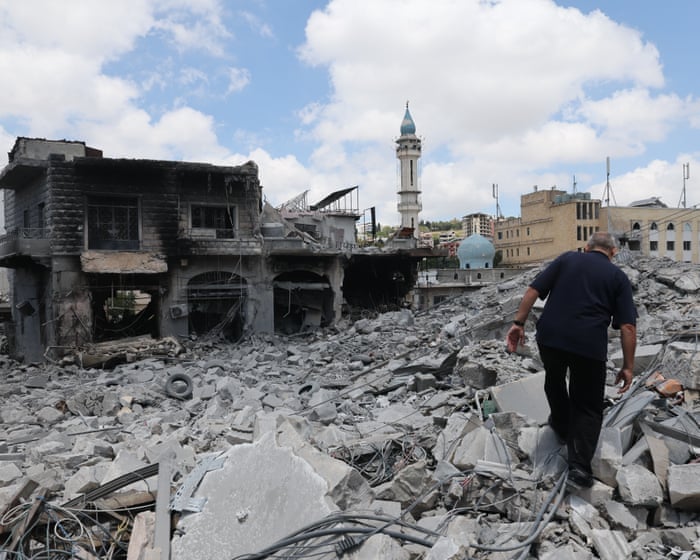
The Lebanese ministry of public health said Monday that at least 3,798 people have been killed since the fighting began in Lebanon on 2 March.
An additional 11,781 were wounded. More than 1.1m were displaced, but even with the US and Iran signing a memorandum of understanding to end the war, the Lebanese army and civil defence are warning residents to not to return to their villages just yet.
Read more here:
Netanyahu announces he will run in upcoming elections
Benjamin Netanyahu used his first public statement after Washington and Tehran agreed to a deal to end the war to announce that he will be running in elections scheduled for later this year.
Netanyahu has been prime minister since 2022, but also held office from 1996 to 1997 and 2009 to 2021, making him Israel’s longest serving prime minister.
View original source — The Guardian ↗
Related stories
Times of Israel
PoliticsJun 7, 2026 · 1 min
Trump: US ‘very close’ to deal with Iran, but demanding stricter nuclear terms
Times of Israel

TASS
NewsJun 5, 2026 · 1 min
Iran, US close to framework agreement on nuclear issue — IAEA chief
TASS

TASS
PoliticsJun 9, 2026 · 1 min
Russia insists on US nuclear weapons withdrawal from Europe — Russian diplomat
TASS
Times of Israel
PoliticsJun 9, 2026 · 1 min
Vance: Iran deal a ‘home run for the American people,’ whether Israel likes it or not
Times of Israel