
The Hill
If the US won’t lead on Ebola, it’s not clear who will
Skip to content
The views expressed by contributors are their own and not the view of The Hill
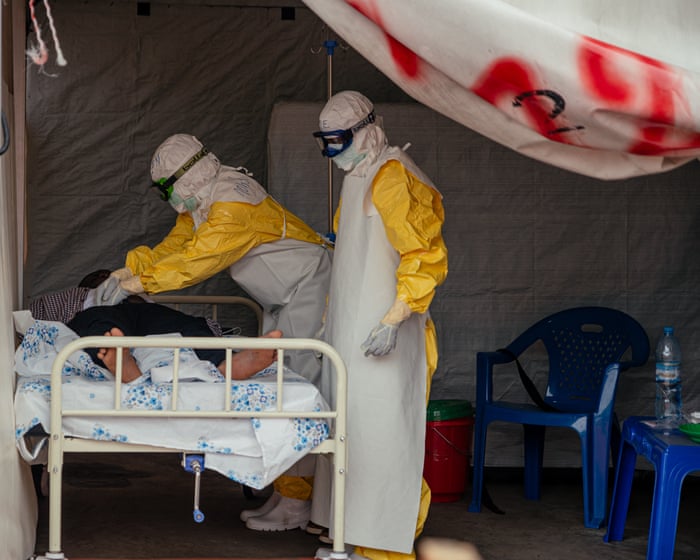
Ebola, one of the world’s deadliest infectious diseases, is spreading rapidly throughout the Democratic Republic of the Congo and Uganda. It now also threatens South Sudan. As nations scramble to stop the outbreak, one fact has become increasingly clear: The international community can no longer count on the U.S. to lead the response to these alarming global public health emergencies.
The last Ebola epidemic killed more than 11,000 people in Africa nearly a decade ago. The U.S. played a major role in combatting the disease back then — a commitment our nation has signaled it no longer shares.
Moves by the Trump administration to strip U.S. public health agencies of experienced scientific personnel and critical resources have drastically weakened America’s capacity to wage an effective and organized response to these catastrophes. Making matters worse, the U.S. decision to withdraw from the World Health Organization has significantly hampered our nation’s ability to collect data and share information with allied partners — practices that were once critical to global U.S. health policy.
These actions have made the U.S. and the world less safe. Once a pioneer in the worldwide fight against infectious disease, the U.S. is now playing catch-up with a deadly Ebola outbreak that could be just as devastating as the 2014 crisis.
The U.S. response to the Ebola crisis has also created confusion and uncertainty on the part of the American people, along with a spectacular lack of accountability.
Who, specifically, at the State Department is running point on America’s response to the Ebola crisis? The U.S. claims it has committed millions in aid but has offered few details on where the money will be spent.
What office is overseeing the delivery of supplies, personnel and support now that the U.S. Agency for International Development has been dismantled? What is being done to prepare for the very real possibility that the outbreak overseas cannot be contained? And who is responsible for communicating with the public about our response to the growing problem?
Confusion over these issues would exist even if we had experienced, congressional-approved officials managing the public health response. But the U.S. has had a parade of acting heads at the Centers for Disease Control and Prevention since President Trump fired his first choice less than a year ago for not complying with his agenda. This has all given Americans even more reason to question their guidance and leadership.
It is not clear who is in charge, what the plan is or to whom we should listen for informed, science-based information on this emerging public health nightmare.
Viruses aren’t bound by international borders. Quite the opposite. They are given fuel to thrive when the U.S. slices health agency budgets, sidelines scientific experts, suspends the flow of real-time data and scraps important global public health partnerships. And control over the current outbreak will become infinitely harder if the disease spreads to neighboring refugee camps in Sudan due to severe overcrowding and poor sanitation.
Confusing, too, are the contradictory positions by the Trump administration on infectious disease prevention. Many of the same voices who mocked and resisted public health mitigation efforts during COVID-19 are now strong proponents of aggressive quarantine measures to contain the Ebola crisis and recent hantavirus outbreak. Once considered acts of governmental overreach, isolation and containment are now being embraced by U.S. agency officials as important disease mitigation practices.
Also troubling is Secretary of State Marco Rubio’s claim that current Ebola containment policies “protect the American people” when the Trump administration has barred citizens abroad who have been exposed to the virus from reentering the country.
America has some of the most advanced infectious disease facilities of any country in the world, along with highly trained and experienced medical personnel capable of handling and treating Ebola-exposed patients. Rather than receive state-of-the-art care in their home country, which the U.S. has done before with great success, American citizens will instead be cared for in a “makeshift hospital” in Kenya.
The U.S. once invested heavily in infectious disease readiness. Coordinating with allied nations, supporting international health organizations and respecting the views of public health experts weren’t considered acts of weakness as they are today. Collectively, these efforts had a singular purpose: prevent, contain and manage disease outbreaks, both here and abroad.
Today, that commitment to leadership is gone. And unless Congress holds this administration accountable for undermining the nation’s ability to respond to Ebola and other public health threats, the safety and security of every American could be in serious jeopardy.
Lyndon Haviland, DrPH, MPH, is a distinguished scholar at the CUNY School of Public Health and Health Policy.
Tags
2014 ebola outbreak
Centers for Disease Control and Prevention
COVID-19
Democratic Republic of the Congo
Donald Trump
Ebola
Ebola outbreak
Infectious Diseases
Kenya
Marco Rubio
President Trump
Quarantine
Secretary of State Marco Rubio
South Sudan
state department
Trump administration
U.S. Agency for International Development
Uganda
united states
usaid cuts
USAID impact on Africa
USAID program
World Health Organization
World Health Organization (WHO)
Copyright 2026 Nexstar Media Inc. All rights reserved. This material may not be published, broadcast, rewritten, or redistributed.
View original source — The Hill ↗
Related stories

AllAfrica
NewsJun 5, 2026 · 1 min
Congo-Kinshasa: Two Scientists On Their Race to Make a New Ebola Vaccine
AllAfrica
ABC News
NewsJun 4, 2026 · 1 min
The race against time to contain Ebola
ABC News
The Guardian
NewsJun 3, 2026 · 1 min
DRC Ebola outbreak could have begun as early as January, WHO chief says
The Guardian

AllAfrica
TechnologyJun 9, 2026 · 1 min
Uganda: Museveni Assures WHO of Uganda's Readiness to Contain Ebola
AllAfrica