CNA
Renard brings African winning record confidence to Tunisia job
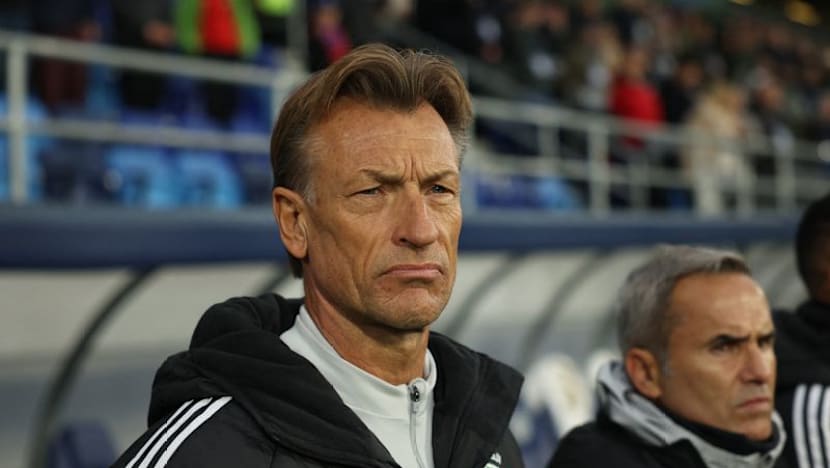
ATLANTA, June 16 : Herve Renard's enviable coaching record in Africa makes him a logical choice for the rest of Tunisia's World Cup campaign after the sacking of Sabri Lamouchi on Monday.
It is also some compensation for the 57-year-old Frenchman, who was due to coach at a third successive World Cup but was sacked by Saudi Arabia only two months before the tournament in Canada, Mexico, and the United States kicked off.
Renard was named as a replacement for Lamouchi after Tunisia's federation dropped the guillotine on the former French international, following a horror start to their Group F campaign when they lost 5-1 to Sweden in Monterrey on Sunday.
Tunisia is the sixth African national team Renard has worked with, bringing a surprise Cup of Nations success to Zambia in 2012 and winning the continent's top prize again with Ivory Coast three years later after he had replaced Lamouchi in that job too.
His strict disciplinary approach came with a charismatic aura, and he enjoyed the affection of the players he worked with.
"He immersed himself in the culture and won the loyalty of the players," said former African Footballer of the Year Kalusha Bwalya, who, when president of the Football Association of Zambia, gave Renard his first job.
He had served as an assistant to veteran French coach Claude Le Roy with Ghana in 2008 before being appointed as Zambia coach.
He also coached Angola and Morocco, who he took to the 2018 World Cup in Russia where they went home early.
LUCKY WHITE SHIRT
The suave-looking Frenchman, who always wears a tight-fitting lucky white shirt on the touchline, was the Saudi coach at the last World Cup when they upset Argentina at the start of the group phase.
After Qatar 2022, he resigned to take France's women's team to the Paris Olympics, but was rehired when Saudi Arabia began 2026 World Cup qualifying, which Renard successfully completed only to be sent packing in April.
In early 2024, when Cup of Nations hosts Ivory Coast fired Jean-Louis Gasset mid-tournament after limping through the group phase, Renard was the man they initially turned to.
But he was working with the French women and turned it down. "I gave it some thought; I know the African continent inside out. I had an extraordinary adventure with the Ivory Coast team in 2015, and challenges are part of my unconventional career path," Renard said at the time.
"But I couldn’t leave the job I had."
(Writing by Mark Gleeson in Atlanta; Editing by Christian Radnedge)
Related stories

CNA
SportsJun 6, 2026 · 1 min
Germany maintain winning run as Portugal, Belgium claim warm-up victories
CNA
Sky Sports
SportsJun 5, 2026 · 1 min
Glamorgan claim dramatic win over Somerset in Vitality Blast
Sky Sports

Sky Sports
SportsJun 7, 2026 · 1 min
England seal comfortable win over New Zealand at Lord's
Sky Sports

CNA
NewsJun 5, 2026 · 1 min
Strong US job growth beats expectations in May, firming recent gains
CNA