
The Hill
Trump invokes Defense Production Act to boost munition production
Close
The latest in politics and policy.
Direct to your inbox.
Sign up for the Defense and National Security newsletter
Defense &
National Security
The Big Story
Trump invokes Defense Production Act to boost munition production
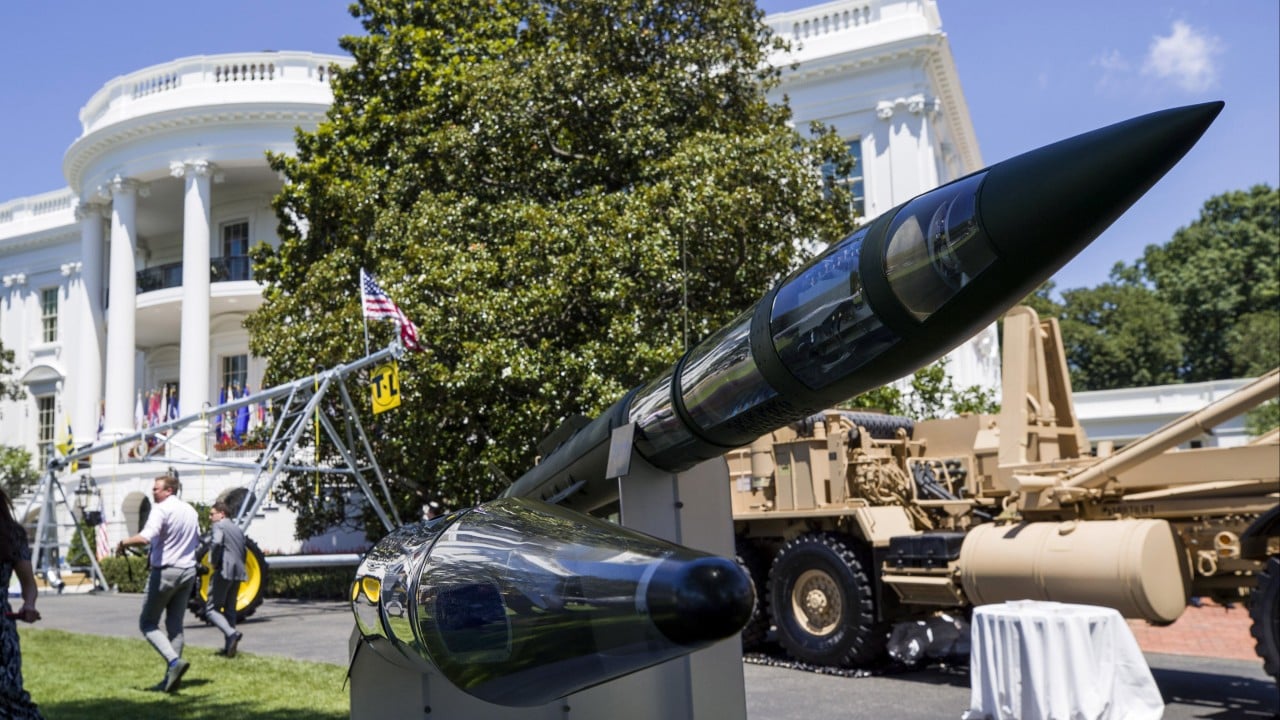
President Trump has invoked the Defense Production Act (DPA) in an effort to bolster the production of key munitions and supply chains as the U.S. looks to address the large expenditure of munitions during the Iran war.
© AP/Matt Rourke
The president said in the memo, which was released Tuesday, that “conditions exist which may pose a direct threat to the national defense or its preparedness programs.”
“In particular, systemic constraints in the munitions industrial base, including limited production capacity, fragile supply chains, long-lead dependencies, and related production bottlenecks, may impair the ability of the United States to produce, sustain and expand the availability of munitions, missiles, and equipment required for the national defense,” Trump said in the 1-page memo to Defense Secretary Pete Hegseth, which is set to be formally released on Wednesday.
Trump’s memo delegates Hegseth, under a section of the DPA, which passed Congress in 1950, to permit companies and the government to strike “voluntary agreements and plans of action to help provide for the national defense.”
The U.S. war with Iran has thrust concerns over munitions stockpiles to the forefront and the ability of manufacturers to produce enough amid heightened levels of expenditures during recent military operations overseas.
“We want these to be set up as an enduring capability. So, expect to see more of these,” Assistant Secretary of Defense for Industrial Base Policy Michael Cadenazzi said at the Center for a New American Security’s event on Tuesday.
The U.S. military has used up nearly half of its stockpile of Patriot air defense interceptor missiles and fired over 50 percent of Terminal High Altitude Area Defenses (THAADs) during its seven-week strike campaign against Iran, an April analysis from the Center for Strategic and International Studies found.
Welcome to The Hill’s Defense & National Security newsletter, I’m Filip Timotija — your guide to the latest developments at the Pentagon, on Capitol Hill and beyond.
In Washington, information is power
A new premium access digital subscription — into the rooms, conversations, and analysis that shape Washington’s most important moments. Launching July 2026. Join the waitlist today.
Essential Reads
How policy will affect defense and national security now and in
the future:
President Trump has said the text of his agreement to end the Iran war won’t be released until it’s signed in person by Washington and Tehran on Friday. But outlets including Bloomberg and CNN say they have obtained the 14-point memorandum of understanding (MOU). White House communications director Steven Cheung said Wednesday morning the reported text “does not reflect the language of the actual MOU.” Here are the key provisions …
Some of President Trump’s most prominent allies in his war on Iran are revolting against the reported contours of his memorandum of understanding (MOU) with Tehran to end the conflict. Conservative pundits and hawkish Iran experts are warning against any agreement that gives up key leverage against the Islamic Republic, or opens access to badly needed funds, without completely giving up its nuclear capacity. The …
Republicans in Congress are quietly trying to take back influence from the Trump administration when it comes to the U.S. role in NATO, as lawmakers seek to assert further control through legislation. The Senate Armed Services Committee is moving to curb President Trump’s power to remove troops from Europe, as the White House reportedly plans to draw down its commitment of air support to European countries. The …
The Senate on Tuesday failed to advance a measure directing President Trump to withdraw U.S. forces from hostilities against Iran despite four Republican senators breaking ranks and voting in favor. GOP Sens. Rand Paul (Ky.), Susan Collins (Maine), Lisa Murkowski (Alaska) and Bill Cassidy (La.) voted for a motion, sponsored by Sen. Raphael Warnock (D-Ga.), to discharge the war powers resolution out of the Senate Foreign …
In Other News
Branch out with a different read from The Hill:
Explosive-drone threat to White House UFC event stopped, Patel says
Federal authorities stopped a potential attack targeting the UFC Freedom 250 event held on the White House lawn, with a multistate law enforcement operation leading to multiple arrests, FBI Director Kash Patel said Tuesday. The FBI and law enforcement first became aware of the possible threat on …
On Tap Tomorrow
Events in and around the defense world:
The Carnegie Endowment for International Peace is holding a discussion tomorrow at 10 a.m. ET on “The U.S-Israel War with Iran: Is There a Way Out?”
The Middle East Institute is holding a webinar tomorrow at 11 a.m. ET on “Reassessing an Evolving Threat: US Counterterrorism Strategy in the Middle East.”
The Quincy Institute is holding a discussion tomorrow at 12 p.m. ET on “Lessons in Military Deterrence from the Iran War: US Strategy in Contested Waters.”
Trending Today
Two key stories on The Hill right now:
Georgia Republicans dealt a blow to President Trump on Tuesday, bucking his preferred pick, Lt. Gov. Burt Jones (R), for healthcare executive and billionaire … Read more
Former Social Security Administration Commissioner Martin O’Malley argued that requiring higher-income Americans to pay more into Social Security is … Read more
You’re all caught up. See you tomorrow!
Tags
Bill Cassidy
Lisa Murkowski
Pete Hegseth
Rand Paul
Raphael Warnock
Steven Cheung
Susan Collins
Copyright 2026 Nexstar Media Inc. All rights reserved. This material may not be published, broadcast, rewritten, or redistributed.
View original source — The Hill ↗
Related stories
South China Morning Post
PoliticsJun 16, 2026 · 1 min
Trump taps Defence Production Act to boost US weapons stockpiles drained by Iran war
South China Morning Post

The Guardian
SportsJun 7, 2026 · 1 min
Iran launches missiles against Israel, homebuyers squeezed, Alexander Zverev wins French Open
The Guardian

The New York Times
TechnologyJun 10, 2026 · 1 min
A Twist in Ukraine’s Drone Campaign Is ‘Really Hurting the Russians’
The New York Times

France 24
PoliticsJun 8, 2026 · 1 min
Tension rises between Israel and the US amid flare-up with Iran
France 24