Indian Express
Indian Express··3 min read
After 12 years, Haryana Cong rebuilds grassroots network, appoints no women block chiefs
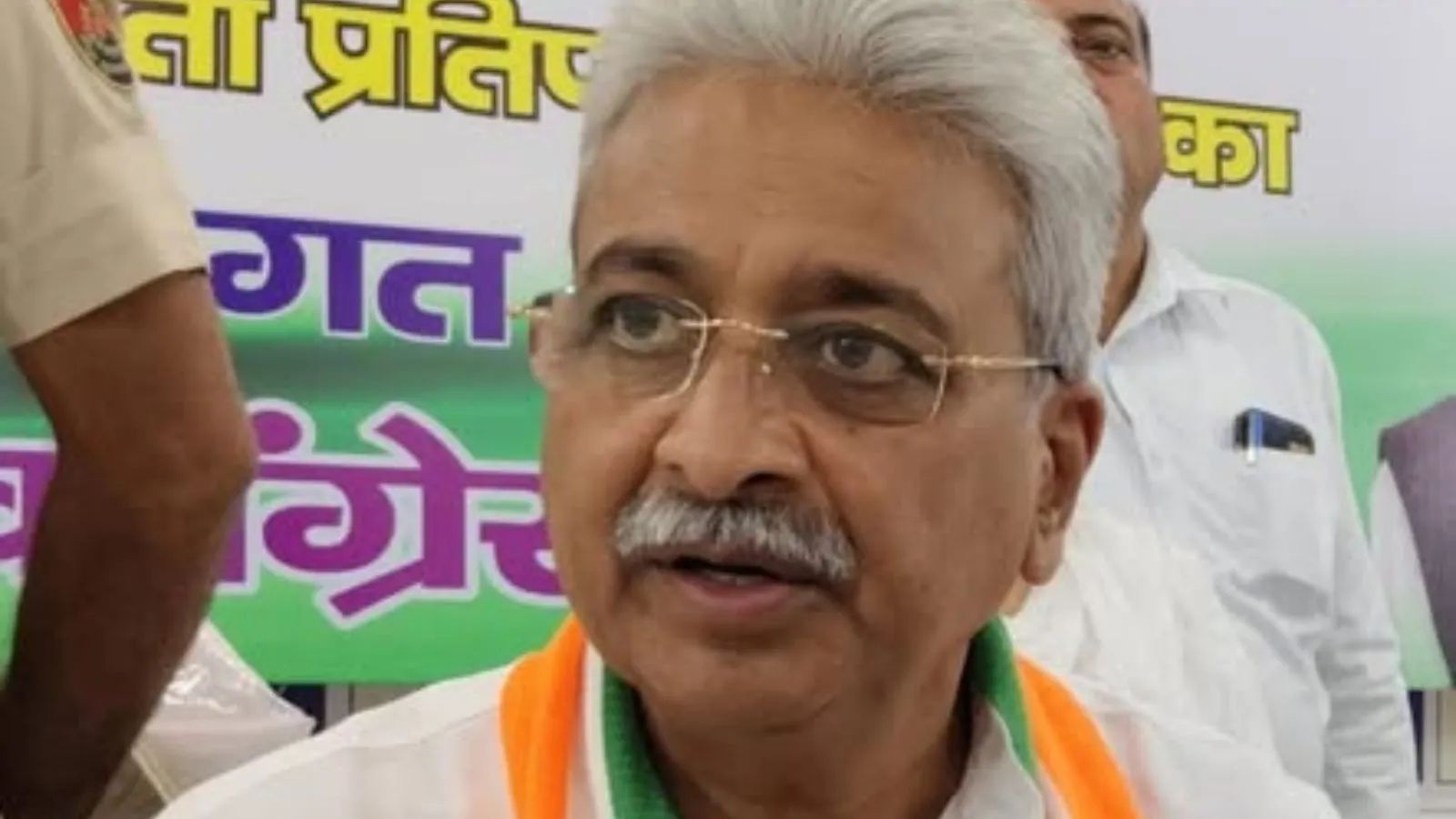
In its first major organisational overhaul in nearly 12 years, the Haryana Congress on Wednesday appointed 103 block presidents across 19 districts, a move aimed at rebuilding the party’s grassroots structure ahead of future electoral battles in the state.
The appointments, announced by Haryana Congress president Rao Narendra Singh, come at a crucial time, with the Special Intensive Revision (SIR) of electoral rolls underway in Haryana. However, the exercise has also drawn attention for another reason: not a single woman has been appointed as a block president.
The lists for Sirsa, Jhajjar, Faridabad and Hansi districts are yet to be announced.
The move is being seen as a significant organisational milestone for the Congress, which has effectively functioned without a fully established grassroots structure since 2014.
Following its poor performance in the 2014 Lok Sabha elections, when the party won only the Rohtak parliamentary seat out of Haryana’s 10 seats, the Congress dissolved all its organisational units in the state. Since then, it has fought three Lok Sabha elections (2014, 2019 and 2024), three Assembly elections (2014, 2019 and 2024), and several municipal and local-body polls without a fully functional block-level organisation.
During this period, Ashok Tanwar, Kumari Selja and Udai Bhan served as Haryana Congress presidents, but repeated efforts to constitute district and block-level committees failed amid factional rivalries, leadership disputes and delays in securing approval from the party high command.
Several organisational lists were reportedly prepared over the years but never received final clearance. Party insiders said the latest exercise gathered momentum after the intervention of Rahul Gandhi.
Story continues below this ad
Defending the appointments, Rao Narendra Singh said the selection process was carried out after extensive consultations.
“The list of block presidents was finalised based on suggestions from District Congress Committee presidents, senior leaders and party workers,” he said, adding that “discussions were also held with B K Hariprasad, the All India Congress Committee (AICC) in-charge for Haryana affairs, before the appointments were approved”.
Rao Narendra Singh further claimed that “the selections were made without considering factional interests”.
“No factional considerations were taken into account while selecting block presidents. Opportunities have been given to those who have been actively working for the party,” he said.
Story continues below this ad
Karnal received the highest number of appointments with 10 block presidents, while Mahendragarh and Kurukshetra were allotted eight each.
Party leaders said the timing of the appointments was closely linked to the Special Intensive Revision of electoral rolls, which began in Haryana on June 15.
“The voter verification exercise involves door-to-door checks and could result in the deletion of some voter names and the addition of new voters. Until now, Congress lacked a formal grassroots organisational network capable of monitoring such exercises and mobilising voters at the local level,” said a Congress leader.
The Congress’s organisational weakness has often been contrasted with the BJP’s extensive network stretching from district units down to booth-level and page-level workers.
Story continues below this ad
The absence of a robust grassroots structure has frequently been cited as one of the Congress’s biggest weaknesses in Haryana and is seen by party leaders as a key factor behind its poor performance in recent Municipal Corporation, Municipal Council and Municipal Committee elections.
At present, the BJP has mayors in all 11 municipal corporations of Haryana, while the Congress does not control a single mayoral post.
Party insiders said that while rival parties, particularly the BJP, invested heavily in booth-level and block-level networks, the Congress lacked formally appointed leaders responsible for voter mobilisation, campaign coordination, voter databases and organisational activities at the grassroots level.
“Against this backdrop, the appointment of 103 block presidents across 19 districts is being viewed as the first substantial attempt in more than a decade to rebuild the party’s organisational machinery from the ground up and prepare for future electoral battles in Haryana,” said another senior Congress leader.
View original source — Indian Express ↗
Related stories
Times of India
NewsJun 9, 2026 · 1 min
Collective thinking, resolve and dream: 12 years of PM Modi government
Times of India
Sky Sports
SportsJun 5, 2026 · 1 min
De Zerbi's Spurs rebuild is under way - and there are encouraging signs
Sky Sports

The Hill
PoliticsJun 6, 2026 · 1 min
8 years after Kavanaugh, Democrats have stopped believing all women
The Hill

The Hindu
BusinessJun 7, 2026 · 1 min
South Korea nominates Han Seong-sook as country's first female Prime Minister in two decades
The Hindu