Indian Express
Global South alone can’t bear war burden, needs financial support: Modi to G7
4 min readNew DelhiJun 17, 2026 11:48 PM IST
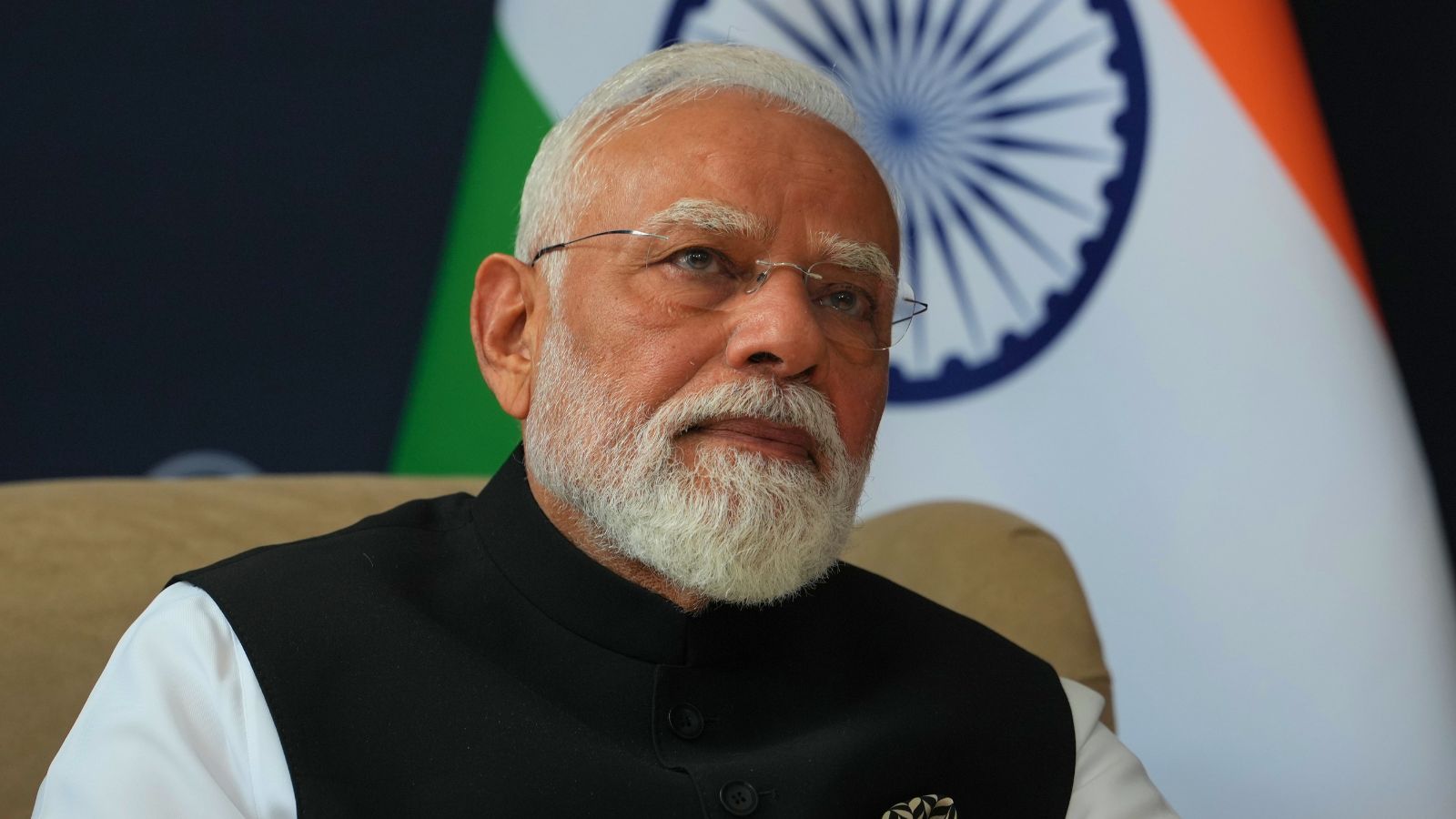
Prime Minister Narendra Modi on the sidelines of the G7 summit, Wednesday, June 17, 2026, in Evian-les-Bains, France. (AP/PTI)
Underlining that disruptions in fuel, fertiliser and food supply chains caused by the war in West Asia will impact the Global South for “a considerable period”, Prime Minister Narendra Modi Wednesday told G7 leaders, including US President Donald Trump, that the “most vulnerable countries” should not be left to bear the burden of these crises alone, and global financial organisations should develop support systems for affected nations.
The war in West Asia has adversely impacted the economy of India and other developing countries in Asia, Africa and Latin America as supply of LPG, LNG, diesel, petrol and fertilisers have been disrupted by the near-closure of the Strait of Hormuz. This has led to rise in fuel prices with cascading effects on the economy, causing hardships.
Addressing the outreach session on ‘Reviving a Balanced, Shared and Sustainable Economic Growth for All’ at the G7 summit in Evian-les-Bains in eastern France, Modi said, “The disruptions in fuel, fertiliser and food supply chains caused by the crisis in West Asia will continue to impact the Global South for a considerable period. If we genuinely seek to strengthen international solidarity, the most vulnerable countries should not be left to bear the burden of these crises alone.”
“Our international financial institutions should develop support mechanisms that help developing countries absorb these shocks and maintain their economic resilience,” he said.
Also attending the summit are the World Bank, IMF, OECD and African Development Bank.
Modi, who was articulating the concerns of the Global South, had said a day earlier that this bloc had “high expectations of the international community” and “what they seek is not mere support, but partnership”.
On Wednesday, he acknowledged that the French G7 Presidency had given importance to this topic. Speaking for the developing countries, he said, “The reality today is when it comes to growth, the question should not be about GDP or trade numbers. The real question is: Growth for whom, with whom and in what direction?”
Story continues below this ad
He said India’s experience demonstrated that shared development could help transform aspirations into reality, and the country’s growth story was one of inclusion, scale and democratic empowerment.
“It is inspired by ‘Sabka Saath, Sabka Vikas, Sabka Vishwas, Sabka Prayas’ (Together with all, development for all, trust of all, efforts by all). And, it has been reflected on countless occasions such as India’s G20 Presidency, the launch of the India-Middle East-Europe Economic Corridor (IMEC) and more.”
India launched the IMEC in September 2023, a month before the start of the war in Gaza following the October 7 attacks on Israel by Hamas.
“Like the vision of IMEC, can we work on connectivity projects with countries in Africa, Latin America and the Pacific Islands? By combining G7 capital, India’s talent and the ownership of Global South countries, we may also consider establishing an International Mobilisation Partnership for Accelerating Connectivity and Trade (IMPACT),” Modi said as he put forward a new proposal.
Story continues below this ad
The summit is also being attended by G7 partner countries Brazil, Egypt, South Korea and Kenya. Ukraine, Qatar and the UAE have also been invited.
Reflecting on the situation in the developed countries, he said, “Today, many societies are becoming ageing societies while India and other countries of the Global South have abundance of young talent, entrepreneurship and skills. To harness this natural complementarity calls for the creation of a Global Skills Partnership, where we can work together on skill mapping and promote trusted skilled mobility.”
This is part of India’s own mobility pacts signed with many developed countries, where Indian skilled and semi-skilled professionals can travel to work through legal migration channels.
© The Indian Express Pvt Ltd
Shubhajit Roy, Diplomatic Editor at The Indian Express, has been a journalist for more than 25 years now. Roy joined The Indian Express in October 2003 and has been reporting on foreign affairs for more than 17 years now. Based in Delhi, he has also led the National government and political bureau at The Indian Express in Delhi — a team of reporters who cover the national government and politics for the newspaper. He has got the Ramnath Goenka Journalism award for Excellence in Journalism ‘2016. He got this award for his coverage of the Holey Bakery attack in Dhaka and its aftermath. He also got the IIMCAA Award for the Journalist of the Year, 2022, (Jury’s special mention) for his coverage of the fall of Kabul in August 2021 — he was one of the few Indian journalists in Kabul and the only mainstream newspaper to have covered the Taliban’s capture of power in mid-August, 2021. ... Read More
Tags:
India
Narendra Modi
View original source — Indian Express ↗
Related stories

Philippine Daily Inquirer
BusinessJun 17, 2026 · 1 min
Pag-Ibig rolls out P10K emergency loan amid ME war fallout
Philippine Daily Inquirer

TASS
NewsJun 10, 2026 · 1 min
Pentagon needs enemy to justify record-high military spending — US journalist
TASS

BBC
BusinessJun 16, 2026 · 1 min
How the Iran war affects your money and bills
BBC

NPR
BusinessJun 8, 2026 · 1 min
Three months into the war, Iran's economy struggles to endure
NPR