Indian Express
Indian Express··5 min read
Pune SIR pre-mapping at 54.65%; exercise to start June 20
3 min readPuneJun 18, 2026 12:00 AM IST
The SIR conducted in West Bengal before the state assembly elections was very controversial with 27 lakh people struck off voter lists due to ‘logical discrepancies’. These people were not able to vote in the election.
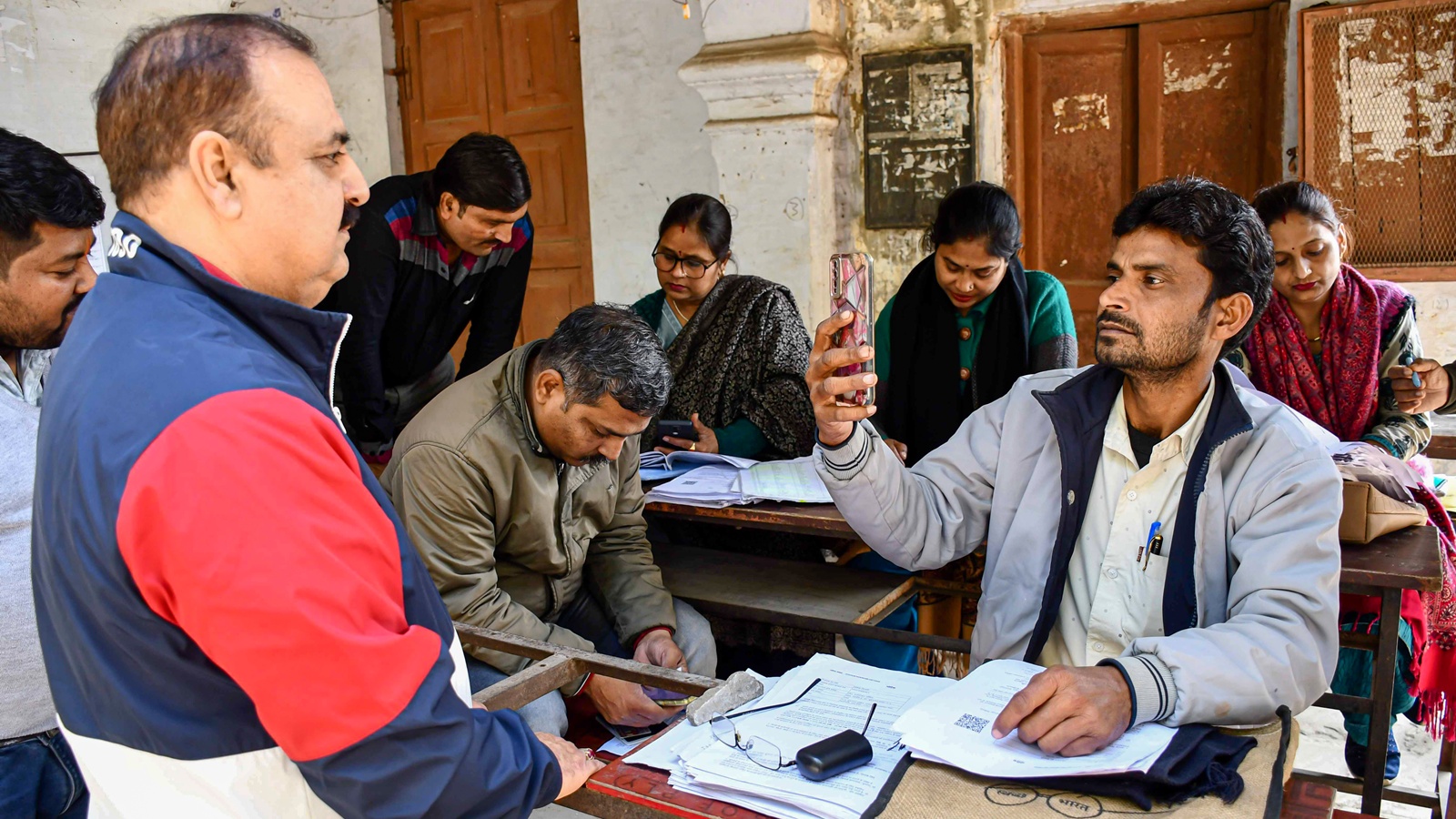
The Special Intensive Revision (SIR) pre-mapping in Pune stands at 54.65 percent at the end of the exercise, informed Pune District Collector Jitendra Dudi on June 17. In the Pune and Pimpri-Chinchwad city regions, Kasba Peth Assembly Constituency (AC) recorded the highest mapping figures at 60.14 per cent. In contrast, Hadapsar AC recorded the lowest mapping rate at 34.81 per cent.
The rural regions of Pune District recorded higher mapping numbers. The Baramati AC recorded the highest number in the district with 79.05 per cent voters mapped. This was followed by the Maval and Khed Alandi ACs at 75.97 per cent and 75.83 per cent respectively.
Pune District has the highest number of voters in the state, said Dudi. There are a total of 8,417 polling stations in the district, with a current voter count of over 90.84 lakh (90,84,088).
The main SIR exercise is scheduled to commence on Saturday, June 20. The SIR schedule will include training for Booth Level Officers (BLOs) and printing of enumeration forms from June 20 to 29; door-to-door distribution of enumeration forms from June 30 to July 29; publication of the draft electoral roll on August 5; filing of claims and objections from August 5 to September 4; hearings on objections filed from August 5 to October 3; and publication of the final electoral roll on October 7, 2026.
A meeting with representatives of political parties was also held on June 17 by Dudi and Deputy District Election Officer Minal Kalaskar. Representatives of Nationalist Congress Party (Sharadchandra Pawar faction), Bharatiya Janata Party, Indian National Congress, Shiv Sena (Uddhav Balasaheb Thackeray faction), Bahujan Samaj Party, and Maharashtra Navnirman Sena were present at the meeting.
Dudi informed that the dates for hearing will be announced 10 days in advance. He said, “Cooperation from political parties is essential throughout this entire process. Authorized representatives appointed by political parties can collect the enumeration forms distributed by Booth Level Officers (BLOs) from voters and submit them at a rate of 50 forms per day.” Dudi urged all political parties to attend these meetings and present any issues encountered at the field level.
Maharashtra Chief Election Officer S Chockalingam in November had written to the Election Commission of India saying that the timeline for SIR in the state was too tight. Asked about this, Dudi said, “CEO sir had written the letter and after that the SIR is beginning in June instead of April. Two and half months of additional time was given…Our people have reached all houses and done as much mapping as possible… I think that is sufficient time to complete the process. We have one challenge in front of us, that is the Palkhi. Because a large number of people participate in that.”
Story continues below this ad
The SIR conducted in West Bengal before the state assembly elections was very controversial with 27 lakh people struck off voter lists due to ‘logical discrepancies’. These people were not able to vote in the election. When asked how such a situation would be prevented in Maharashtra, Dudi said, “The Bengal process I don’t know, I have read through media only. Here I have a simple process through which I can ensure 100% transparency. And that is to conduct weekly meetings with the political representatives…They will submit their queries and questions to me. On the very same day I will hold a meeting with my EROs and AEROs.”
Soham Shah is a Correspondent with The Indian Express, based in Pune. A journalism graduate with a background in fact-checking, he brings a meticulous and research-oriented approach to his current reporting.
Professional Background
Role: Correspondent coverig education and city affairs in Pune.
Specialization: His primary beat is education, but he also maintains a strong focus on civic issues, public health, human rights, and state politics.
Key Strength: Soham focuses on data-driven reporting on school and college education, government reports, and public infrastructure.
Recent Notable Articles (Late 2025)
His late 2025 work highlights a transition from education-centric reporting to hard-hitting investigative and human-rights stories:
1. Investigations & Governance
"Express Impact: Mother's name now a must to download birth certificate from PMC site" (Dec 20, 2025): Reporting on a significant policy change by the Pune Municipal Corporation (PMC) following his earlier reports on gender inclusivity in administrative documents.
"44-Acre Mahar Land Controversy: In June, Pune official sought land eviction at Pawar son firm behest" (Nov 9, 2025): An investigative piece on real estate irregularities involving high-profile political families.
2. Education & Campus Life
Faculty crisis at SPPU hits research, admin work: 62% of govt-sanctioned posts vacant, over 75% in many depts (Sept 12, 2025): An investigative piece on professor vacancies at Savitribai Phule Pune University.
"Maharashtra’s controversial third language policy: Why National Curriculum Framework recommends a third language from Class 6" (July 2): This detailed piece unpacks reasons behind why the state's move to introduce a third language from class 1 was controversial.
"Decline in number of schools, teachers in Maharashtra but student enrolment up: Report" (Jan 2025): Analyzing discrepancies in the state's education data despite rising student numbers.
3. Human Rights & Social Issues
"Aanchal Mamidawar was brave after her family killed her boyfriend" (Dec 17, 2025): A deeply personal and hard-hitting opinion piece/column on the "crime of love" and honor killings in modern India.
"'People disrespect the disabled': Meet the man who has become face of racist attacks on Indians" (Nov 29, 2025): A profile of a Pune resident with severe physical deformities who became the target of global online harassment, highlighting issues of disability and cyber-bullying.
Signature Style
Soham is known for his civil-liberties lens. His reporting frequently champions the rights of the marginalized—whether it's students fighting for campus democracy, victims of regressive social practices, or residents struggling with crumbling urban infrastructure (as seen in his "Breathless Pune" contributions). He is adept at linking hyper-local Pune issues to larger national conversations about law and liberty.
X (Twitter): @SohamShah07 ... Read More
Click here to join Express Pune WhatsApp channel and get a curated list of our stories
Tags:
pune
View original source — Indian Express ↗
Related stories

CNA
SportsJun 5, 2026 · 1 min
Ferrari set pace in first practice for Monaco Grand Prix
CNA
CNA
NewsJun 17, 2026 · 1 min
Two Prime projects in Bishan, Bukit Merah among 6,952 flats launched in June BTO exercise
CNA
CNA
NewsJun 7, 2026 · 1 min
Over 2,500 flats with wait times of around 3 years or less to be offered in June BTO exercise
CNA

Sky Sports
SportsJun 5, 2026 · 1 min
Toone and James fit to start for England vs Spain LIVE!
Sky Sports