Times of Israel
Hezbollah expecting major cash injection from Iran once deal sealed with US — sources
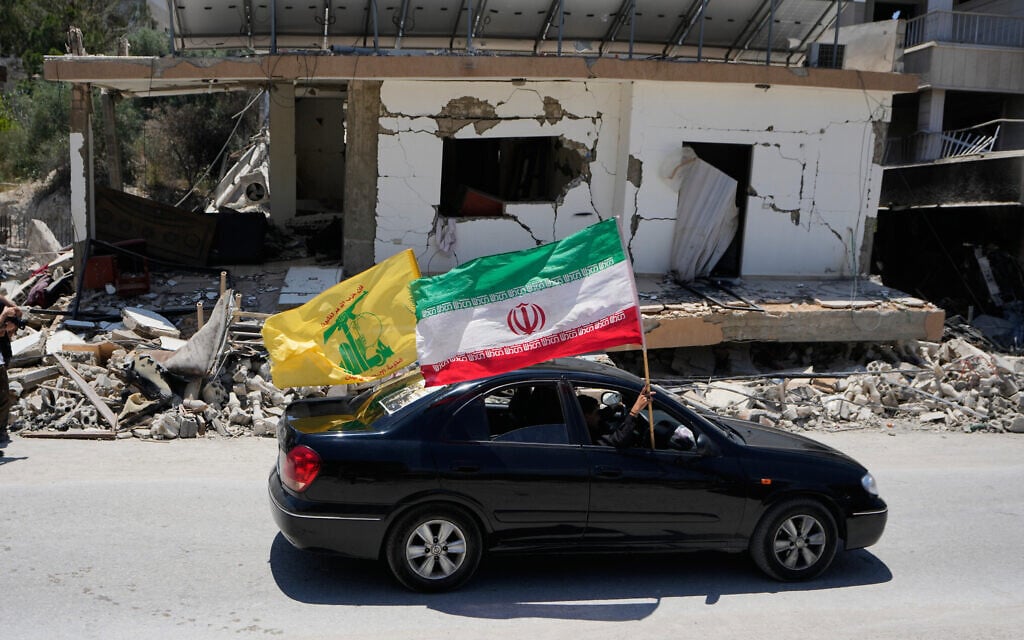
Iran’s interim deal with the US looks set to bolster Hezbollah’s political and financial hand in Lebanon, with Tehran promising more funding for its ally once cash starts to flow, according to four sources familiar with ties between Tehran and the terror group.
A cash infusion to Hezbollah could help it recover from heavy wartime losses and deliver a setback to Israel, which dealt the Iran-backed terror group crushing blows in a 2024 war and has campaigned against sanctions relief for Tehran.
The US-Iranian memorandum of understanding (MOU), due to be signed on Friday, is expected to halt hostilities across all fronts, mediator Pakistan has said, although its terms have not been made public.
The halt to fighting — at Iran’s insistence — includes Lebanon, where Hezbollah fired at Israel in solidarity with Tehran on March 2, igniting an Israeli offensive into southern Lebanon, in a conflict that has unfolded in parallel to the wider US-Iran confrontation.
The situation in southern Lebanon remains volatile. Iran warned Israel on Tuesday to expect an Iranian military response if it did not stop attacks in the south, where Israel has said it will keep troops, and violence, albeit much reduced, has continued.
Get The Times of Israel's Daily Edition
by email and never miss our top stories
By signing up, you agree to the terms
The ceasefire in Lebanon leaves Hezbollah politically emboldened after two years of setbacks, including the fall of Hezbollah’s Syrian ally Bashar al-Assad in December 2024.
It also corners Lebanon’s US-backed government, which failed in its own efforts to secure a broader ceasefire in face-to-face talks with Israeli officials in Washington over the past two months as a pathway to curbing Hezbollah’s attacks on Israel.
The attacks have disrupted the lives of tens of thousands of people in northern Israel who were repeatedly driven to seek safety in bomb shelters at all hours of the day and night, playing havoc with their daily lives. Many of those residents had evacuated their towns during a previous round of Hezbollah attacks, which began in October 2023 and came to a halt in November 2024.
The talks, which Israel has said are ultimately aimed at securing a full peace deal while Lebanon has said they are only focused on de-escalation, have faced an uphill battle since Hezbollah has vowed not to recognize or abide by any deal they yield, raising the prospect of a renewed civil war in Lebanon.
Hezbollah, a Shi’ite Muslim terror group, has been armed and financed by Tehran since it was founded by the Revolutionary Guards in 1982.
US says no unfreezing of funds for ‘any terror organization’
Two regional diplomats briefed by Tehran said Iran had assured the terror group it would receive more funds once assets are unfrozen, while a senior Lebanese source said Iran had promised funds as soon as possible, and another Lebanese source said Iran was expected to boost support. None of the sources gave figures.
Hezbollah’s media office said Iran had publicly announced its support for Hezbollah and that help was continuing.
Asked whether Hezbollah would receive a share of released Iranian funds, the media office told Reuters Tehran would continue to support Lebanon “regardless of the details of the retrieval of its funds.”
A US official said Washington had told Iran that “funds will not be unfrozen if they are going to any terror organization.”
“The MOU also incentivizes Iran to keep proxy groups in check, as if they fail to do so, they will be unable to access any benefits of the agreement,” the official said.
The Israeli Prime Minister’s Office and Iran’s Foreign Ministry did not respond to requests for comment.
Iran has maintained financial support to Hezbollah through years of crippling US sanctions: it transferred $1 billion to the group in the first 10 months of 2025, according to the US Treasury Department.
Price of war
The war has inflicted huge costs on Lebanon: Israeli forces have uprooted a fifth of the population and razed southern villages, saying Hezbollah operates from civilian areas.
Reflecting squeezed finances, Hezbollah said in May it had to cut back on cash payments. Earlier this month, the group offered assistance of $200 to displaced families — the first cash aid it has offered during the war, recipients said.
Mohanad Hage Ali of the Carnegie Middle East Center, a think tank, said a big injection of Iranian cash would be “a game changer” for Hezbollah, allowing it to aid constituents and repair frayed political alliances in Lebanon.
He expected the issue of Hezbollah’s disarmament would “take a backseat,” noting Hezbollah could cite Israeli occupation as justification for staying armed. He called Hezbollah a strategic asset for Iran that Tehran was unlikely to give up.
Iran is pressing for an Israeli withdrawal from Lebanon — its foreign minister said on Tuesday that Israel’s continued troop presence in Lebanon would be considered a breach of the MOU.
Hezbollah believes Iran will not sign a final nuclear deal with Washington unless Israel withdraws from Lebanon.
Iran’s push for a Lebanon ceasefire and its demands for Israeli withdrawal have dealt a blow to Beirut’s efforts to assert its sovereignty and negotiate an end to the war.
Lebanese President Joseph Aoun sharply criticized Iran earlier this month, accusing it of using Lebanon as a bargaining chip in its talks with the US. But on Monday, he spoke to Iran’s foreign minister and welcomed the MOU.
Andreas Krieg, at the School of Security Studies at King’s College, London, said Israeli withdrawal “can realistically only be achieved through diplomacy,” raising the question of what concessions Hezbollah might be willing to offer.
Israel wants the dismantlement of Hezbollah, but the group rules out disarming.
Krieg said a more plausible formula for resolving that impasse would be some form of demilitarization of southern Lebanon in return for Israeli withdrawal.
Past ceasefires have required Hezbollah to have no terrorists in the area between Israel and the Litani River, which flows east to west across the south. The Hezbollah media office said the terror group could not discuss its arms while Israeli troops are in Lebanon.
Bolstering resistance narrative
Hezbollah assessed that joining the war would put Lebanon on the agenda of US-Iranian talks and that Iran could secure a more robust ceasefire than the one that ended the previous conflict in November 2024, Hezbollah officials have said.
Israel continued to attack Hezbollah members after that ceasefire, while the terror group held fire.
Hezbollah’s media office said Israel could not return to the pre-March 2 situation “without there being a response.”
It also reiterated its demand for the government to retract a decision banning its military activities.
Nick Blanford, a senior fellow with the Atlantic Council think tank, said Israeli occupation had revitalized “Hezbollah’s resistance narrative and it’s going to be very difficult for the government to move against Hezbollah now, particularly if fighting flares up again.”
View original source — Times of Israel ↗
Related stories

Straits Times
PoliticsJun 17, 2026 · 1 min
After war losses, Hezbollah seen gaining from Iran-US deal
Straits Times
Times of India
NewsJun 17, 2026 · 1 min
Inside Trump’s Iran deal: The billions that could soon flow to Tehran
Times of India

Japan Times
NewsJun 16, 2026 · 1 min
U.S. set to offer Iran broad financial gains in peace deal
Japan Times

Al Jazeera
PoliticsJun 7, 2026 · 1 min
Trump says will not unfreeze Iranian assets before ceasefire deal reached
Al Jazeera