Indian Express
Backrooms: The malfunctioning mind palace where the hype is greater than the film
In the last few weeks, the social media world has exploded with theories about Backrooms. The followers of Kane Parsons’ series have been explaining the rules of the universe, and those who have been following the lore since it started on 4chan have been explaining what it ‘actually’ means. Kane himself, on The Town with Matthew Belloni, has said that his interpretation of the concept isn’t the only possible explanation, as many creators have interpreted it differently in the last few years. But, if you, like many others, have watched the film and have no idea about any of the backstory that comes with Backrooms, be assured that the film does not expect you to have a PhD on the subject. Even if you walk in with a blank slate, as many of us did, you will walk away with your interpretation of this universe. But, it is fully possible that the interpretation won’t really match up to the hype around the film.
Backrooms: What does it mean?
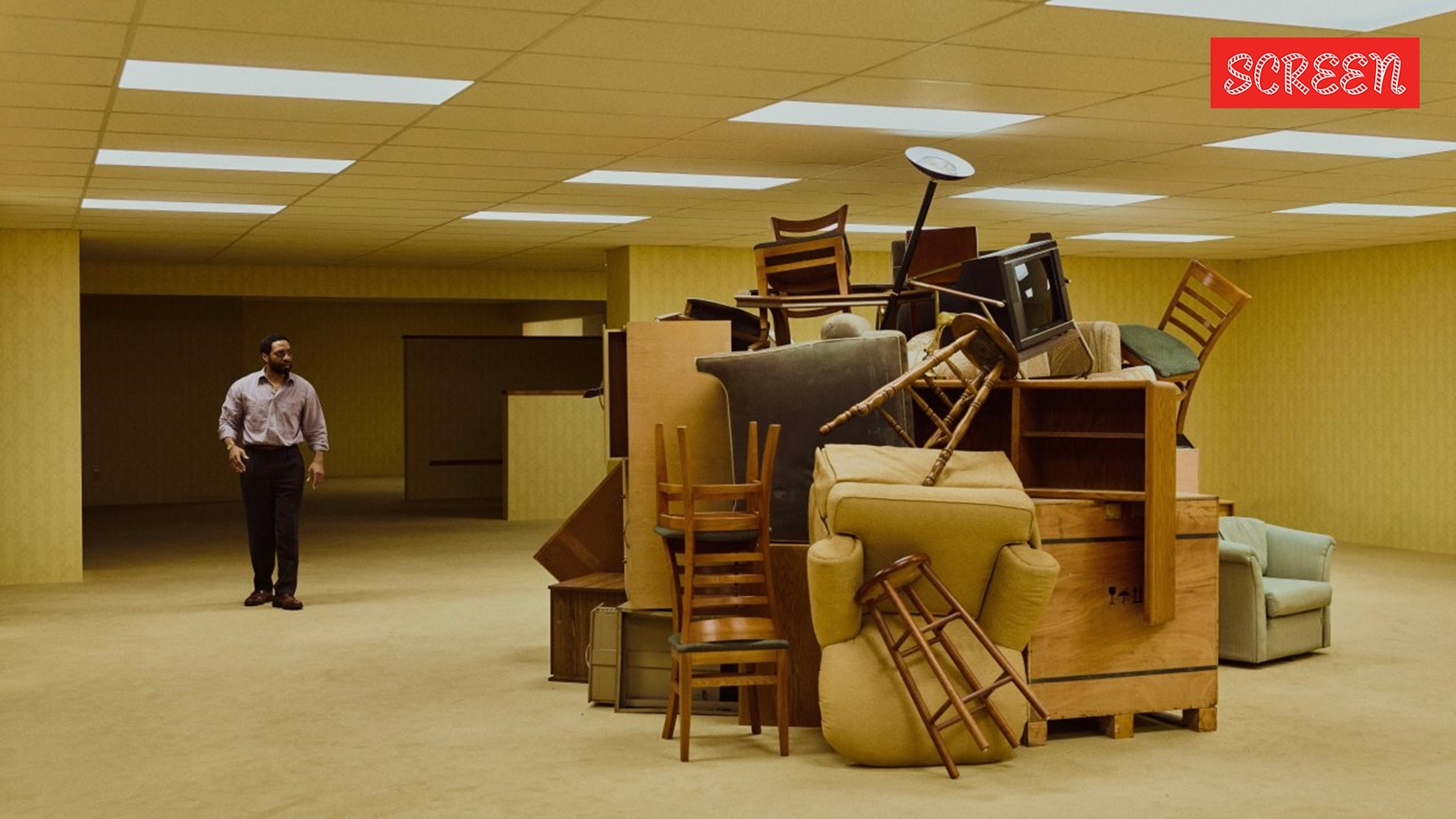
With no reference to the work that Kane has done in the web series of the same name, Backrooms can be described as the inside of someone’s brain when they are drowning within themselves. It’s almost like a malfunctioning mind palace; a dynamic maze that fights you if you try to get out. Clark, the central character played by Chiwetel Ejiofor, is a prisoner in his own brain and after a few trips to the real world, he finds himself stuck in this jail. A functioning alcoholic, he runs a failing furniture store and resents his wife every waking minute of his life. His mind is starting to mesh reality with imagination, so when he discovers a ‘secret’ backroom at his furniture store, Clark is intrigued.
Chiwetel Ejiofor in a still from Backrooms.
He is curious to find out where it leads, and in an almost self-sabotaging manner, ends up scratching the surface so deeply that it turns into a wound. As he spends more time in this universe, which has bits from his real life, he feels more in control. The disfigured shapes that once scared him are now his friendly pets as Clark finally feels in control. So when Dr Mary, played by Renate Reinsve, comes in and challenges his notions, Clark disintegrates.
The tragedy supersedes the horror in Backrooms
For Clark, Backrooms is scary. One can almost imagine how your brain playing tricks on itself, when it can’t distinguish what’s real, could be terrifying; and for Clark, that terror lasts for a short while, until he accepts it as his world. The horror here exists within oneself, but the fear doesn’t stay for too long. Once Clark accepts his life in the Backrooms as his reality, you are concerned for him, but you can’t overlook the tragic story of a man who desperately needs help but doesn’t know where to find it, despite being in therapy.
ALSO READ | Obsession: Not ‘male loneliness’ or ‘crazy girlfriends’, this is only about consent. Period
His therapist, Dr Mary, is fighting her own demons. Her childhood, when she lived with a mother who was struggling with mental health issues, has defined her personality. She carries a broken piece of that childhood with her at all times, literally. And while she believes that she is trying to help Clark, her own life experiences won’t allow her to do so. As Clark sucks Mary and two of his employees into his own whirlpool of doom, you empathise with him for the tragic state that he is in. He is the monster in his own life. He is scared of himself, and doesn’t even know it yet.
The ominous vibe of liminal spaces
All three characters who walk into Clark’s mind walk in with the intention of helping him, but can never escape. When we are told about Async, the company that previously made MRI machines, and is now conducting some kind of human experiment, we interpret it as an advanced form of brain imaging where technicians can watch how one’s brain can get attacked with their thoughts. It’s almost like humans are the exhibits in a zoo or a museum, and Async is making observations about those who are in desperate need of help.
Story continues below this ad
Renate Reinsve in a still from Backrooms.
The conversation around the film has been all about liminal spaces and the ominous vibe that such spaces bring with them. But as you stay with your thoughts after the film, you realise that vibe of the film has nothing to do with the physical spaces where these backrooms exist; it’s one’s state of mind that makes up the vibe here, and creates that sense of misery.
The definition of horror in horror films isn’t what it used to be a decade ago. Last year’s Weapons and this year’s Obsession have both been at the center of the conversation of the genre’s new form. Backrooms joins that discussion and while it does contribute to the conversation, it doesn’t drive it forward as much as the others.
View original source — Indian Express ↗
Related stories

BBC
EntertainmentJun 5, 2026 · 1 min
The Amazing Digital Circus: Another YouTube sensation hits cinemas
BBC

CBC
NewsJun 9, 2026 · 1 min
Endless rooms and records: Backrooms is A24's highest-grossing movie ever
CBC

Indian Express
TechnologyJun 4, 2026 · 1 min
Obsession, Backrooms, Weapons: A Gen Z revolution on the big screen, powered by YouTube
Indian Express

The New York Times
EntertainmentJun 7, 2026 · 1 min
Why We Still Need Steven Spielberg
The New York Times