Indian Express
When is a party merger valid? With TMC split, here is what the defection law says — and omits
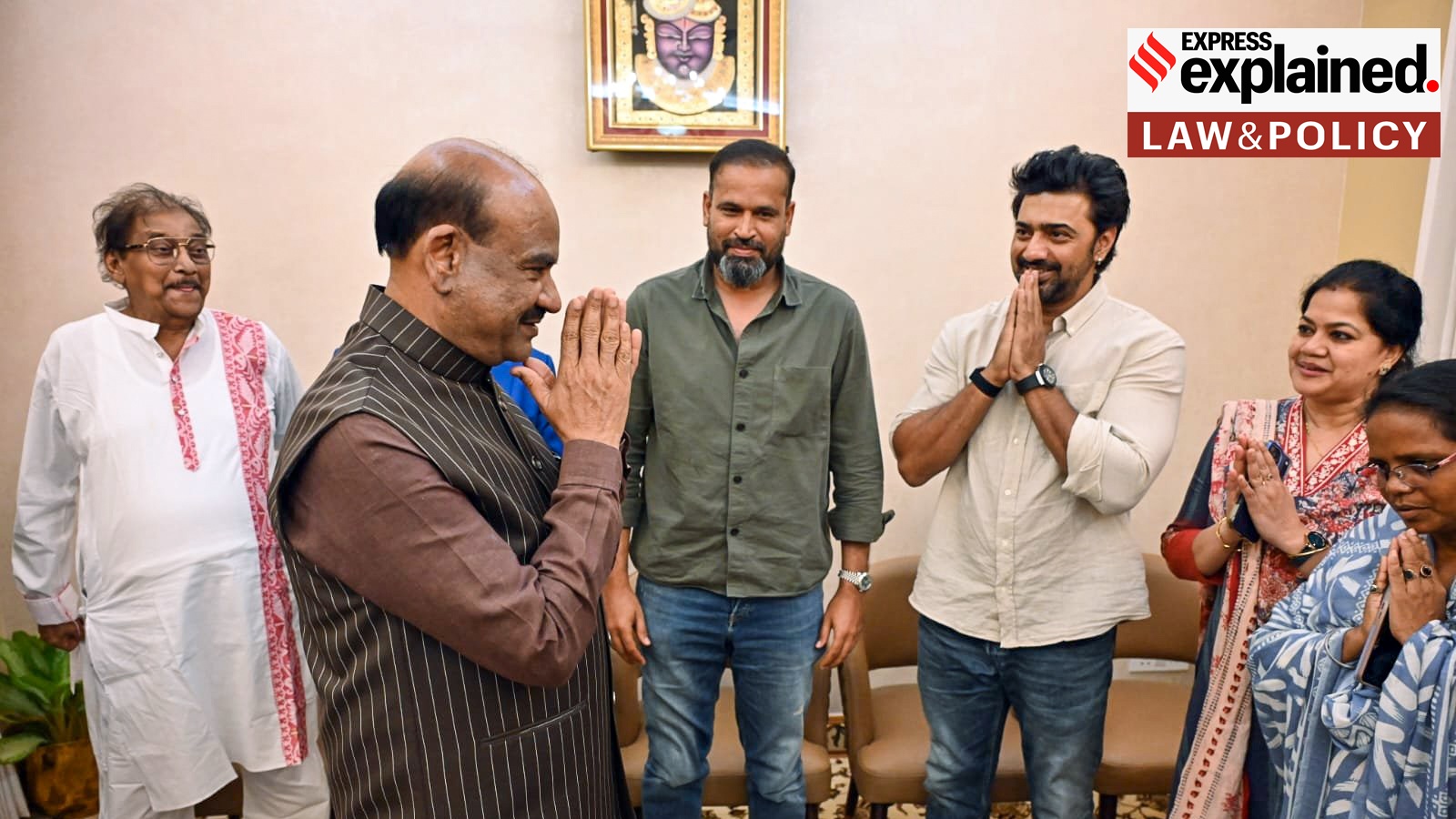
Amid the ongoing tussle within the Trinamool Congress (TMC), 20 rebel MPs met Lok Sabha Speaker Om Birla on June 14, claiming they had merged with the Nationalist Citizens Party of India (NCPI).
Joining the Tripura-based outfit, which polled just 822 votes across two seats in the 2023 Legislative Assembly election, the MPs led by Kakoli Ghosh Dastidar and Sudip Bandhopadhyay asked to be seated separately from the other TMC benches.
The group says it represents more than two-thirds of the TMC’s Lok Sabha strength. This is the threshold required for political representatives to be exempt from the law meant to penalise defections, and to retain membership of the House.
Birla will hear both factions before taking a call on the merger. TMC’s national general secretary Abhishek Banerjee previously wrote to him, insisting the party is “a single, indivisible political party” and that no organisational merger has taken place.
The dispute turns on a question the Tenth Schedule of the Indian Constitution has never fully settled — does a two-thirds split within Parliament amount to a merger, or must the larger political party itself merge first?
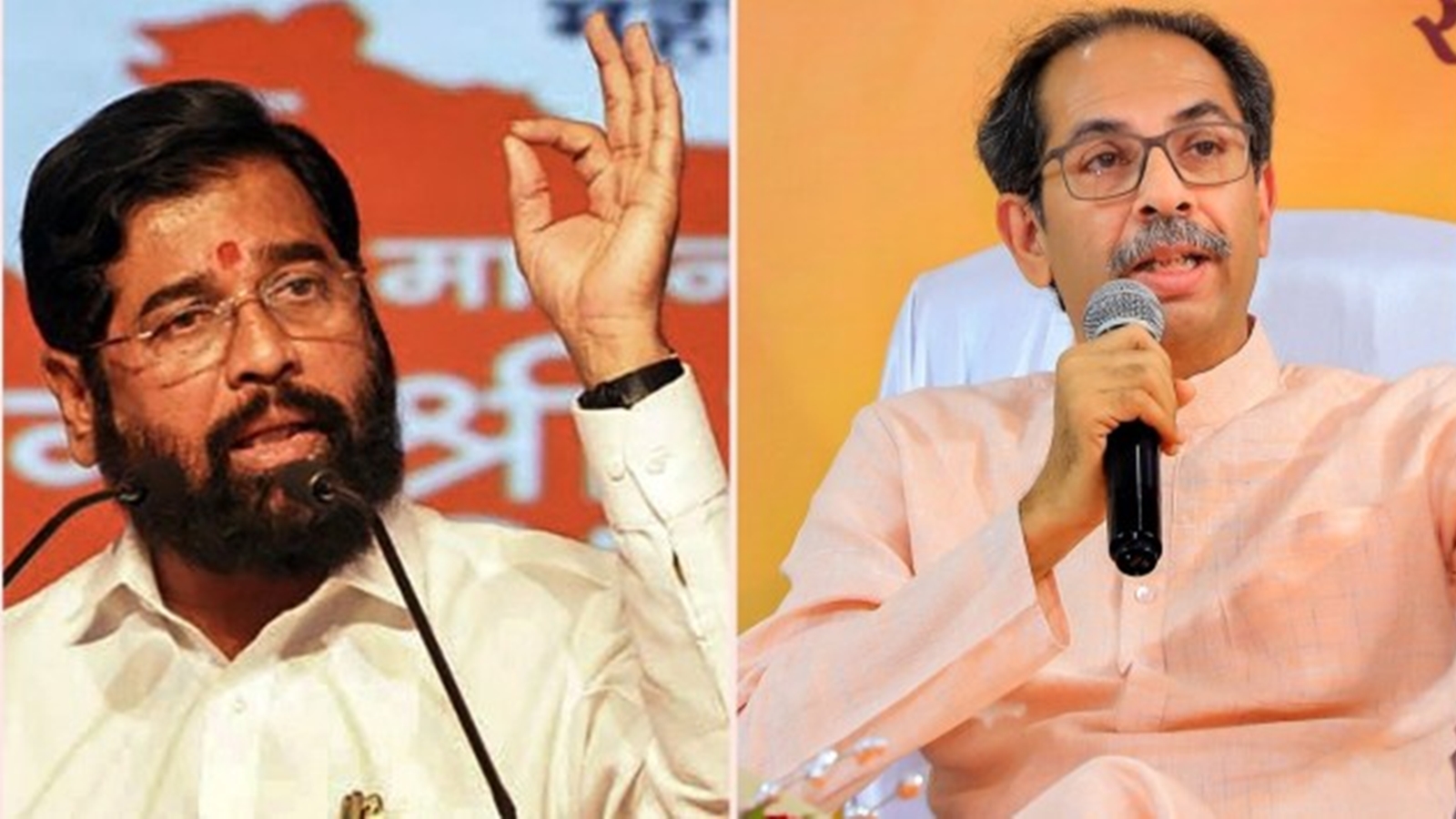
A similar dispute is brewing within the Shiv Sena (Uddhav Balasaheb Thackeray), which has urged Birla not to recognise any breakaway faction on the strength of legislative numbers alone. Party leaders have argued that Paragraph 4 requires a merger of the original political party not merely the support of two-thirds of MPs — a position that mirrors the stand taken by the TMC leadership.
What the defection law says
An MP who gives up party membership or defies a whip (a party directive in the legislature, or someone appointed to issue such directions) is ordinarily disqualified under Paragraph 2 of the Tenth Schedule.
Story continues below this ad
Paragraph 4, however, carves out an exception for mergers. Sub-section 4(1) states that members of an original political party can merge with another political party and still retain their MP status. Paragraph 4(2) adds that this can happen “if and only if” not less than two-thirds of the members of the legislative party have agreed to “such merger”.
The two terms mentioned in this Schedule must be noted — an MP’s “original political party” is the organisation that set them up as a candidate, is registered with the Election Commission of India and accountable for activities outside Parliament. The “legislature party” is narrower, including the members of that party sitting in a particular House.
Members who proceed with the merger, and those who refuse it but choose to function as a separate group, are both protected from disqualification once that threshold is met.
There existed an easier route to mergers under Paragraph 3 of the original 1985 Schedule, which protected a “split” if one-third of a legislative party broke away. The 91st Amendment Act of 2003 deleted that provision and raised the threshold to two-thirds because the exception was used to engineer bulk defections. Thus, at present, a merger under Paragraph 4 is the only route out of disqualification.
Readings of the same paragraphs
Story continues below this ad
The TMC rebel MPs are raising Paragraph 4 as a single test: cross the two-thirds limit and the merger is established. But Banerjee’s letter argued that this is exactly backwards.
It contended that Para 4 sets two conditions, which are an actual merger of the original party (TMC in this case), and two-thirds support within the legislature and that satisfying only the latter accomplishes nothing on its own.
His letter adds that the party whip and leader are appointed by the party organisation and not by whichever faction holds the numbers in the House. No breakaway group can appoint a rival whip or claim separate recognition without itself attracting disqualification, it added.
This argument has split India’s courts and presiding officers for years. The disagreement traces to a distinction in the Tenth Schedule itself, which treats “political party” and “legislative party” as two connected but non-identical concepts.
Story continues below this ad
Given the merger exception, the question is whether the provision requires proof of an actual merger of the original political party, or whether support from two-thirds of legislators is sufficient to invoke the exception.
In the 2023 Supreme Court verdict in the Shiv Sena split case (called the Subhash Desai case), the court held that the power to appoint a whip and a leader belongs to the political party, not whichever faction commands a majority among the MPs or MLAs sitting in the House.
The rebels, on the other hand, are relying on the Goa precedent. The case, Girish Chodankar v Speaker, The Goa State Legislative Assembly (2022), concerned 10 Congress MLAs who comprised two-thirds of the Congress legislature party in the Goa Assembly. They crossed over to the BJP in 2019.
The Speaker rejected a disqualification petition against them, and the Goa bench of Bombay High Court upheld that decision. It said that two-thirds support within the legislature party was itself deemed a merger of the original party, with no separate proof required that the Congress organisation outside the House had merged with the BJP.
Story continues below this ad
Banerjee’s letter does not engage the Goa rulings directly. Instead, it relies on the principles articulated by the Supreme Court’s Constitution Bench judgment in Subhash Desai, arising from the split between Uddhav Thackeray and Eknath Shinde inside the Shiv Sena.
That case was not about a merger. Here, the Shinde faction claimed to be the real Shiv Sena, not a merged entity. But the bench held that a legislature party cannot disconnect from the political party that created it, that the power to appoint a whip and leader belongs to the organisation and not to whoever holds a majority among MPs or MLAs, and that the question is “not a game of numbers, but something more.”
Banerjee’s letter extends that logic to argue that legislators cannot declare a merger into existence by force of numbers either.
But the argument that two-thirds is an adequate threshold has already been acted on, not just upheld by one HC. In April this year, 7 of the 10 AAP Rajya Sabha MPs announced they had merged with the BJP, invoking the same threshold. AAP filed a disqualification petition against them with the Rajya Sabha Chairman. Within days, the chairman accepted the merger, and the 7 MPs formally joined the BJP. No detailed reasoned order on how the competing Paragraph 4 readings were weighed has been made public.
The Speaker’s role
Story continues below this ad
The landmark Kihoto Hollohan v Zachillhu (1992) judgment upheld the Tenth Schedule’s constitutionality, and held that the Speaker acts as a tribunal while deciding disqualification questions and not as a House member exercising ordinary privilege.
This permits judicial review of the Speaker’s decisions, but the same judgment confined it to cases of mala fide exercise of power, breach of natural justice or an error of law and barred courts from intervening before the Speaker has actually ruled.
View original source — Indian Express ↗
Related stories
Indian Express
NewsJun 18, 2026 · 1 min
Shiv Sena (UBT) split all but official as 6 MPs skip party meeting
Indian Express

The Punch
NewsJun 16, 2026 · 1 min
Obi, Kwankwaso, others to sign NDC anti-defection pact
The Punch

Daily Trust
TechnologyJun 17, 2026 · 1 min
NIGERIA DAILY: Why We Asked Party Candidates To Sign Anti-defection Affidavits – NDC
Daily Trust

Daily Trust
TechnologyJun 16, 2026 · 1 min
NIGERIA DAILY: What Becomes Of Atiku And The Opposition If ADC Is Deregistered?
Daily Trust