Indian Express
‘No return to pre-war conditions’: Iran defies Trump, announces Hormuz toll
4 min readUpdated: Jun 18, 2026 07:48 PM IST
US President Donald Trump in Evian-les-Bains, France, Wednesday, June 17, 2026. (AP Photo)
Iran has said it will charge ships looking to cross the Strait of Hormuz, directly contradicting US President Donald Trump’s claim of a toll-free Hormuz even beyond the 60-day period of negotiations.
Ruling out a return to “pre-war conditions” in Hormuz, a key maritime chokepoint, Iranian lead negotiator Mohammad Bagher Ghalibaf told state media this fee will come into effect after 60 days of negotiations agreed under the MoU, according to reports.
“Strait of Hormuz will not return to pre-war conditions. Iran has the right to sovereignty over the Strait of Hormuz and of course we will receive a fee for services,” Ghalibaf said after the 14-point MoU was digitally signed by Trump and his Iranian counterpart Masoud Pezeshkian on Thursday.
US President Donald Trump (left) and his Iranian counterpart Masoud Pezeshkian sign the Memorandum of Understanding. Trump was present at the Palace of Versailles, in France. (@WhiteHouse/X via PTI Photo; (Embassy of the Islamic Republic of Iran in India/ANI Photo)
Trump has repeatedly said he won’t accept tolls being imposed on the route that was the conduit for a fifth of global petroleum and liquefied natural gas supply before February 28, when US and Israel struck Iran, plunging the region in the over 100-day war.
Most recently at the G7, a day before the MoU was signed, Trump reiterated that Hormuz is going to be opened “toll-free”, including beyond the 60-day time period.
این یک سند تاریخی و پیامی از ایران مقتدر است: صلح در سایه احترام متقابل تحقق خواهد یافت.
جمهوری اسلامی ایران به صلح جهانی با حفظ عزت و استقلال، پیشرفت و همکاری منطقهای همواره متعهد و پایبند است. pic.twitter.com/FgbeHSioKX
— Masoud Pezeshkian (@drpezeshkian) June 18, 2026
‘Record of American failure’
Ghalibaf called the MoU a “record of American failure,” according to a CNN report and said US “made the potential of the Strait of Hormuz a reality for us”. A few ships have already passed the Strait of Hormuz since the deal was signed.
Three Saudi-flagged supertankers carrying six million barrels of crude sailed through the Strait hours after the deal, according to ship tracking data accessed by Reuters on Thursday. These weree the biggest departures through the strait in week, according to a Reuters analysis.
Story continues below this ad
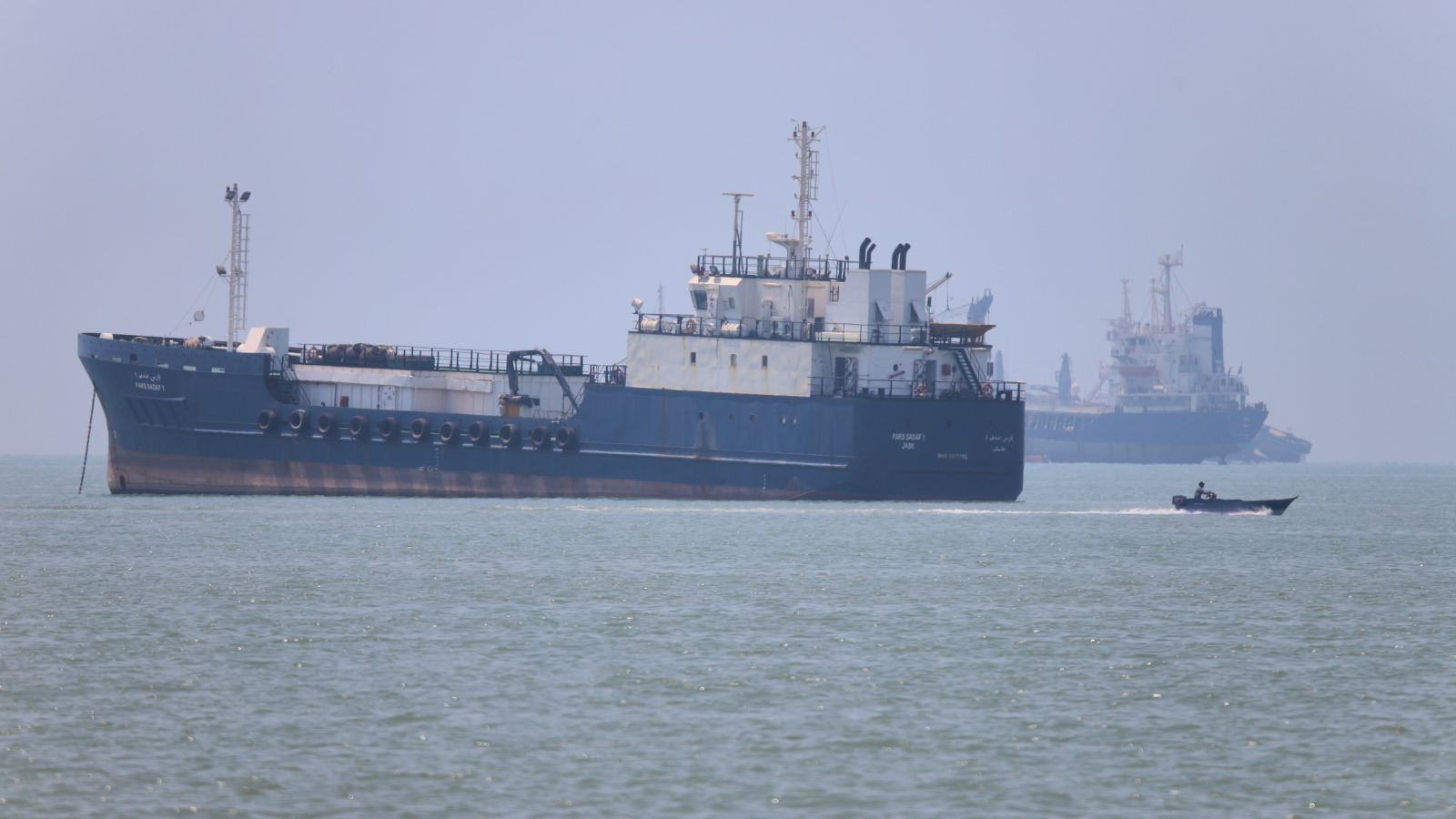
A small motorboat passes anchored vessels in the Strait of Hormuz off Bandar Abbas, Iran, Wednesday, June 17, 2026.(Amirhosein Khorgooi/ISNA via AP)
Other tankers displayed their positions as sailing through the strait on public ship tracking after weeks of concealing their voyages when crossing through the waterway.
Global oil prices are also expected to fall as the resumption of traffic through Hormuz is likely to throw open the gates for West Asian crude oil to flow into the global market.
“The reopening of the Hormuz Strait could unleash some 93 million barrels of stranded non-Iranian barrels from the Persian Gulf, while producers are expected to continue supplying cargoes through less visible channels,” Kpler analyst Muyu Xu said in a June 17 note. US lifting its restrictions on Iranian crude could add around 72 million barrels stranded on tankers west of Chabahar to the mix, with volumes set to rise further if Washington grants broader sanctions relief, Kpler said.
A huge body of crude oil is currently believed to be stuck in the Gulf aboard 54 supertankers carrying approximately 87 million barrels of crude.
© IE Online Media Services Pvt Ltd
The Express Global Desk at indianexpress.com which delivers authoritative, verified, and context-driven coverage of key international developments shaping global politics, policy, and migration trends. The desk focuses on stories with direct relevance for Indian and global audiences, combining breaking news with in-depth explainers and analysis.
A major focus area of the desk is US immigration and visa policy, including developments related to student visas, work permits, permanent residency pathways, executive actions, and court rulings. The Global Desk also closely tracks Canada’s immigration, visa, and study policies, covering changes to study permits, post-study work options, permanent residence programmes, and regulatory updates affecting migrants and international students.
All reporting from the Global Desk adheres to The Indian Express’ editorial standards, relying on official data, government notifications, court documents, and on-record sources. The desk prioritises clarity, accuracy, and accountability, ensuring readers can navigate complex global systems with confidence.
Core Team
The Express Global Desk is led by a team of experienced journalists and editors with deep expertise in international affairs and migration policy:
Aniruddha Dhar – Senior Assistant Editor with extensive experience in global affairs, international politics, and editorial leadership.
Nischai Vats – Deputy Copy Editor specialising in US politics, US visa and immigration policy, and policy-driven international coverage.
Mashkoora Khan – Sub-editor focusing on global developments, with a strong emphasis on Canada visa, immigration, and study-related policy coverage. ... Read More
Stay updated with the latest - Click here to follow us on Instagram
Tags:
donald trump
Iran War
Strait of Hormuz
View original source — Indian Express ↗
Related stories

Straits Times
PoliticsJun 3, 2026 · 1 min
Iran FM warns any attack on Beirut will trigger ‘full-scale resumption of war’
Straits Times

Al Jazeera
PoliticsJun 16, 2026 · 1 min
Families return to shattered towns as fragile ceasefire holds in Lebanon
Al Jazeera
CNA
PoliticsJun 3, 2026 · 1 min
Iran FM warns any attack on Beirut will trigger 'full-scale resumption of war'
CNA

Financial Times
BusinessJun 6, 2026 · 1 min
Abu Dhabi’s Etihad to surpass pre-Iran War capacity without price cuts
Financial Times