Indian Express
From Kobiraji to Railway Cutlet: India’s love affair with chops
When the French came up with the concept of the côtelette—from Old French costelette, meaning a “little rib” or a “small piece of meat”, usually veal or mutton, which is cut horizontally from the upper part of the leg—little did they know that miles away, in India, the cutlet would be so popular or famous.
From the Kolkata Fish Cutlet and the Railway Cutlet to Anglo-Indian chicken cutlets and offshoots like the Army Mince Chop and the Goan Croquette—not to forget the Kobiraji Cutlet, Dimer Devil, and Nargisi Chop—Indians love crumb-frying meat and minced vegetables.
And it’s not just in India. One of my favourite versions of a cutlet is the German schnitzel, where chicken is flattened to the thinnest possible layer, seasoned, dipped in egg, coated with breadcrumbs and then crumb-fried. The scallopini I tasted in Milan still brings back delicious memories—the lightly breaded cut of veal, pan-fried to perfection. Then, of course, there’s the Japanese Katsu cutlet, which I love, but without the curry. I am a purist when it comes to the crispiness of a cutlet…nothing must dampen its splendour.
In India, although we seem to enjoy several variations of the cutlet—which we also often call chops, which are actually what croquettes are—their popularity was most probably thanks to the British. We never had a tradition of using breadcrumbs, or bread, till the colonial traders entered our borders.
This is a list of my favourite chops and cutlets from India.
Chops are a version of croquettes, which are essentially flat patties made from minced meat or fish, sometimes encased in mashed potato or mixed with boiled potato, dipped in egg wash, breaded, and deep-fried. The process of cooking mincemeat was also born of necessity, to avoid wasting leftover meat or chicken. Potatoes, too, were introduced to the country by the Europeans.
The Kobiraji Cutlet, a creation of Bengal, is actually a colloquialisation of the name ‘Coverage Cutlet’, which is what the British called it. Fish or chicken, and sometimes mutton mince, were seasoned with spices—usually simply chilis, ginger, garlic, coriander, salt, and pepper—and then dipped in an egg wash. The cutlet is covered in breadcrumbs, soaked in egg, and then fried up in whipped egg, which forms the most crunchy and pretty nest around the cutlet. A “coverage”, if you will.
Story continues below this ad
The Railway Vegetable Cutlet, introduced by the Indian Railways, was, I assume, the easiest way to serve hot food without being messy. A jumble of chopped vegetables—ranging from beetroot to carrots and beans and onions—is spiced, formed into a flat patty, dipped in a cornflour slurry and breadcrumbs, and then deep-fried. To be honest, I preferred the Rajdhani Fish Fry which you got when you travelled from Calcutta –but the vegetable cutlet, often served at breakfast, is still worth mentioning for its distinctive diamond shape and not so extraordinary taste.
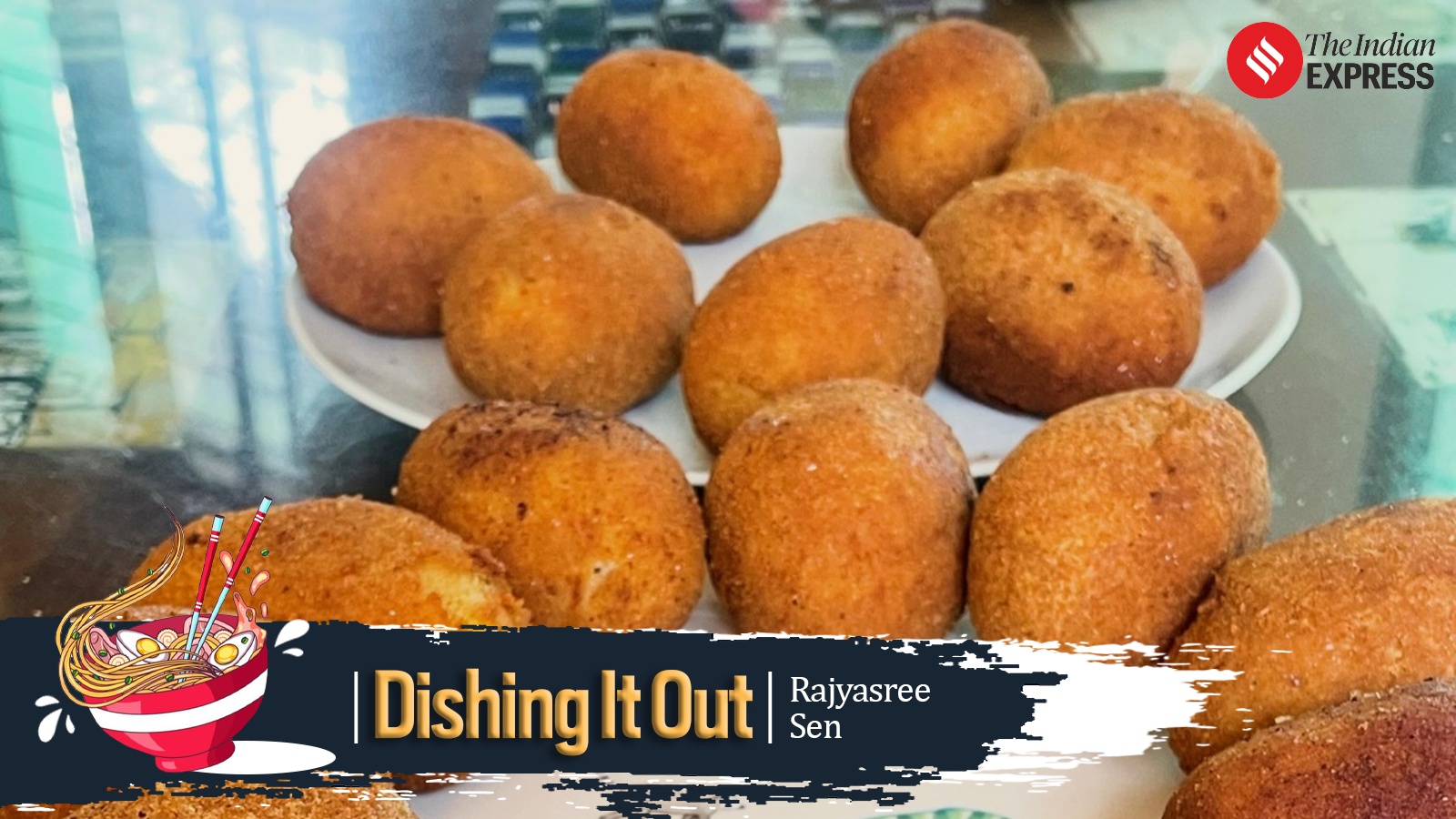
The Army Mince Chops are an all-time favourite of mine. Our home has a lovely recipe using mutton mince cooked with Worcestershire sauce, soya sauce, brown sugar, coriander leaves and chillies. The mixture is shaped into balls, wrapped in mashed potatoes to form an egg shape, covered with breadcrumbs, and then deep-fried. The crispiness of the breadcrumbs, leading to the soft mashed-potato covering, finally revealing the spiced mutton mince, is a burst of textures and flavours.
The Dimer Devil, or Nargisi Chop, has nothing to do with devilled eggs. The first, a creation of Bengal, encases a hard-boiled egg in a spicy mashed potato covering—with turmeric, chilli, and all the spices that fuelled the East India Company’s wealth—before being crumb-fried. The charm of the Dimer Devil lies as much in its taste as its appearance when you halve it to reveal the different layers and the cut yolk. The more popular version is when the egg is coated in a spiced mince mixture and then crumb-fried. I have even tasted a version with a minced fish mixture encasing the egg.
Interestingly, the word “devil” in a culinary context can be traced back to Great Britain in 1786. It refers to spicy preparations. By 1800, “devilling” food was a verb describing the act of making food spicy. The question is: is the Dimer Devil simply an Indianisation of the Scotch Egg, or is it a version of the Nargisi Chop, which has a boiled egg encased in mince and deep-fried? Either way, imitation is the best form of flattery.
Story continues below this ad
One of the best versions of the Dimer Devil is when the egg is hard-boiled, halved to remove the yolk, which is then mixed with the potato mixture, seasoned, and placed back in the egg. This is encased in a spicy potato coating and then crumb-fried.
All in all, a chop by any other name is a cutlet—and both should be relished. There are many other versions of croquettes, cutlets, and chops in India: from Parsi cutlets, fish croquettes, prawn cutlets, and beetroot chops, each requiring a glossary of their own. I would say, when you’re in Goa or Mumbai or Kolkata—go try a chop or a cutlet. It will be well worth your while.
Next week, I will write on some of my favourite mango recipes from across the world.
View original source — Indian Express ↗
Related stories

Bloomberg
BusinessJun 8, 2026 · 1 min
Updates From Apple WWDC Keynote
Bloomberg
Indian Express
PoliticsJun 5, 2026 · 1 min
Cockroach Janata Party Protest Live Updates
Indian Express

Bloomberg
BusinessJun 10, 2026 · 1 min
Steady UK Assets Dodge Global Volatility
Bloomberg
Indian Express
NewsJun 17, 2026 · 1 min
Delhi Confidential: ‘Wordly’ Wise
Indian Express