Indian Express
Indian Express··5 min read
Man served Rs 200 watermelon juice without price display, wins Rs 20,000 payout
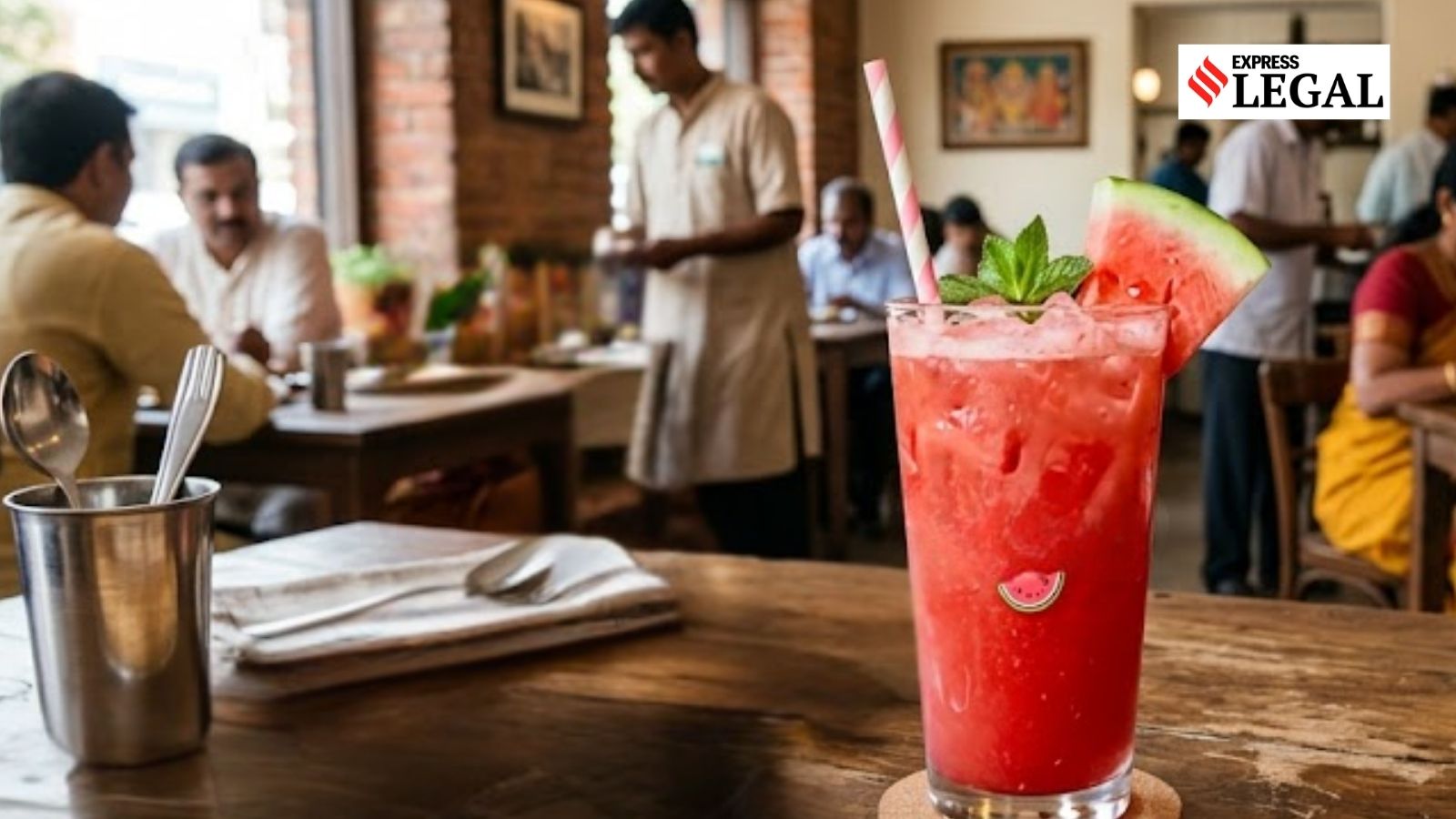
After a restaurant in Kerala unfairly charged a customer Rs 200 for a glass of watermelon juice without disclosing the price in advance, a consumer court has directed it to pay Rs 20,000 as compensation for the inconvenience and mental agony as well as the litigation expenses incurred by the complainant.
A bench of president S K Sreela and member Stanley Harold of the consumer commission in Kollam observed that while a restaurant has the right to determine its prices, it has a corresponding obligation of making such prices known to consumers before they place their orders, and this restaurant had failed to do so, amounting to a deficiency in service.
“The opposite party is found to have committed deficiency in service and indulged in an unfair trade practice by failing to disclose the price of the watermelon juice to the complainant before serving the same, thereby depriving the complainant of an informed choice, the June 15 order noted.
Rs 200 for glass of juice
The complainant, along with his two friends who had returned from Canada, visited D Light House (opposite party) on September 28, 2025.
They consumed food, liquor, beer and also ordered a glass of watermelon juice.
When the bill was presented, the complainant noticed that an exorbitant amount had been charged for the watermelon juice.
A sum of Rs 200 was charged for a single glass of watermelon juice, apart from 5 per cent Goods and Services Tax (GST).
The complainant submitted that he has not come across any hotel in Kollam district that charges such an excessive amount for a glass of watermelon juice.
He claimed the charge was arbitrary, unreasonable and highly condemnable.
Therefore, the complainant, being a consumer, filed the complaint seeking appropriate reliefs and justice.
Restaurant fails to appear
The commission noted that the complainant was charged an exorbitant amount for a glass of watermelon juice compared to the prevalent rates in other hotels in the district, and that the price was not disclosed to him at the time of placing the order, which amounts to unfair trade practice and deficiency in service.
It observed that D Light House, despite receipt of notice, failed to appear before the court and did not file any version; consequently, the complaint proceeded ex parte.
The commission noted the material produced by the complainant, which included the bill issued by the restaurant, showing that an amount of Rs 200 and GST were charged for one glass of watermelon juice, and the GST rules on the pricing and other particulars of the establishment, obtained under the Right to Information (RTI) Act.
Transparency in pricing essential: Court
Hotels and restaurants are indeed entitled to fix the prices of food and beverages served by them, and a consumer who orders an item from a hotel is ordinarily bound to pay the price displayed in the menu together with applicable taxes, the commission observed.
Merely because the price of an item is higher than the market price of its ingredients, it cannot by itself be treated as illegal or amounting to deficiency in service.
The pricing of food and beverages in hotels takes into account several factors, including ambience, infrastructure, service and operational costs.
However, the right of a hotel to determine its prices is subject to the corresponding obligation of making such prices known to consumers before they place their orders.
Transparency in pricing is an essential component of fair consumer practice.
A consumer must be afforded an opportunity to know the price of an item before deciding whether to purchase the same.
Restaurant showed deficiency in service
The court noted that in the present case, the complainant had specifically asserted that the price of the watermelon juice was not disclosed to him before the item was served.
Story continues below this ad
It was observed that the restaurant, which alone owned the relevant records, including the menu card, has chosen not to appear before the commission and has not produced any material to establish that the price of Rs 200 for a glass of watermelon juice was displayed in the menu or otherwise communicated to the complainant before the sale.
The commission said that the records further reveal that the establishment was operating as a hotel and restaurant under GST registration. However, the correspondence produced by the complainant regarding star classification did not conclusively establish the exact classification status of the opposite party’s hotel.
The core issue before the commission was not whether the hotel was a three-star establishment but whether the consumer was informed of the price before the service of the item.
In the absence of any rebuttal evidence from the opposite party, the commission is liable to draw an adverse inference against it, and accept the complainant’s contention that the price was not disclosed remains unchallenged, and that the amount charged for the watermelon juice was not made known to him before the service of the item.
Story continues below this ad
Failure to disclose the price of an item before its supply amounts to an unfair trade practice as well as a deficiency in service within the meaning of the Consumer Protection Act, the commission said.
It highlighted that the opposite party could not be permitted to charge a consumer an undisclosed amount and thereafter justify the same.
‘Refund not warranted’
Considering the facts and circumstances of the case, the commission observed that, in the absence of the restaurant establishing that the price was disclosed through a menu card or otherwise before the service of the item, the complainant is entitled to reasonable compensation.
However, since the complainant had admittedly consumed the juice supplied by the restaurant, refund of the price charged for the same is not warranted.
The complainant has submitted that, on account of the conduct of the restaurant, he was constrained to initiate the present proceedings and attend the commission on several occasions for prosecuting the complaint.
Considering the facts and circumstances of the case, the nature of the unfair trade practice established, the commission took note of the inconvenience, loss of time and mental agony suffered by the complainant, and the expenses incurred in pursuing the proceedings.
It said the ends of justice would be met by awarding compensation of Rs 15,000 and Rs 5,000 as litigation costs.
Accordingly, the restaurant is directed to pay the complainant within 45 days from the date of this order, failing which the compensation amount shall carry interest at the rate of 9 per cent per annum from the date of default till realisation.
Consumer takeaway
The ruling underscores that a consumer cannot be deprived of their right to claim when they have produced all the documents in favour of their case.
In this case, the commission’s direction to pay compensation reaffirms the consumer’s entitlement to redress the grievance of survival.
Story continues below this ad
Aggrieved consumers may contact the consumer helpline in their respective states (Kerala helpline: 1800-425-1550) or call the National Consumer Helpline at 1915 for assistance.
View original source — Indian Express ↗
Related stories

Indian Express
NewsJun 16, 2026 · 1 min
Lawyer wins Rs 15,000 payout after restaurant charges Rs 151 service charge
Indian Express
Indian Express
NewsJun 16, 2026 · 1 min
Smart TV bought for Rs 20,000 stops working in 6 months, man wins Rs 57,000 compensation
Indian Express

Indian Express
NewsJun 19, 2026 · 1 min
Lawyer suffers ‘injury’ at luxury Shimla property due to unsafe road, wins Rs 20,000 payout
Indian Express

AllAfrica
TechnologyJun 10, 2026 · 1 min
Congo-Kinshasa: We Knew About the Bundibugyo Ebola Virus for 20 Years. Why Was There No Vaccine When the Outbreak Began?
AllAfrica