Indian Express
In revised Kerala Budget, ‘Knowledge Valley’ to keep students from leaving, ‘silver economy’ for senior citizens
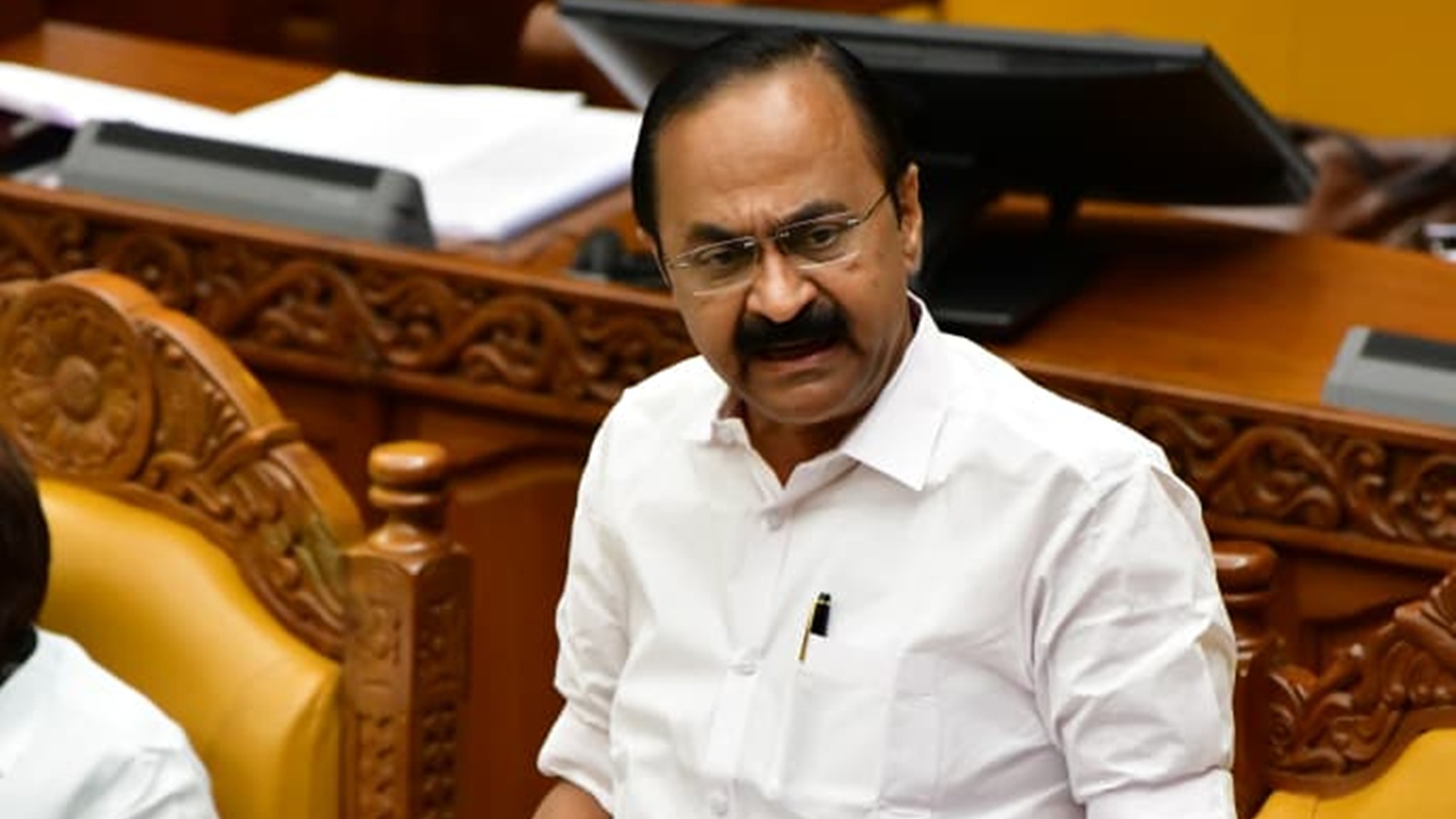
Positioning Kerala as a maritime and aviation logistics hub, setting up a Knowledge Valley to stem student migration, promoting a “silver economy” to harness the expertise of senior citizens, and bringing a comprehensive land management policy to attract investment are among the key initiatives announced in the revised Budget for the current fiscal year, presented by Chief Minister V D Satheesan on Friday.
One of the major Budget announcements that Satheesan, who also holds the Finance portfolio, made is the proposed restructuring of the Kerala Infrastructure Investment Fund Board (KIIFB), which the previous Left government had turned into a vehicle for off-budget borrowing and infrastructure financing.
“The debt repayment obligation of KIIFB is Rs 20,000 crore. KIIFB relies on off-budget borrowings at interest rates significantly higher than those incurred on standard sovereign state borrowings. This has inexorably pushed the state’s borrowings and debt burden beyond permissible limits, triggering grave macroeconomic imbalances. Taking cognisance of these challenges, we will constitute an expert committee to initiate comprehensive structural reforms and overhaul of KIIFB’s current operational framework,” he announced.
Maritime and aviation hub
Satheesan also announced the Rs 400-crore Mission Samudra, which is aimed at positioning Kerala as a global maritime hub by leveraging ports such as Vizhinjam and 17 others along Kerala’s coastline.
With an allocation of Rs 200 crore, the government also aims to tap the potential of the state’s four international airports to position it as an aviation hub. Various infrastructure development projects are being formulated to position Kerala as South India’s premier aviation logistics hub. The aircraft maintenance, repair, and overhaul (MRO) sector will be strengthened, and simulator-based pilot training centres and aviation maintenance engineering training and skill development facilities aligned with DGCA standards will be established, as per the announcement.
Placing importance on airport-centric economic zones, the flagship Aeropark and Aerocity projects will be implemented, integrating IT and IT-enabled services (IT/ITES), global capability centres (GCCs), hospitality, and aviation-allied trade and service sectors, the CM said. A comprehensive aviation policy will be promulgated in this regard.
Minerals corridor
To tap the critical mineral resources and rare earth deposits along the coast of Kerala, the Budget also proposed a Southern Kerala Economic Corridor & Rare Earth and Critical Minerals Corridor. This is expected to boost the space and technology institutions in the region.
Story continues below this ad
Silver economy
Highlighting Kerala’s ageing population, the government proposed developing a “silver economy” through world-class facilities for senior citizens, entrepreneurship programmes, institutional support and measures to utilise their expertise and experience.
Karuthal Mission
To support poor families facing rising healthcare and education expenses, the government announced the One Kerala Karuthal Mission, a technology-driven platform to provide direct assistance to eligible beneficiaries.
The mission aims to channel donations from NGOs, CSR funds, institutions and individuals directly to beneficiaries through a transparent mechanism.
Job watch
The government will establish a Global Job Watch Tower, a state-level future skills and employment intelligence mission aimed at aligning education and skill-development programmes with emerging global employment trends.
Story continues below this ad
Space economy
The Budget also proposed measures to strengthen Kerala’s participation in the growing space economy through specialised research institutions focusing on satellite technology and initiatives to encourage students to pursue careers in the sector.
Knowledge Valley
To curb the outflow of students seeking higher education outside the state, the government announced the establishment of Kerala Knowledge Valley, envisioned as a world-class higher education hub.
The project will bring together advanced academic programmes, research parks and centres of excellence and seek to attract leading Indian and international universities through a dedicated legislative framework.
Cooperative societies
The cooperative sector will be made a partner in renewable energy projects undertaken by the Power Department. A scheme titled “100% Energy Self-Sufficient Cooperative Societies” will be launched to encourage cooperatives to participate in renewable energy generation.
Story continues below this ad
EVs
The Budget offered incentives for electric vehicles. Road tax on EVs priced up to Rs 10 lakh has been reduced from 5% to 3%, while tax on EVs priced between Rs 15 lakh and Rs 20 lakh has been cut from 8% to 5%.
However, road tax on EVs costing more than Rs 40 lakh has been increased from 10% to 15%. Other tax rates remain unchanged.
Land policy
Another significant announcement was a comprehensive land management policy and a review of existing land laws.
The government said the scarcity of land, difficulties in land mobilisation and legal uncertainties continue to hinder industrial growth. It plans to identify and utilise large tracts of unused land held by government departments and public sector undertakings, while reviewing and amending outdated land laws to facilitate investment and infrastructure development.
View original source — Indian Express ↗
Related stories

CBC
NewsJun 7, 2026 · 1 min
Alberta students say changes to provincial loan program create 'financial barrier'
CBC

AllAfrica
NewsJun 4, 2026 · 1 min
Kenya: No Early Midterm Break Despite School Unrest, PS Bitok Says
AllAfrica

AllAfrica
TechnologyJun 5, 2026 · 1 min
Kenya: Rising Illness Burden Among Elderly and Children Deepens Kenya's Health Financing Gap
AllAfrica

Lovin Malta
PoliticsJun 17, 2026 · 1 min
EU Approves Tougher Rules To Deport Migrants Staying Illegally
Lovin Malta