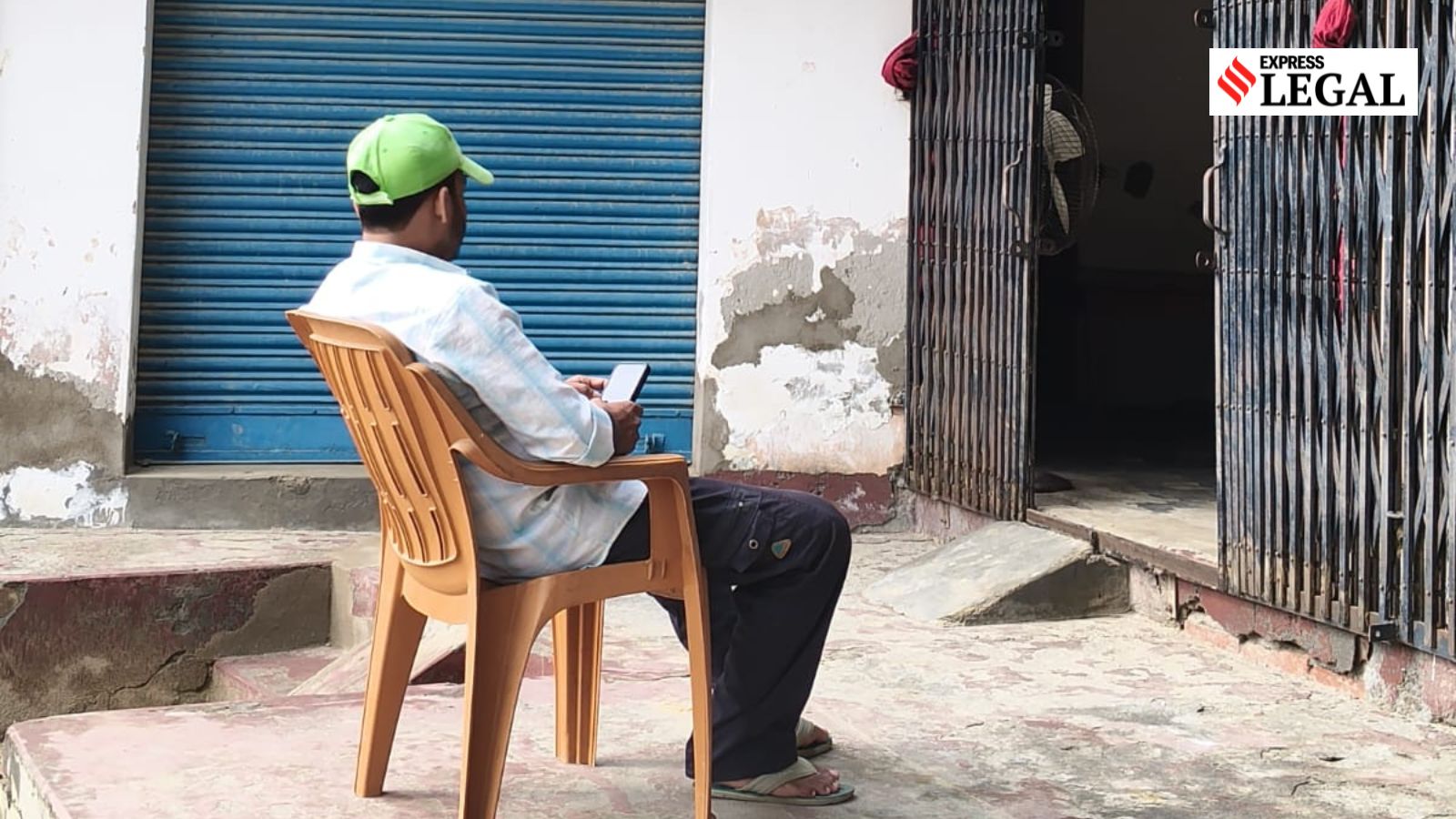
Indian Express
Indian Express··13 min read
How a childhood offence left this Gorakhpur man in passport limbo for 15 years
For a young resident of Gorakhpur in Uttar Pradesh, a passport meant an opportunity to work abroad and improve his family’s financial circumstances, but instead, the application pulled him back into a juvenile case that had been settled over a decade ago.
The 32-year-old, who had completed his probation under the juvenile justice framework years ago and had secured a ‘good conduct’ certificate, soon found himself repeatedly being denied a passport.
Following years of litigation, the Allahabad High Court ruled in his favour on May 7 this year, even as it heavily criticised passport officials for their “completely non-serious attitude” and described their actions as a “monument to non-application of mind”.
It has already been over 15 years since the incident that brought him into conflict with the law, and over a decade since he completed his probation under the Juvenile Justice Board (JJB).
“I had full confidence in the court,” the man recalls. “I knew that if no one helped me, the court would definitely stand by me. It was the one place that could restore my respect and honour.”
Built on the principles of reform and reintegration, the Juvenile Justice Act grants children in conflict with the law the right to a fresh start, free from the stigma of their past. On paper, he had that right. In practice, he found the doors still closed.
Ghost of the past
“It has been more than 10 years, and I am still trying to catch up with life,” he says quietly.
Story continues below this ad
In 2010, at age 15, the Juvenile Justice Board placed him on probation for six months, subject to furnishing surety and bonds and maintaining good conduct, after he was allegedly found to have run away with a girl of his age.
Four years later, in 2014, he received a certificate affirming that he had successfully completed the probation period and had maintained good conduct throughout. Under the law, completion of the probation entitled him to certain statutory protections.
From here, the law says, in the words of the Allahabad High Court, no stigma is to be attached to juvenile convicts, and the “principle of fresh start” read with the “right to be forgotten” is the essence of the matter which emerges from a plain reading of Section 19 of the Juvenile Justice (Care and Protection of Children) Act, 2000.
For this young man, however, the promise of a fresh start remained largely on paper. Child-rights advocates say former juveniles often continue to face stigma despite legal protections intended to facilitate their reintegration into society.
Story continues below this ad
“I don’t have any siblings,” he says. “I have to look after my parents, my wife and my kid. All the responsibilities are on me. Things are not very good here. Money is a big problem. I thought I should do something better. I wanted to go abroad, but it didn’t happen. Because of that, I suffered a lot.”
Over a decade after the law gave him a second chance, he is still waiting for society to extend the same.
Another 7-8 years in legal battle
Away from the constitutional principles of the right to be forgotten and a right to a fresh start for a juvenile, he experienced firsthand how those rights are often denied in practice.
“I have applied before also for a passport, but only this time I got through it. It was in February 2017 or 2018, I do not remember clearly, but it didn’t happen at the time. Then, I applied again. The second time, too, my application was rejected by the Lucknow passport office. After that, I had no options left other than going to court. The last time I went to the passport office, I had made up my mind that if it did not happen this time, I would go to court,” he recounts.
Story continues below this ad
According to the passport authorities’ rejection letter dated March 19, 2021, accessed by The Indian Express, his application was declined, stating that they had received an adverse police investigation report against him.
He says he was finally able to secure an appointment after submitting another application following the court order on May 7. “Hopefully, this time I will get my passport.”
“This process has already wasted so much time, and because of that, I have suffered a lot,” he says, remembering the days when he had to shuttle between court hearings and the passport office, making endless rounds.
“I had no money, no support. The only thing I want is to go to some other country, earn some money, and support my family. I thought I should do something. I thought I should go abroad. But it didn’t happen.”
Story continues below this ad
‘Tum aropi ho’
He is not sure where exactly he wants to go, but he knows that it must be a country where he can earn well. “I had a money problem in my family. That is why I left school, and then I got into a juvenile case, which cost me many things. I will never get back that time again.”
He recalls days when on every visit he had to explain to passport officials that his was not a criminal case, but a juvenile justice case. “But they didn’t believe me, and every time they would say, ‘No, we can’t do this. Tum aropi ho (You are an accused). Your case is pending. Bring a court order, then we will proceed.”
“After multiple rounds of the passport office, I decided that I will return with a court order. Only I know how I managed to travel to the passport office in Lucknow multiple times despite financial constraints. It was a very difficult time. What do they know? The officers there sitting in their armchair, they don’t care about the common man, and because of them, the public has to go through the trouble,” he says.
“I showed them all my documents, including my character certificate from 2014, which I got after the completion of my probation. But they did not believe it either. My lawyer also called the passport officials, but they still did not agree.”
Story continues below this ad
After multiple failed attempts, he reached out to advocate Shailendra Singh, a friend of one of his relatives, and was told, “We will file a petition”.
‘Even politicians have pending criminal cases’
Laying out the timeline of the case, Singh says his client has suffered for years. “He was just a 15-year-old boy. He eloped with a girl, and for that, he is being treated as if he had committed a grave crime. It was never really a criminal case. They were in love and left together. Later, the girl’s family filed a complaint. After all, they were just children. It happened back in 2010, and eventually, the matter was settled through a compromise.”
According to the JJB document, seen by The Indian Express, the matter was settled between the parties in July 2013.
The lawyer says that just because he was declared a juvenile did not mean he had no right to a passport. “By the definition of police, multiple criminal cases are pending against politicians in our country. Then why do they have a passport? How are they travelling abroad?”
Story continues below this ad
Singh points out that a leading political leader in Bihar was himself once a juvenile offender in a case.
The advocate says that after the rejection of a previous application, they reapplied for a passport on January 29, 2020, and since no decision was taken on that application, they filed a petition before the Allahabad High Court. “We got an order. Again, he applied but heard nothing back. It was then that we filed a contempt case, and during this contempt proceeding, they rejected his application again.”
“We moved the high court and challenged this refusal,” says Singh, while underlining his client’s poor financial background. “He just wants to go outside and earn a little money. What’s wrong with it? He works as a labourer. He is not a terrorist.”
Living with a record
Recalling the initial days when people began to view him differently, the Gorakhpur resident says, “It is very common here that if you get into any police case, people start to see it in a different way. Villagers stopped talking to my family. I have changed over the years, but they are not ready to change their mindset.”
Story continues below this ad
“Now, I work in Ahmedabad as a factory worker. People there know me as the person I am, not through the lens of my past. I wanted to step out of that shadow, which is why I went to another state for work,” he adds.
With a firm voice, he says, “I knew that if no one helped me, the court would definitely be on my side. I knew that it was the place that would bring back my respect and honour.”
‘Reformation meaningless if you don’t remove stigma’
Anant Kumar Asthana, a lawyer who specialises in child rights, says that since the year 2000, the Juvenile Justice Act has protected children from facing such disqualification. The law changed a little bit in 2015, but broadly, it says that children who end up in conflict with the law should not face lifelong consequences or disqualification, he explains.
“If you don’t take away stigma, then reformation becomes meaningless. Suppose I do something today, but I reform tomorrow, and still, if the stigma continues, there is no point. I can’t avail any benefit from that reformation. That’s why this provision is called the soul of the Juvenile Justice Act,” says Asthana.
Relevant provisions
The expert refers to Section 74, Subsection 2 of the Juvenile Justice Act 2015, which deals with the prohibition on disclosure of the identity of children, and says that the police shall not disclose the record of any child for the purpose of a character certificate or otherwise in pending or disposed of cases.
Asthana highlights an amendment that changed its language to make it more inclusive. “One interesting thing about this law is that before 2021, the word ‘pending’ was not included in the language. The language was, ‘Police shall not disclose a record of the child for the purpose of a character certificate or otherwise in disposed-of cases.’ The police used to read it that it is prohibited to disclose such a child’s records in a case that was disposed of, not in a pending case. It is weird.”
Another provision, Section 24 of the Act, states that a child who has been dealt with under the provisions of this Act shall not face removal or disqualification in any manner that would ordinarily be attached to conviction of an offence under any other law.
Besides, Rule 14 of the Juvenile Justice Model Rules, 2016, provides that a child’s record should be destroyed after the expiry of the appeal period or seven years. Records are required to be maintained during the appeal period, as a party may challenge the order, and generally the appeal window is around one or two months.
However, he points out that while the law mandates the destruction of such records after seven years, there is no clear mechanism or procedure for implementing it. Unlike criminal courts, where destruction of records is governed by High Court rules, a similar framework is missing in the juvenile justice system.
While the JJB and children’s court are required by law to destroy records after seven years, the law does not prescribe any procedure or mechanism for doing so, he says. As a result, records continue to remain stored in the JJB for years without being formally disposed of. The lawyer points out that there is no proactive destruction of these records by the authorities, leaving them vulnerable to damage or decay over time.
He makes it clear that this is the general law – that no child will suffer disqualification.
‘When police violate law, children have to litigate’
Asthana says the reality, however, is that the relief under this law does not reach children automatically. “Children have to litigate.”
In the Gorakhpur man’s case, he points out, the Juvenile Justice Act of 2000 was in place, but he still had to move the high court thrice – a stark example that shows why ordinary people may not be able to fight this kind of battle.
“The question is, why should it be like that? And the reason is more surprising. First, in practice, there is no mechanism to ensure that the disqualification doesn’t happen. So, there is a law that creates a right that you will not suffer disqualification. But simply having a right is not a guarantee that the right will be available.”
“Second, no violation will happen if the police do not disclose. Every disqualification has a violation of the Act by the police itself,” he says.
He highlights that the police violate the Act because the record of the crime is always available at the police station only. The Act, however, says that you have to destroy the record, Asthana points out. In fact, now many Juvenile Justice Boards, when they close a case, have started the practice of writing this in the order – directing the police to destroy the record. The problem is that there is no mechanism prescribed anywhere for the destruction of children’s records.
Gap between law and its implementation
Asthana goes on to explain that rights may exist on paper, but the process required to deliver and realise those rights is missing. “In the case of children, this gap is even more profound.”
According to him, adults receive at least some benefit from the mainstream justice system, which ensures a certain degree of attention and accountability. “The system meant for children is highly marginalised, and therefore very little reform reaches it.”
Drawing a comparison between prisons and children’s institutions, he notes that many observation homes are in a worse condition than jails. “Prisons receive regular visits from officials, civil society groups, and volunteers. Various camps, yoga sessions, and welfare activities are organised there. People take an interest in what happens inside prisons. But who visits children’s homes? Almost nobody.”
An artwork created by a minor who resides at a childcare institution in Uttar Pradesh. Credit: hclko.allahabadhighcourt.in
Such facilities are often overcrowded, and children are neglected there, Asthana alleges. “Kids are packed into these homes like cattle, with little oversight or concern for their welfare.”
‘The issue is resources’
A serving JJB member, speaking on condition of anonymity, acknowledges the lack of implementation of existing provisions and says the issue is that of resources. He says that for implementing rights and re-establishing protective rights, the government has to allocate resources, but there is always a shortage of resources.
The member highlights that the Juvenile Justice Act contains explicit provisions regarding privacy, confidentiality, and the right to a fresh start. Section 3(12) ensures that records of children in conflict with the law remain confidential, while Section 3(14) provides the right to a fresh start by requiring the erasure of records.
Stating that in Delhi, the government has started digitising records and has also started destroying hard copies of such documents, he adds that the process, however, is not happening quickly. “The Juvenile Justice Committee of the Delhi High Court has already instructed the Department of Women and Child Development to start weeding out old files. The process had started, but as per my information, it has now stopped,” he says.
Noting that there is a rule and a provision in the Act, but the issue is implementation, he asks that if Delhi itself is not implementing it at full speed, how can we expect other states to do so?
He also admits that children’s rights are often neglected, and despite activists and government representatives speaking about it at conferences and events, there is a gap between what is promised and what happens on the ground.
‘JJB has power to issue directions to erase records’
The JJB has the power to issue directions to remove such records, he explains, adding, “The board usually issues directions to the Station House Officer (SHO) and police officials to remove the records.”
He says that while serving with a particular board, he used to follow a certain practice. “In every disposal order, we issued notice to the SHO and the Special Juvenile Police Unit to remove the records and file a compliance report. We used to call for compliance in every case. After my transfer, that practice stopped. So it largely depends on the discretion of the person handling the matter and whether they follow up.”
There are also systemic and institutional delays, he says, citing the situation in Delhi, where the government’s special notification for weeding out records is not being implemented properly.
View original source — Indian Express ↗
Related stories
VnExpress
NewsJun 19, 2026 · 1 min
Vietnamese-American jailed for 11 years for attempting to traffic 3 children to US
VnExpress

Straits Times
NewsJun 19, 2026 · 1 min
Russia jails Romanian man for 15 years after convicting him of spying for Ukraine
Straits Times

South China Morning Post
NewsJun 10, 2026 · 1 min
Teacher gets good behaviour bond after slapping 13-year-old son in Hong Kong
South China Morning Post

The Guardian
PoliticsJun 5, 2026 · 1 min
Inside one man’s botched deportation: seven flights, two swallowed batteries and a staggering bill for the UK taxpayer
The Guardian