Dawn
Dawn··23 min read
The leopard princess of Islamabad
It’s the big cats that need saving, not us.
In 2018, a wildlife patrol found a skull and claw at the top of Trail 6 in the Margallah Hills, just behind Faisal Mosque in Islamabad.
The rest of the animal’s body had either decomposed or been scavenged, but some of the skin on the claw remained intact. On closer inspection, it was found to have the rosette patterns of a leopard.
Analysis confirmed that the animal had been a fully grown adult and had died a natural death. Its skull was sent to the Pakistan Museum of Natural History, where it has been kept in a lab and away from public display ever since.
What was a shy, secretive and highly territorial leopard doing out here in its old age? No one could say for sure. Nevertheless, the discovery completely changed what we know about big cats in the capital.
British gazetteers say leopards were found in Swat, Dir and Murree and even the Kala Chitta range to Islamabad’s west, but they make no mention of sightings in the Margallahs. At most there are mentions of jackal, deer, monkey and boar (tigers became extinct decades ago).
It was only the Margallah locals who insisted there were ‘cheetay’ in the thick forests (the right word is guldaar tendwa). But in the absence of concrete evidence, myth more than fact prevailed.
It was more to the east of the Margallahs, up in the higher-altitude Murree Hills, especially near Ayubia, that people reported seeing them. As the Murree hills are higher up, they regularly get snow, so one theory was that the leopards would descend to the warmer Islamabad mountains as a winter retreat and go back to Murree when it was warmer. They sometimes came near human settlements, but never in the daytime.
But in 2005, staff in Islamabad’s Marghazar Zoo at the base of the hills were alerted to a massive disturbance on the grounds. They located the noise to a deer enclosure where a leopard was on a rampage. As the zoo had no leopards of its own, this one was a visitor. The cat was eventually subdued and captured, and lived out the rest of its life as one of the attractions until it died a natural death.
Its attack on the deers did, however, challenge perceptions because it took place in an unusual season and in broad daylight, when leopards were not usually known to hunt.
Over the next decade, hikers at the trails continued to report sightings and hearings. Capital Development Authority guards posted to villages such as Gokina and Kalinjar would tell hikers that they had heard roaring in the night. People from the adjoining villages also regularly claimed that their livestock had disappeared overnight (there are 20 villages inside the Margallah Hills National Park with a population of around 200,000).
As smartphones and online video sharing became common in the 2010s, some videos of leopards started making their way to cyberspace. On more than one hike during these years, when I was a teenager, I would inevitably hear someone in the group bring up the rumours that there was a predator in the hills whenever we heard a rustling.
The locals, of course, dealt with more than just rumours. In 2014, Zaheer Ahmed and a friend were shepherding his family’s goats in the hills of Shah Allah Ditta. The two men walked apart, talking loudly to each other. At one point, as they stood on two elevations with the goats in between, his friend screamed.
Zaheer looked down to see a shape moving between the trees towards the goats. He started banging his axe against a tree and screaming at the herd. As the goats skittered and bleated, the massive cat, unmistakable for its luminous eyes, stopped before slinking away.
Around the same time, Muhammad Nawaz, who lived in Talhar, saw a leopard make off with a calf on the village outskirts. Nawaz and friends watched in disbelief as the calf’s owner charged at the leopard with a stick and rescued his animal.
For Zaheer and Nawaz, this was only the beginning of their dealings with leopards.
After duty hours
The care of animals in the Margallah Hills National Park turned a page when a new organisation called Islamabad Wildlife Management Board was set up in 2015. Before this, the forest department managed the vegetation while the CDA, oddly enough, handled the wildlife and zoo. In two years, the board managed to recruit experts and wildlife guards to patrol the forest.
Among the first batch of new staff was Sakhawat Ali. As a child, he had never been allowed to keep a pet. His parents were not even partial to pigeons, which they saw as something only ruffians kept. He studied Zoology, Biology and Chemistry and was pleasantly surprised to find that his university was offering a Master’s degree in Wildlife Management. This time he got his way. His parents learnt that his thesis was an ornithological study of the birds on campus.
Sakhawat taught for a while after graduating, but his real break came in 2017 when the Islamabad Wildlife Management Board employed him as an Education Officer. By 2022, he was promoted to Director of Wildlife. This makes him one of the few people who lived through the entire leopard discovery saga.
He will tell the story with the slow body language of a teacher who peers at you over his rimless glasses if you interrupt. He will consult his records before making a definitive statement even though he doesn’t need to. When I asked if I could visit the leopard preservation zone, he drew me a guide map from memory on a pink post-it note.
Between 2017 and 2018, the wildlife guards, many of whom are from the villages, were itching to go out and find evidence of leopards after hearing reports from locals and tourists. However, the department did not have enough resources to sanction official leopard-finding missions when it had its hands full with people harming monkeys all day long.
So the guards decided they would do it on their own. Their morale went up when Sakhawat, then manager of operations, said he would help. For several months, he and the guards would wrap up their shifts and then go in groups to look for signs of leopards. The men were roughly scientific in their approach. They would figure out what areas the sightings had been reported from most frequently, and then work their way on foot one forest patch at a time to search for pugmarks (paw prints) and scats (droppings).
The first one to catch a sign of an active leopard in the area was Zaheer, the shepherd from 2014 who was now a wildlife guard. He saw scats containing fur and bones which he scooped up for analysis. The lab confirmed they belonged to a leopard and were recent.
Zaheer’s experience as a shepherd from Shah Allah Ditta, a village at the northwestern end of Islamabad, made him a natural tracker. He is lean and dark, and murmurs when he speaks. When I met him, I couldn’t help but notice that his eyes are the same shade of green as a leopard’s.
Zaheer is currently a caretaker at the Wildlife Rescue Centre in Islamabad, but he spent the bulk of his early career posted at Trail 6. He says he has heard the roar of a leopard multiple times, and one time they were so loud that hikers came running down back to the trail’s entrance. After pacifying the fleeing hikers by telling them that leopards don’t come near humans unless provoked, he went to investigate himself. That is when he found the scats.
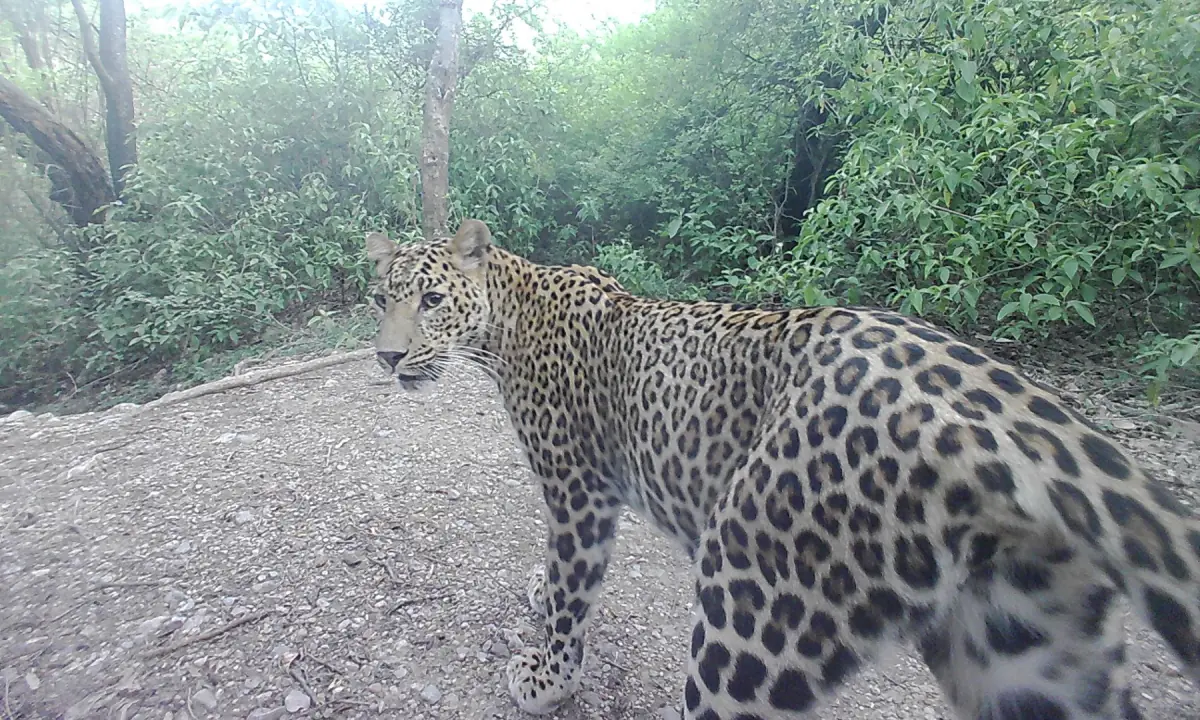
Over the next two years, from 2018 to 2020, the small signs continued to become more frequent. A pugmark here, some scats there. The skull found on Trail 6 in 2018 gave the search new momentum. And then in 2019, a leopard was seen on a camera trap for the first time.
For the guards on duty, it was satisfying to find evidence that made their claims believable. But every patrol duty also grew full of apprehensions because signs were growing more regular. For one guard, the fears turned into reality one day in 2020.
Muhammad Nawaz, the same one who had seen a calf being carried away in 2014, had an encounter that is still considered the closest by a staff member while on duty.
Nawaz was born in Talhar, one of the largest villages inside the national park. His father, who worked as a guard with the CDA, had told him about hearing the roar of the big cat. As a child, Nawaz was obsessed with cooking meat, so when he grew up, he trained as a barbecue chef. For seven years, he had the time of his life training and cooking at restaurants including the erstwhile Monal.
But after persistent sickness, a doctor told him that standing in front of the coals all day wasn’t doing his health any favours. Nawaz quit and decided to put his mountain genes to use by joining the wildlife guard.
On that winter morning in 2020, Nawaz was patrolling Trail 4 near Pir Sohawa. He made his way slowly through the foliage, looking both ways, when he froze.
A leopard was crouching next to a large stone with its back to him, barely ten feet away. It was the dead of winter, but Nawaz sweated through his uniform. In the seconds of wondering whether he should run or hide, Nawaz found the leopard turning its head to lock its luminous green eyes on him. But then the leopard let out an annoyed moan and took off. Nawaz ran to see it pouncing on a monkey below. He later found that the leopard had been crouching on a hole in the rock with a porcupine inside.
A princess in her kingdom
Volunteers and animal organisations collaborated with the board to install camera traps in the forest after the first photo in 2019. In one instance, the Duke and Duchess of Cambridge went along with students to see one being installed. More photos were captured in 2020, and with that came more optimism.
Rina Saeed Khan was appointed to head the IWMB as chairperson towards the end of 2020. A former journalist, Rina brought a preference for active communications to the board. Every rescue and every operation was released to the public, slowly increasing visibility of their work. For the guards, this became a wholly different experience compared to dealing with a bureaucrat, because she listened to reports of leopard sightings with interest and encouraged searches.
A few weeks after assuming office, Rina went with some guards to take a look at Trail 6, which seemed to be a hotspot for leopard sightings. She remembers walking slowly and being left behind by the guards (who are all expert mountaineers) when she heard a low roar. She scampered ahead to find the guards, who said they had not heard anything. But Rina wasn’t convinced. The next day the guards called her in excitement to tell her she had been right.
A camera trap had been fitted near the spot where she had heard the roar. When she came to the office, the guards played the camera’s feed for her, showing that a fully grown female leopard had casually strolled around in front of the lens, almost striking a pose. Rina named her ‘Shehzadi’ on the spot.
“She just seemed so royal, so graceful,” Rina told me. “She walked like she owned the ground, so I called her Shehzadi.”
More camera traps were set up. It turned out that a ‘Shehzada’ was also sauntering around in the same parts.
A few weeks later, the camera traps found a male sub-adult, leaner and more handsome than Shehzada, moving in the space adjacent to the couple. He moved quicker than them both as well.
The guards showed Rina the video. “This one is Sultan,” she declared.
So there it was: three leopards waltzing around in the forest just behind Faisal Mosque, the capital’s iconic landmark. A hostel was located close by, and the mosque was frequented by hundreds, if not thousands, daily. Yet no contact between the leopards and the people had ever been reported.
The Board now had enough evidence to call for a deeper study. The pandemic meant that the hiking trails had been closed for the public, so it was the perfect time to see how the animals behaved without human interference. They worked with Dr Muhammad Kabir, a researcher from the University of Haripur, to design a study that would analyse the entire national park to conclusively find if leopards lived there or not. But to complete the study, they needed help from a teenager.
The photographer
Mohibullah Naveed is a Gen Z boy who grew up in Islamabad. In his early years in school, he often found that he wasn’t doing as well as his peers in conventional subjects such as Math, so eventually his parents located his troubles to dyslexia. However, he had energy and displayed an aptitude for practical learning in ways that others did not.
His parents had taken him on hikes throughout his life, so Margallah’s hiking trails became one of his favourite spots for photography. By 15, he was so good at it that his parents bought him his first DSLR.
The first ever photograph of a leopard in the hills in 2019 was Mohibullah’s work. He had heard about cheetay from locals for years, but it was a reported sighting by guards at a farmhouse in Shah Allah Ditta in 2019 that finally encouraged him to try to photograph the big cat.
He bought three camera traps from Canada on his own dime and set them up near the area. There was nothing in the first batch of photographs, and he was about to delete them when he saw the upper back and hind leg of a leopard in a corner of a shot. He had set the camera too high by mistake and nearly missed the leopard altogether.
So when the Board decided to launch a study in 2021, they brought 19-year-old Mohibullah on as a lead team member. A total of 20 cameras were procured with his and the WWF’s help and strategically placed throughout the park. The findings finally put an end to the theories and rumours.
The study
The Margallah Hills National Park covers over 15,000 hectares, so the study divided it into 15 blocks based on natural watersheds. Twenty cameras were placed at a 1 km distance from each other. The cameras stayed active throughout the period, and recordings were triggered by motion.
The camera traps were kept on for fifteen continuous days, with staff visiting every day to check if they were working properly or their memory cards needed to be replenished. Slowly but surely, the photos and videos started trickling in.
During the study, encounters between the cats and the staff were closer than what the guards had thought. Once in 2021, the guards fixed a camera trap at exactly 5:47pm on a tree at Trail 6. They loitered around for a few minutes before making their way home. When they retrieved the data the next day, they found that a leopard had come to inspect the camera at exactly 5:57pm, mere minutes after they left.
When the data was compiled, a leopard was seen on eight of the 20 cameras, although analysis indicated that there were seven individual leopards in the park. They were distinguished by their unique rosette patterns, just like human fingerprints, and were carefully recorded using a special software called Hotspotter.
In addition to clearly identifying multiple individual leopards, the study caught several sights that had never been captured before. One leopard revisiting a boar carcass that it had hunted a day ago; another making a mating call.
But most importantly, they saw a leopard marking its territory near a tree. This was significant as it meant that the leopards were not visitors and the Margallah Hills were not a winter retreat. The capital was home to an active leopard population.
A home of their own
Meanwhile, there had been more changes in Islamabad’s wildlife management. The zoo was closed in 2020 after multiple controversies and court cases over animal welfare. The nail in the coffin was Kaavan, dubbed the world’s loneliest elephant. Since then, the zoo has been turned into a rescue centre, handled by the Board.
Nature is slowly reclaiming the former zoo. It seems as if the humans just packed up and left one day without properly decommissioning it. A battered food kiosk, glass counter intact, is almost overrun by grass. A ticket counter that has been turned into a security booth still says ‘Adults Rs20’ and ‘Children Rs10’ even though no tickets have been bought and sold here for at least six years.
The Board had decided to turn the study into a long-term exercise which would continue till 2024, but with clear evidence that the leopards were living here, it was time for more concrete steps to save them. In January 2022, Trail 6 was closed to the public and turned into the Leopard Preservation Zone. This was where the skull had been found four years ago, and Shehzada, Shehzadi and Sultan were photographed a year ago.
The Board organises guided tours for the zone for a small fee, which you can book on its website. The front of the zone is fenced off at two levels, and the outer gate is so nondescript that you would drive right by if you were new to the hiking trail.
The trail is slowly being reclaimed by the forest too. The path, which was big enough for two people, is no more than two feet wide in many places. The growth overhead is also dense and is expected to get greener in the monsoon. You will see fig trees, which attract honeybees. At one spot, their buzzing was so loud that I could not hear my guide, Waseem.
I visited three of the spots where leopards have been photographed, one of which is a mere 10-minute walk from the entrance. Perhaps I had been reading and thinking too much about leopards, but the snap of every twig sounded like one. I wondered how the guards stood their ground when they actually heard one roar.
Conflict with humans
The question of whether leopards can harm humans is an important one. Contact and conflict between humans and leopards have been well documented in other forests. According to a 2019 study, 21 attacks were recorded on people in Galiyat and Murree forests, and ten of them were lethal. In retaliation, people killed 40 leopards.
Margallah’s leopards are unique in this aspect: they have never come in contact with humans. There are no reports of attacks on people, lethal or non-lethal, ever taking place. The Board even conducted a survey of all villages adjoining the park, and no villager reported ever being harmed. The worst have been livestock attacks, some of which were verified and others exaggerated in a bid to secure compensation.
However, the opposite end of the equation paints a grim picture. Since the first skull found in 2018, there had been nothing but signs of increasing life in the forest till 2022. Then there were three leopard deaths in four months.
In December 2022, the Board received a report that a leopard had died after being run over by a truck on GT Road in Taxila, near the Nicholson monument from the British Raj. The spot marked the very end of the Margallah Hills to the west, which meant that leopards were spread in an area even wider than previously thought. Despite the entire incident being recorded on video, the guards could not recover the leopard’s body. This potentially meant that it was still a prized possession for poachers.
In the same month, the guards found a leopard dead in a ravine in Sinyari, a village just behind the PAF base in Islamabad. The body was fully intact, but the autopsy revealed a broken skull. The big cat is too good at hiking and climbing for it to have simply fallen, so one theory suggested that the leopard had gotten into a fight with a competing male and then fallen to its death. Still, the leopard was an adult between 10 and 15 years of age and weighed 85kg, one of the largest specimens ever seen in the park.
The most ominous finding came in March 2023 when a leopard was found near Shahdara, a tourist spot with a stream at the eastern end of the park.
The cause of death, for the first recorded time in the park, was a bullet wound. Whoever had killed the animal had also stuck porcupine quills in the body. If the aim was to lead people to believe that the leopard had been killed by a porcupine, it didn’t work because the food chain works the other way round, according to Director Sakhawat Ali. However, the worst part was that the leopard’s jaw and paws had been completely cut off and were missing.
Inside Islamabad, one of the most famous incidents involving leopards was the multiple sightings in Saidpur in 2022. Villagers informed IWMB that three or four leopards had entered the village and gone for a house containing livestock. Some said the reports were exaggerated, because leopards are solitary hunters.
One of the guards who responded to the emergency was Saqib Arif, a Saidpur native. His family has lived in the village since before partition and has been settled in the modern-day village since 1988. He is a stocky young man with weatherbeaten skin and a long black mane that he keeps in a ponytail.
He wanted to be a politician when he was young, spending several years with the PSF, but wasn’t able to contest local elections when a local Syed asked him to withdraw his papers. He initially joined the Board as a daily-wager, working as a gardener and driver before joining as a full-time guard in 2022. But his association with the place is much older. While the zoo was active, he managed food stalls and swings on contract. One of the guards who captured the first leopard in 2005 was his father-in-law.
After receiving the complaint, Saqib and company decided to camp out in Saidpur for the night. When I asked him about people saying that sightings of multiple leopards together were unlikely, he said there was enough evidence, including videos, that there were at least three leopards in Saidpur that night. Mothers often train their cubs to hunt until they are ready, and it was likely one such situation.
Video from a camera trap in 2021 had also shown one such instance. A mother and her two cubs had been seen stalking out a porcupine, in what officials believed to be a training session. As the mother kept an eye out, the two children rolled around playing with each other.
However, Saqib added that the reports of the leopards attacking a house or carrying away livestock had likely not happened in Saidpur, and many locals had attributed dog footprints to leopards as well. He added that the leopards had been sighted on top of a dandi, the local word for a boulder or rock which is not reachable by a path from below. The leopards, according to Saqib, were neither interested in coming down to the village, nor was there a way for humans to be in their way.
All in all, there is only one recorded instance of a leopard actually venturing inside a settled area in Islamabad and attacking people.
The DHA incident
In February 2023, security staff from the Defence Housing Authority in Islamabad called the IWMB to report that a leopard had made it to Phase II of the gated housing community. The leopard had reportedly bit a security guard as well.
Sakhawat Ali and Saqib were part of the team that responded to the complaint. They found that despite the panic, there was an army of TikTokers gathered in the area to record videos. After over five hours of intense back-and-forth, the leopard was finally subdued in a basement by a tranquilliser. At least two IWMB staffers, including Sakhawat, were injured. The site is over 30 kilometres from the Margallahs, so it was never concluded if the animal had really come from the national park or elsewhere. It was safely released a few days later in the hills, and the location was not publicly disclosed.
Videos posted on social media also showed a woman in plainclothes rushing to get out of the way as the leopard bounded out of one house and into another during the operation. A security guard can be seen firing his gun wildly at the leopard, while the woman waved at him and hid behind a car. A wildlife guard who was part of the rescue told me she was screaming, ‘Don’t shoot! Don’t shoot!” even as the massive leopard charged at her.
Some comments on social media questioned what ‘a woman’ was doing at the spot in the first place. Some even criticised the way she had run away with her back to the leopard. But she knew what she was doing. In fact, she knows more than most people about how to deal with a leopard.
The rescuer
The woman in the video is Sana Raja. She is an expert called in to assist in every major rescue by the centre.
Sana began by rescuing cats in her teens and taking them to vets for treatment. A 2017 article on her says that she had 70 cats in her house at one point. She enrolled in a two-year veterinary course at the Pir Mehr Ali Shah-Arid Agriculture University in Rawalpindi but says she eventually left because she couldn’t bear seeing some of the teaching experiments.
Sana rescues animals from all over Pakistan. When the Bengal tiger Baboo was sent from Islamabad to South Africa in 2024, she was the one who accompanied it. The day I met her, she had been called to the rescue centre because two bears had been fighting. Sana speaks in a loud, clear voice, and the guards generally defer to her opinions. She also likes to say that there is hardly any part of her body that has not been scratched by an animal. Right after introductions and pleasantries, she held a thumb up in front of me with a deep gash in it. “Jackal. A few days ago,” she said with a small laugh.
Sana took me to see Nilofer, one of two leopards currently living in the rescue centre, who was brought here from AJK. Nilofer, who is served a steady diet of beef five days a week and chicken two days a week, was perched on a wall inside her enclosure but did not respond to Sana’s calls to come down. “She’s locked her eyes on you because she hasn’t seen you before,” she told me. I looked up, and sure enough, the big round eyes were fixed on me.
“Maybe a friend can help,” Sana said. “Ruji, come here,” she called out to the open space next to the enclosure. A grey garden cat, who I hadn’t even noticed, jumped out of the grass to obediently walk up to her. But even Ruji’s meows weren’t enough to win me a close-up glimpse of Nilofer.
I did, however, get to see the other leopard: a cub named Soldier. He was a few months old when he was brought here from AJK last year from the house of a man who claimed to have bought him. His hind legs were weakened because he had been weaned off his mother ahead of time. Soldier is friendly with all the caretakers, but has a particular affinity for Nawaz, who let him out of his cage to let me see him.
When I asked Sana if poaching is a concern, she said it could not be ruled out. The gestation period for leopards is three months, and if they are mating every year in the mountains, there should be multiple baby cats by now, but not all are seen. Still, she thinks having the Board’s guards make a difference.
Who’s the predator?
The four-year study from 2021-2024 found 544 detections of leopards across 2,400 total sampling occasions. In addition to finding leopards, the study also proved that predators help maintain the entire ecosystem of the forest. Sakhawat believes that without leopards on the hunt, there would be too many boars, too many porcupines and too many dogs in the hills. Then the forest’s resources would not be enough to sustain them, and they would have to find food around settlements, especially garbage dumps.
But leopards have a predator too. Us.
Leopards are territorial, shy and good at hiding, and Islamabad’s leopards have an unblemished record of never harming a human. Sakhawat and Sana both said that it must be remembered that it is the humans who are encroaching on the leopards’ home. The problem, as they explained, is protecting leopards from people and not people from leopards.
Rina, who left the post of the Board’s chairperson in 2025, said that it is unbelievably unique for a capital city to have a thriving wildlife ecosystem right next to it. “It is very easy to coexist without coming into contact; it has been shown all over the world,” she added. But habitat destruction and human conflict could upset the balance, if not protected.
How can humans and leopards keep clear of each other? The answer is brief and simple: Just don’t venture into the forest except during the day, according to Sana Raja and Sakhawat Ali. The leopards like to hunt at sunrise and sunset and sometimes at night. Evening and full moon hikes ought to be discouraged.
While this story was being written, two leopards were being monitored because they were in areas that had no history of sightings before. The first is in the forest near International Islamic University and the other near the Defence Complex Islamabad. Still, they have not come near enough anyone to be sighted in daytime.
For the most part, if you’re in the forest during the safe hours of the day, you don’t have to worry about running into a leopard. As a wildlife guard put it to me, you are in their home, and they have probably seen you from far away, and if you haven’t met them, it is probably because they would rather not go through the hassle.
Related stories
OnlineKhabar
PoliticsJun 17, 2026 · 1 min
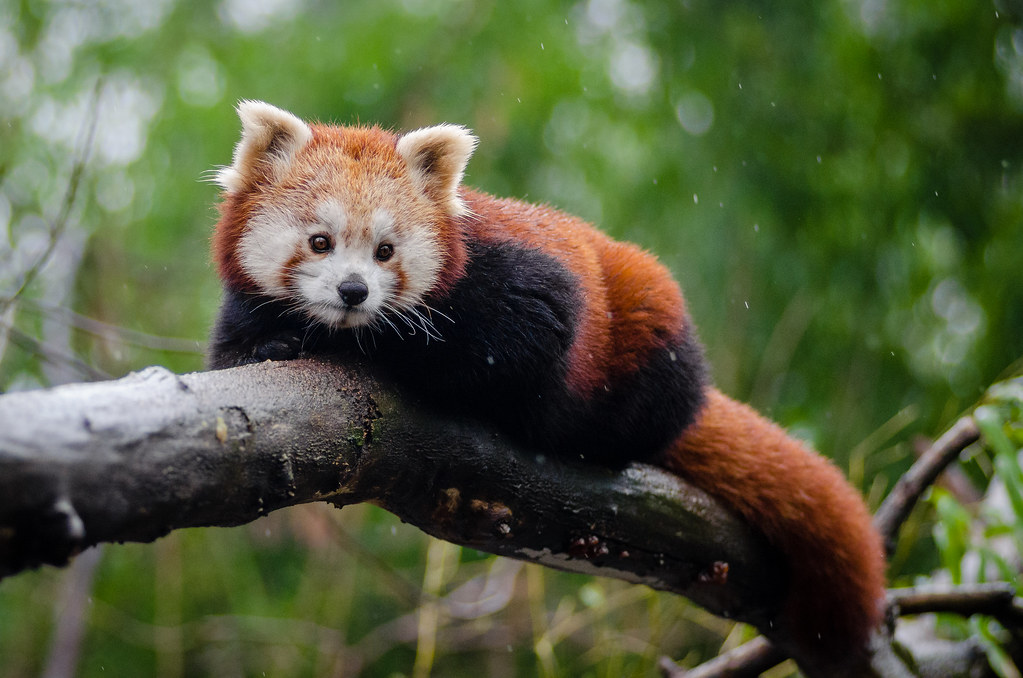
Red panda spotted in Kalikot: A red panda
OnlineKhabar
The Guardian
TechnologyJun 17, 2026 · 1 min
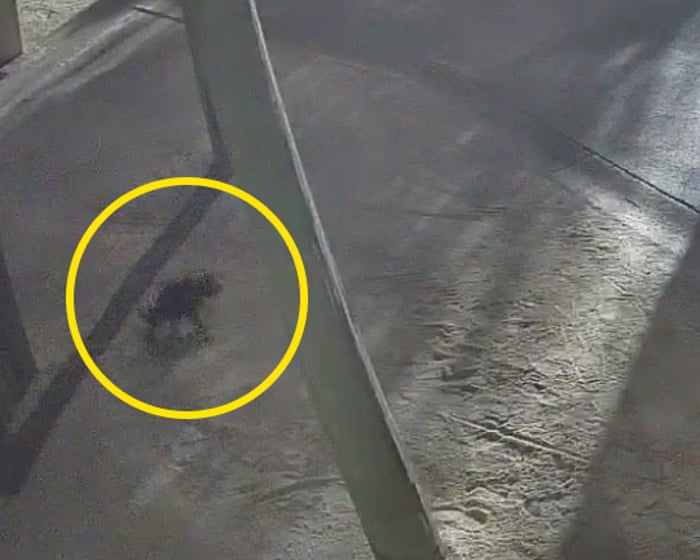
Tasmanian devil Mary found 2km from her Gold Coast theme park home after two weeks on the run
The Guardian

The New York Times
SportsJun 16, 2026 · 1 min
Merlin, the Duck in a Mexico World Cup Team Jersey, Finds Unexpected Fame
The New York Times
ABC News
NewsJun 17, 2026 · 1 min
Runaway Tasmanian devil Mary recaptured after two-week search
ABC News