
The Hindu
Bolivia’s President declares emergency over blockade crisis, paving way to deploy military
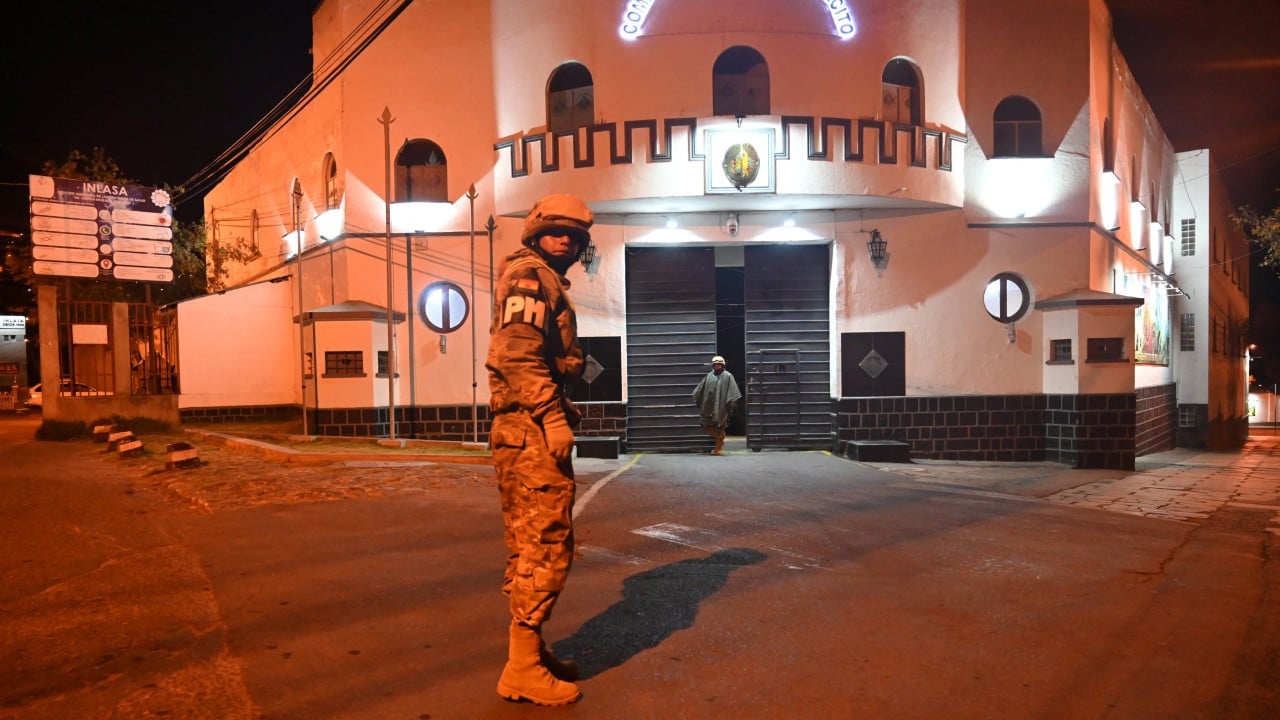
A soldier stands outside the Estado Mayor headquarters after Bolivian President Rodrigo Paz declared a nationwide state of emergency following weeks of violence and blockades in La Paz, Bolivia, on June 20, 2026.
| Photo Credit: Reuters
Bolivia’s crisis intensified on Saturday (June 20, 2026) as President Rodrigo Paz declared a state of emergency, enabling wider military deployment to clear blockades and restore order after protests brought the economy to a halt over the past 50 days.
The move came in a live message to the nation just hours after Mr. Paz unveiled a deal struck on Friday (June 19, 2026) with the main union, the Bolivian Workers’ Confederation (COB), that aimed to ease tension.
The conflict initially erupted after Mr. Paz abruptly cut long-standing fuel subsidies to shrink the deficit, amid a worsening dollar crunch and talks with the International Monetary Fund.
Bolivia’s President Rodrigo Paz speaks on the day he signs an agreement with the Bolivian Workers’ Confederation union after 50 days of anti-government protests, a step toward resolving a conflict that has paralysed the country, in La Paz, Bolivia, on June 19, 2026.
| Photo Credit:
Presidencia de Bolivia via Reuters
Despite later steps to stabilise fuel prices and reverse unpopular land reforms, protests intensified into broader discontent, with unions demanding wage increases, an end to fuel and dollar shortages, and Mr. Paz’s resignation.
Protesting groups, many allied to former leftist President Evo Morales, have cut off key roads, stranding trucks and choking supplies of food, fuel and medicines to many areas, including La Paz.
The emergency declaration gives Mr. Paz broader constitutional tools to restore order, such as sending armed forces to clear blockades.
Published - June 20, 2026 01:53 pm IST
View original source — The Hindu ↗
Related stories

France 24
BusinessJun 20, 2026 · 1 min
Bolivia declares state of emergency, escalating a 50-day blockade crisis
France 24

CBC
BusinessJun 20, 2026 · 1 min
Bolivia's president declares emergency over blockade crisis, paving way to deploy military
CBC
South China Morning Post
BusinessJun 20, 2026 · 1 min
Bolivia’s president declares state of emergency, paving way for troop deployment
South China Morning Post

SBS News
PoliticsJun 20, 2026 · 1 min
Bolivia declares state of emergency over blockade crisis
SBS News