Indian Express
Indian Express··6 min read
Why Karnataka cancelled 386 small hydro projects despite renewable energy push
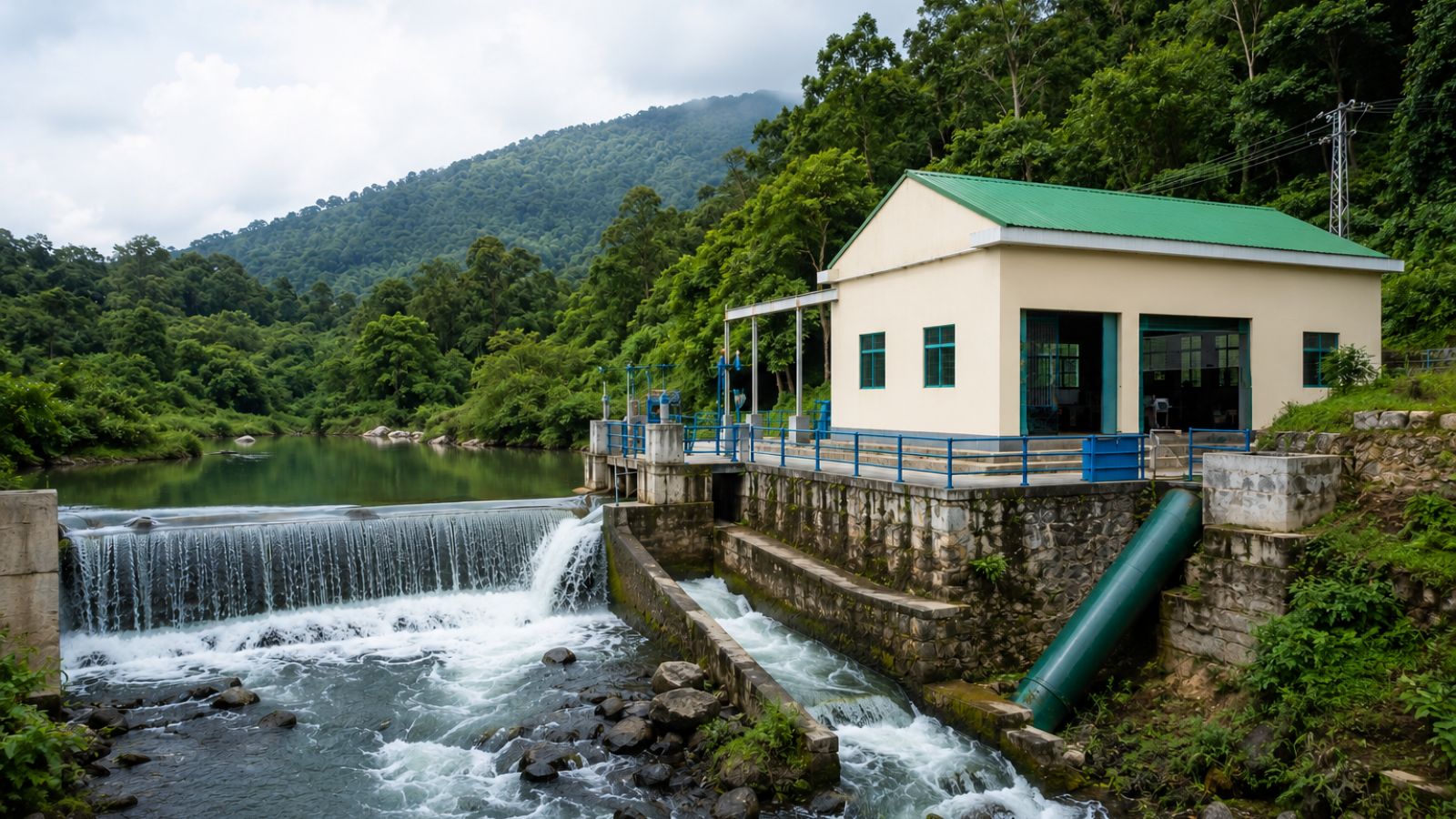
Despite being India’s top-ranked state for small hydro projects in the renewable energy sector, Karnataka has seen a huge number of such projects getting cancelled. Thanks to the failure of private firms to bring the projects, allotted over the years, to the commissioning stage.
According to data released up to May 31, 386 of 519 small hydro sector projects in Karnataka allotted (in the 1 to 25 MW sector) to generate 2,045 MW of power were never commissioned. The projects were mostly allotted in the 2009-10 and 2014-15 periods when small hydros were given incentives.
Karnataka’s weak record has come at a time when the Union Cabinet in March cleared a fresh Rs 2584.60 crore impetus for private participation in the small hydro sector to facilitate the installation of 1500 MW of alternative small hydro power, amid the West Asia-triggered fuel crisis.
Out of the 519 projects targeted to generate 3198 MW of power, only 108 projects have been commissioned for generating 943 MW, while the installed capacity is only 1284 MW from 133 projects, according to the Karnataka Renewable Energy Development Board (KREDL) data.
The highest number of 225 small hydro projects aimed at generating 1123 MW of power were allotted during 2022-23, but 220 of these projects were cancelled, and only five projects with an installed capacity of 42 MW have actually been launched, the KREDL data stated.
“The majority of the projects were cancelled because they did not obtain forest and panchayat clearances. These projects were allotted after a central financial assistance (CFA) of Rs 5 crore for small hydros was announced in 2014. Several private firms came forward but could not avail the aid since the projects needed to be commissioned to avail the financing,” said a senior KREDL officer.
Firms linked to Bengaluru bizman allotted highest generating capacity
Among the private firms that were allotted the highest generating capacity but did not act on the allotment are firms linked to a Bengaluru businessman and BJP worker, Vignesh Shishir, who is accused in multiple cases of fraud and is also behind attempts to get courts to order investigations of claims of dual citizenship of the Congress leader Rahul Gandhi.
Story continues below this ad
According to the KREDL data, 11 projects to generate 84 MW of power were allotted to nine firms, where the businessman and his family are the directors. But the projects were cancelled during the 2014-2018 period after the private firms did not obtain clearances to start the project, the data stated.
“These companies (Parpikala Power, Pushpagiri Power, Dakshina Kannada Power, GCI Power, Kodagu Power, Asia Pacific Industries, Kaltronics Automation, Davanagere Power associated with the businessman) never obtained any clearances. Their allotments were cancelled after they remained only on paper,” a senior KREDL officer said.
The firms Parpikala Power, Davangere Power, Monte Carlo Power, and Asia Pacific Industries are incidentally also at the centre of police investigations in Karnataka. They are alleged to be conduits for the laundering of funds misappropriated from private firms by the businessman’s family.
Majority of allotments cancelled during 2007-2008
KREDL cancelled the majority of the allotments during the 2007-2008 period when the JDS and the BJP were in power in Karnataka. Apart from the firms of Vignesh Shishir, another major defaulting firm was the Bhoruka Power Corporation, which had 11 projects of 75 MW cancelled, as per the data.
Story continues below this ad
“The allotments were cancelled after the firms failed to obtain clearances and start their projects despite multiple extensions of three years given to them,” a KREDL officer said.
A 2016 The Indian Express analysis of 298 small hydro projects allotted by the KREDL in the 2011-2016 period for production of 1,718 MW of power, showed that projects accounting for at least 880 MW went to a small cluster of 14 firms, operating with 64 different names and led by directors with overlapping interests and political connections.
Developers were earlier offered access to Central government subsidies to the tune of Rs 5 crore per project, along with Rs 10 lakh for the project preparation phase. They were also guaranteed power purchase at the rate of Rs 2.30/KW in Karnataka as well as a 30-year lease on project land, making small hydro projects a viable business option.
The new push for small hydro projects
Under the NDA government’s proposed small hydro power push to provide Rs 2584 crore as incentives to private firms to install around 1500 MW, there is a condition that private firms must have a power-purchase agreement with the respective state governments before projects can be considered, a KREDL officer said.
Story continues below this ad
“In the north-eastern states and in districts with international borders, a Central aid of Rs 3.6 crore per MW or 30 per cent of the project cost, whichever is lower, with an upper limit of Rs 30 crore per project, will be available,” the Centre said in March.
“In other states, Rs 2.4 crore per MW or 20 per cent of project cost, whichever is lower, with a cap of Rs 20 crore per project, would be available. This will help tap the small hydro potential in remote and difficult-to-reach locations,” a statement on the scheme said.
“An amount of Rs 2,532 crore has been earmarked for such projects. This is likely to bring in Rs 15,000 crore of investment in the small hydro sector, giving a boost to the clean energy initiative, investment in remote and rural areas, and creating significant employment opportunities. The investment will also leverage 100 per cent of the plant and machinery from indigenous sources, fulfilling the objective of Atmanirbhar Bharat,” the statement read.
Karnataka leads in SHP
Despite the large number of cancelled small hydro project allotments, Karnataka still ranks first in the small hydro sector, surpassing Himachal Pradesh, which ranks second with an installed capacity of 1013.46 MW, out of a total of 5179.36 MW small hydro installed capacity in India as of May 31, 2026, according to data from the Ministry of New and Renewable Energy (MNRE).
Story continues below this ad
Small hydro projects with an installed capacity of up to 25 MW are usually created in forest areas and regions with flowing streams like the Western Ghats, the KREDL officers said.
However, small hydros get deferential treatment compared to large hydro projects “for statutory clearances such as forest clearance, environmental clearance, National Board of Wildlife clearance, related Cumulative Impact Assessment and carrying capacity studies.”
Under-utilised resources
“India’s assessed small hydro power potential is 21,133 MW across 7,133 sites. Only a fraction of that has been tapped. Small hydro accounts for just 2.6% of India’s renewable energy installed capacity, excluding large hydro. That tells its own story. The problem is not the absence of resources. It is the inability to convert resources into viable projects,” a policy paper titled ‘Small hydro power needs state capacity, not just funds’ by Chethana Chaudhuri and Ujala Kumari, published by the NCAER on March 30, 2026, stated.
Advantage Himalayan states, Western Ghats
The NCAER paper noted that the Himalayan states and the Western Ghats dominate the resource map because they have steep gradients, perennial rivers, and a longer history of hydro development. “Even there, capacity addition has lagged far behind potential. Karnataka has used only 34% of its assessed small hydro potential, Himachal Pradesh 29%, Uttarakhand 14%, and Arunachal Pradesh just 7%,” it stated.
Story continues below this ad
Some states with fewer topographical and climatic constraints have done better. “Telangana has tapped 89% of its assessed potential, Haryana 68%, Gujarat 56%, while Odisha and Maharashtra have reached 49%. The contrast is instructive. Small hydro does not fail because the technology is weak. It stalls because execution capacity is uneven,” the paper stated.
The total installed capacity from renewable energy in India – from solar, wind, bio energy, small and large hydro projects (above 25 MW capacity) – is 2,82,745.08 with solar power at 1,57,046.44 MW being the biggest contributor to the renewable energy bucket.
View original source — Indian Express ↗
Related stories
Dawn
BusinessJun 7, 2026 · 1 min
Analysis: BUDGET 2026-27: Can Pakistan afford to delay its dams?
Dawn

Philippine Daily Inquirer
NewsJun 10, 2026 · 1 min
First Gen rejects Lopez majority’s claims on hydro deal
Philippine Daily Inquirer

Portugal Resident
PoliticsJun 17, 2026 · 1 min
Municipalities reject government’s renewable energy ‘Green Map’
Portugal Resident

Al Jazeera
NewsJun 5, 2026 · 1 min
Trump admin’s cancellation of wind energy projects causes business turmoil
Al Jazeera