Indian Express
India should move away from being back office to world, become product nation: UIDAI chairman
4 min readAhmedabadJun 20, 2026 09:33 PM IST
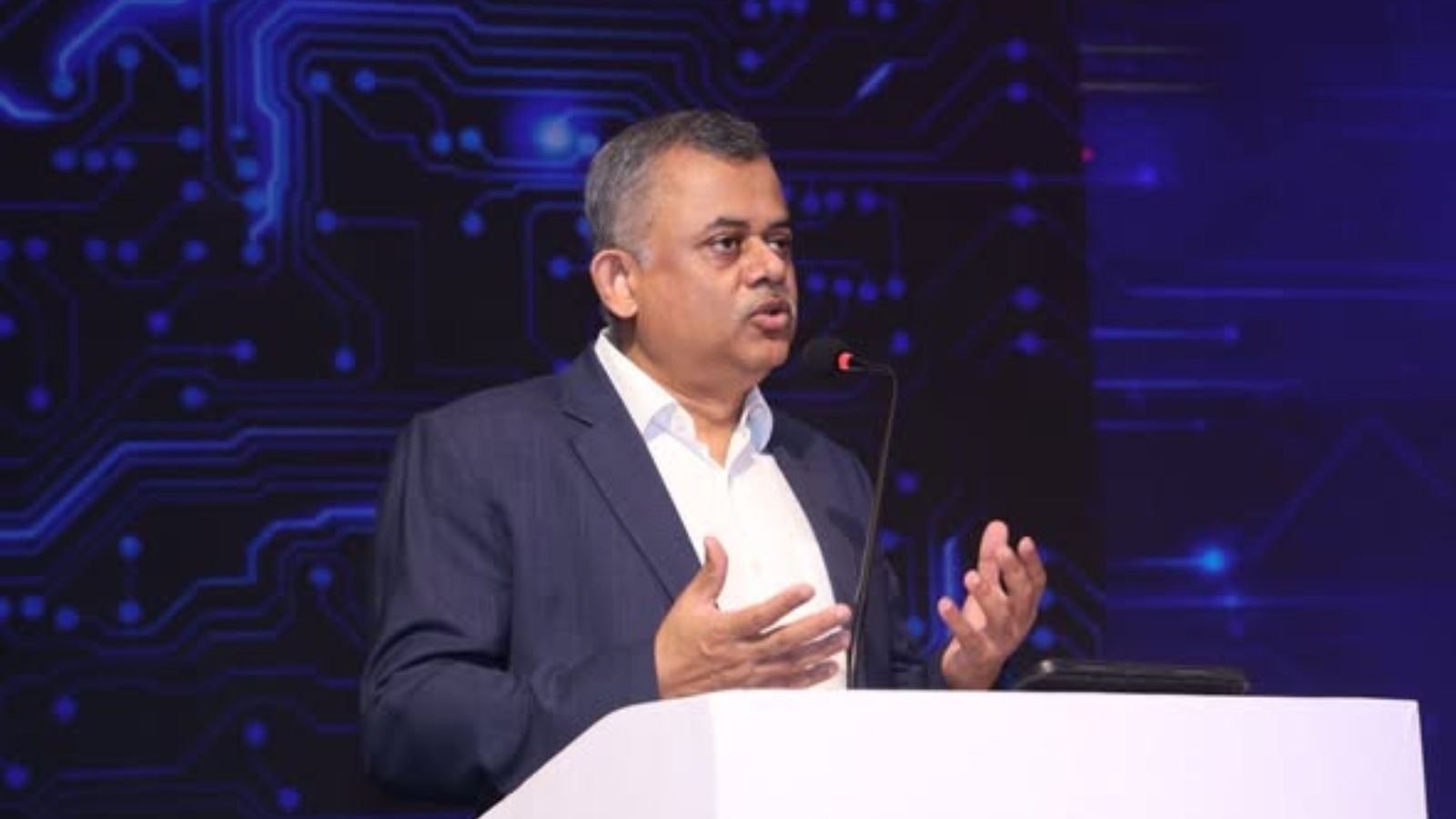
Mishra was speaking as the chief guest at the 15th convocation of the Indian Institute of Technology, Gandhinagar (IIT-Gn), on Saturday. (Aadhaar/Facebook)
“INDIA NEEDS to move away from being the back office to the world – writing and managing software for clients or designing semiconductor chips for foreign firms. It must become a product nation which owns technologies, own brands and has the capability for continuous innovation. We need the whole ecosystem to develop,” said Neelkanth
Mishra, Chief Economist of Axis Bank and Chairman of Unique Identification Authority of India (UIDAI), on Saturday.
Mishra was speaking as the chief guest at the 15th convocation of the Indian Institute of Technology, Gandhinagar (IIT-Gn), on Saturday.
Mishra, who is also a member of the Telecom Regulatory Authority of India (TRAI), said that while Taiwan could rise by excellence in the semiconductor and electronics sectors and South Korea needed just electronics, automotive and biotech, “given India’s scale, we will need to reach global leadership in at least 15 to 20 sectors.”
“These will include not only the fields we read about in the newspapers such as artificial intelligence, semiconductor manufacturing, quantum computing, drones, clean energy generation, and energy storage, but also less-publicised but critical technologies such as aircraft engines, heavy machinery, construction equipment, ship building, materials manufacturing and telecommunication equipment.”
The Indian Institute of Technology Gandhinagar (IITGN) organised its 15th convocation on Saturday at the Helipad Exhibition Centre (HEC), Gandhinagar. The graduating batch consisted of 225 women and 508 men from 26 states and Union Territories of India, along with international students. The Institute awarded 107 PhD degrees. One student graduating from the BTech-MTech Dual Degree programme received both BTech and MTech degrees, bringing the total number of degrees awarded to 734. A total of 46 students were awarded medals.
The maximum students graduating are from Gujarat (104), followed by Maharashtra (84), Uttar Pradesh (81), Rajasthan (74), West Bengal (58), Madhya Pradesh (40).
In his convocation address, Mishra said, “The countries that are currently rich, moved from lower-middle income where we are, to upper income, over 150 to 200 years. We need to do that in about a third of that time. Given rapidly falling fertility rates, India has barely 25 years or so of runway, before a rapidly aging population begins to slow us down.”
He said that most countries that grew prosperous after the second world war including Japan and Germany followed by South Korea and Taiwan, Thailand and Malaysia and China, benefited from “assisted rise” in that the US transferred technology and capital and accelerated their integration into the global value chains to aid their growth and keep them from turning communist, or as a Counterweight to the USSR in the case of China.
Story continues below this ad
On India, he said, “However our rise will be a resisted rise. The US believes that its support for China created a strategic competitor and it doesn’t want to create more. More importantly as per the Australian strategy policy Institute, China, which sees India as a strategic competitor and actively resists technology transfer to us, now leads in 66 of the 74 critical technologies and the US only in 8. So our critical competitor is far far ahead of everyone else.”
On the current state of the world, Mishra said, “The world ahead looks far more uncertain than what we had become used to for the past half century. Hyper globalization operated on a simple logic – design where it is smartest, manufacture where it is cheapest, and move components seamlessly across frictionless borders. But that world is gone. It has been replaced by an era of intense hyper nationalistic competition.”
View original source — Indian Express ↗
Related stories

CNA
BusinessJun 17, 2026 · 1 min
Exclusive-Meta head of product for 'AI for work' transformation is leaving company
CNA
Times of India
BusinessJun 20, 2026 · 1 min
PwC's global chairman Mohamed Kande doesn’t believe companies adopting AI are laying off
Times of India

TASS
BusinessJun 5, 2026 · 1 min
Putin urges Russian companies to build up ties with foreign partners
TASS

South China Morning Post
BusinessJun 5, 2026 · 1 min
Hong Kong ideal platform for Uzbek firms to spread wings globally, John Lee says
South China Morning Post