Indian Express
Indian Express··4 min read
‘Pressure to do even better…’: Anxiety peaks among aspirants before NEET retest
For days, 25-year-old Yash, a medical aspirant, lived with the belief that his long wait for a government seat might finally be over.
After appearing for the National Eligibility cum Entrance Test (Undergraduate) [NEET (UG)] on May 3, Yash, a resident of Haryana’s Rewari calculated his score repeatedly, discussed possible cut-offs with friends and family and hoped that his eighth attempt at the medical entrance exam for admission to undergraduate courses would be his last. But he ended up disappointed and demotivated when the National Testing Agency (NTA), which holds the exam, announced on May 12 that the exam would be held again because the question paper was leaked.
As nearly 23 lakh candidates prepare to appear for the NEET UG 2026 re-examination on Sunday, Yash on Saturday found himself battling anxiety that despite preparing harder over the last month, he could end up scoring less than before. “Now, there is pressure to match it or do even better,” he said from his hostel room in Rajasthan’s Kota. Like him, many other aspirants moved back to Kota and spent the final day before the exam trying to manage anxiety.
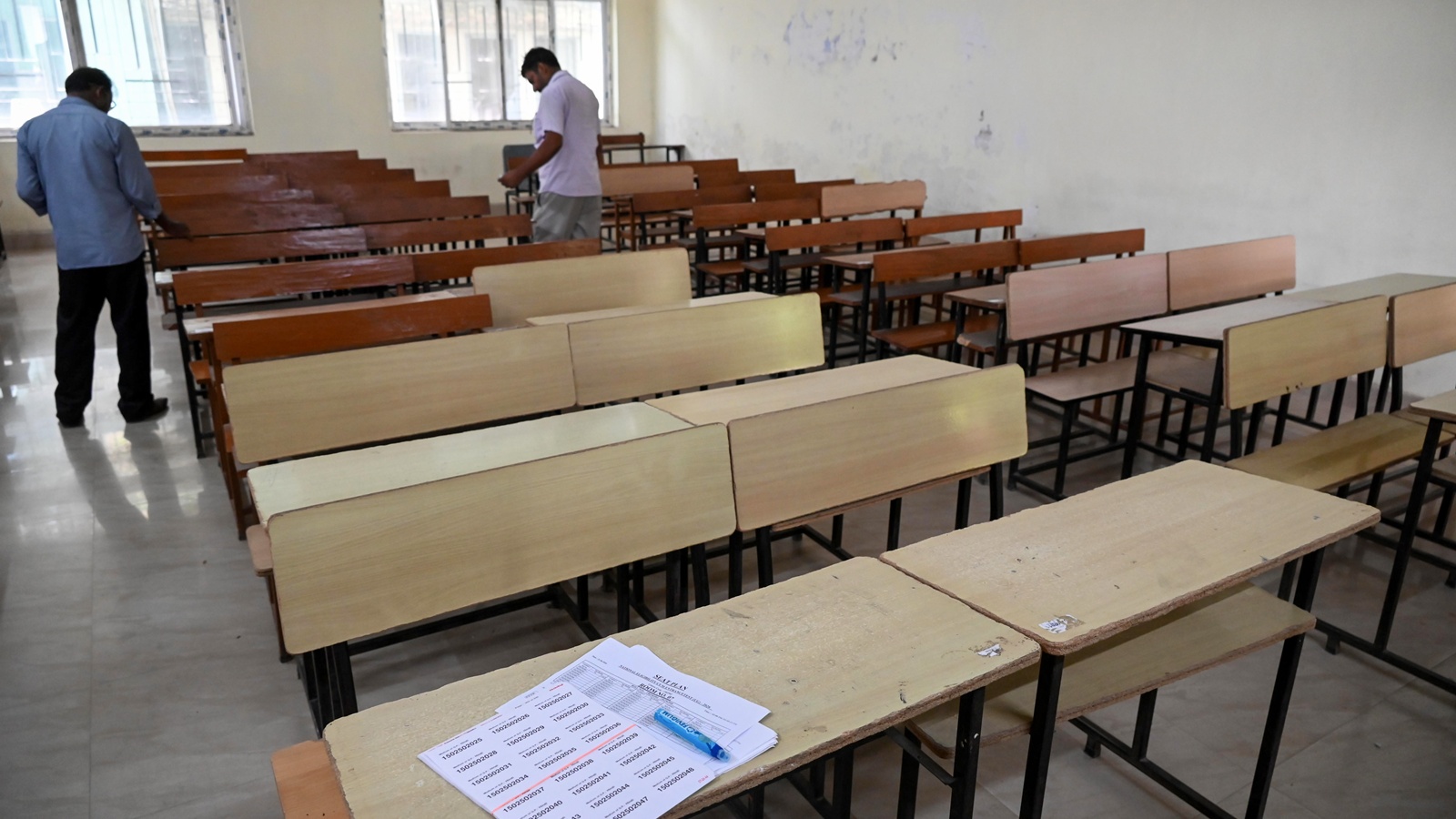
Amid row over paper leak, the National Testing Agency (NTA), which conducts the exam, overhauled its examination protocols involving multiple central security agencies, the railways, school systems such as the Kendriya Vidyalayas, and other stakeholders.
For many like 20-year-old Shantanu Kacher, the weeks up to this retest have been more draining than the years they spent in preparation.
“After May 3, I stopped studying completely,” said Kacher from Madhya Pradesh, who has taken the entrance test four times. “I packed my books, returned to my home. When the cancellation happened, it felt like somebody had suddenly told me that the last two years weren’t over. But am hoping that this time would be another chance for a better score.”
For Abhinav Agarwal from Delhi’s Malviya Nagar, the uncertainty has been overwhelming. “This year, students are even more anxious because they think they know what they have already achieved and are scared of losing it.”
The fear is particularly acute among repeat aspirants who see this as one of their final attempts to secure a government medical seat.
Story continues below this ad
Parvez, a 25-year-old aspirant from Moradabad in Uttar Pradesh, a few days before the Re exam said, “Some students were disappointed after the first exam. Others were happy. But at least everybody had closure. The cancellation took away that closure.”
Over the past week, Agarwal said he has struggled to get quality sleep — he wakes up in the middle of the night thinking about Biology questions he might have missed or Chemistry concepts he needs to revise again. “You start doubting everything. You ask yourself whether you prepared enough, whether you revised enough, whether you had given enough time to each concept…,” he said.
Students said social media has only amplified their stress, with endless discussions about expected cut-offs, possible paper patterns and speculation over whether the re-exam will be tougher than the original test. “If someone says they solved three mock tests today, suddenly you feel guilty about solving only one,” said Agarwal. “ There were also many posts about the paper being leaked going around for several days which created panic amongst us but the NTA clarified that these were not authentic.”
In an affidavit NTA submitted last month during the hearing at the Supreme Court, the NTA said a ‘High-Powered Steering Committee’ reviewed all aspects of the re-examination and recommended a series of safeguards to prevent paper leaks, impersonation, and other irregularities.
Story continues below this ad
The agency told the court that the fresh exam is being conducted under enhanced security to restore confidence in the examination system.
For the May 3 exam, NTA released a general guideline stating that candidates would be subjected to extensive and compulsory frisking before entering the exam centre using highly sensitive metal detectors. However, this time, it has become stricter.
Students will undergo multiple levels of verification before entering examination centres. Aadhaar-based biometric authentication will be mandatory, while facial recognition and live photography will also be used to prevent impersonation and the use of proxy candidates.
Every examination centre will be under CCTV surveillance. The NTA has mandated checks of all camera systems before the exam, with footage to be preserved for at least 90 days. Monitoring will not be limited to the centres themselves.
Story continues below this ad
Live CCTV feeds will be tracked simultaneously by NTA control rooms, district administrations, state authorities, the Ministry of Education, and other designated agencies. Flying squads, observers, and surprise inspection teams will also be deployed, while a central command centre will monitor activities across the country in real time.
The examination duration has been increased to 195 minutes to accommodate the additional verification procedures. Candidates will not be allowed to leave the examination hall before the test concludes, a step intended to prevent information from being passed outside while the examination is still underway elsewhere.
View original source — Indian Express ↗
Related stories

Indian Express
NewsJun 20, 2026 · 1 min
Daily Briefing | As NEET retest nears, aspirants’ suicides mount; Cocktail 2 review; and more
Indian Express

Indian Express
NewsJun 4, 2026 · 1 min
‘No courage to take retest, I’m sorry’: NEET aspirant dies by suicide in Nagpur
Indian Express
Indian Express
NewsJun 17, 2026 · 1 min
‘I love you, Papa’: NEET aspirant dies by suicide in Dehradun ahead of retest
Indian Express

Deutsche Welle
PoliticsJun 20, 2026 · 1 min
India news: Millions of students retake NEET amid protests
Deutsche Welle