Indian Express
Indian Express··3 min read
A two-month course, a Rs 25,000 job offer, and a new future
Amandeep Kaur had completed her Class XII education and a diploma in computer applications, but like many young women from modest backgrounds, she was struggling to find a career path that could provide stable employment and financial independence.
Today, even before completing her training on June 20, she has already received a job offer carrying a monthly salary of Rs 25,000.
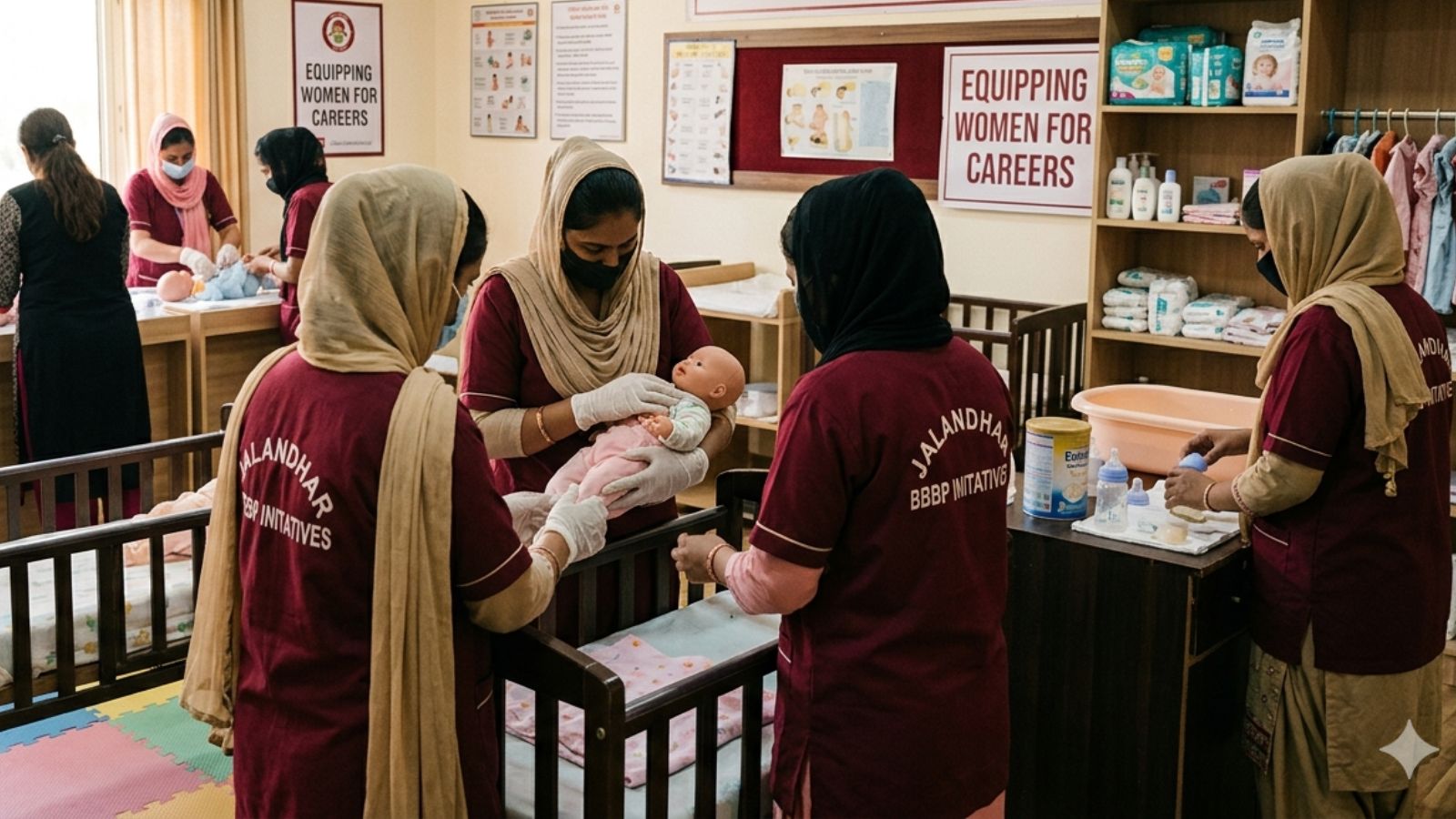
The turnaround came through a two-month skill development programme in newborn and child care (nanny services) organised under the government’s Beti Bachao, Beti Padhao initiative by the District Administration, Jalandhar, Punjab Skill Development Mission and Satyam Group of Institutes.
“I wanted to learn a skill that could help me earn a livelihood. This course has given me both confidence and employment opportunities,” Amandeep, one of the 30 women trained under the programme, said.
The initiative was launched to equip women from economically weaker sections with professional caregiving skills while creating employment and self-employment opportunities in a sector witnessing growing demand.
The programme was conceptualised during the tenure of Dr Himanshu Aggarwal, then deputy commissioner of Jalandhar (now Deputy Commissioner, Patiala), and has been carried forward by the current Deputy Commissioner, Varjeet Walia, to address the growing need for trained childcare professionals.
Thirty women, mostly from below-poverty-line families in rural areas, have already completed the course, while another batch of 30 women from urban areas is currently undergoing the training. Classroom sessions are being conducted at the District Administrative Complex, while practical exposure is provided in government hospitals.
Story continues below this ad
The specialised Child Caretaker Course prepares learners to support children, mothers and patients through safe, compassionate and professional care.
“During the training, participants were taught a wide range of skills, including newborn care, infant feeding and nutrition support, hygiene and sanitation practices, child growth and development monitoring, and basic health and safety care,” Paras Chadha, project head of Satyam Group of Institutes, said.
He said the initial cost of the programme is being borne by the Satyam Group and will later be reimbursed by the District Red Cross Society.
A major highlight of the programme is the on-the-job training at Civil Hospital, Nakodar, where trainees worked under the supervision of doctors, nurses and healthcare professionals.
Story continues below this ad
“The district administration has also been helping participants secure suitable placements after completing the course,” Chadha added.
The course further focuses on maternal care before and after delivery, patient assistance, communication skills and professional caregiving practices, said Parveen Kumari, another trainee who completed the programme.
According to trainers, the objective was not merely to teach childcare but to develop well-rounded caregivers capable of assisting mothers, newborns and patients in both home and healthcare settings.
Officials associated with the programme said the practical training significantly enhanced the confidence and employability of participants.
Story continues below this ad
Another beneficiary, Manpreet Kaur, came to know about the programme through people in her village. The eldest among three siblings, she saw it as an opportunity to become financially independent after completing her Class XII education.
“As soon as I heard about the course, I enrolled myself. It has provided practical skills that can help me build a career,” she said.
According to Manpreet, placement drives are currently underway, with some employers offering starting salaries of around Rs 30,000 per month. Beyond job placements, the programme also encourages self-employment. Certified caregivers can independently provide newborn care, mother-care and patient-care services, creating a sustainable source of income within their own communities.
Reflecting on his brainchild, Aggarwal said that with increasing urbanisation and the number of nuclear families, and growing awareness about professional childcare, demand for trained caregivers is steadily rising.
Story continues below this ad
“The programme seeks to bridge this gap while simultaneously empowering women through skill development,” he underscores.
Lauding his predecessor Aggarwal for the initiative, Deputy Commissioner Walia said that the programme addresses the growing need for trained childcare professionals.
“Under this programme, women have been professionally trained in childcare and nanny services, creating employment opportunities while providing families with access to reliable and skilled caregivers. They are also willing to reside with families anywhere in Punjab if required,” Walia added.
For Amandeep and many others in the batch, the training has become much more than a certificate. It has provided a pathway to financial independence, self-confidence and a brighter future, said Suman, another beneficiary and the daughter of a daily-wage worker.
View original source — Indian Express ↗
Related stories

Indian Express
NewsJun 17, 2026 · 1 min
IIT Madras Placements: 2,196 job offers, 538 students opt for higher studies, 76 launch startups
Indian Express

VnExpress
NewsJun 5, 2026 · 1 min
New Zealand confirms November launch of six-month graduate work visa
VnExpress

MarketWatch
BusinessJun 18, 2026 · 1 min
Employers to college students: Skip the perfect GPA and go get a summer job
MarketWatch

The Next Web
TechnologyJun 17, 2026 · 1 min
China’s new five-year plan makes tracking AI’s hit to jobs a national priority
The Next Web