Indian Express
What are the three ships with three different strategic roles that Navy inducted today
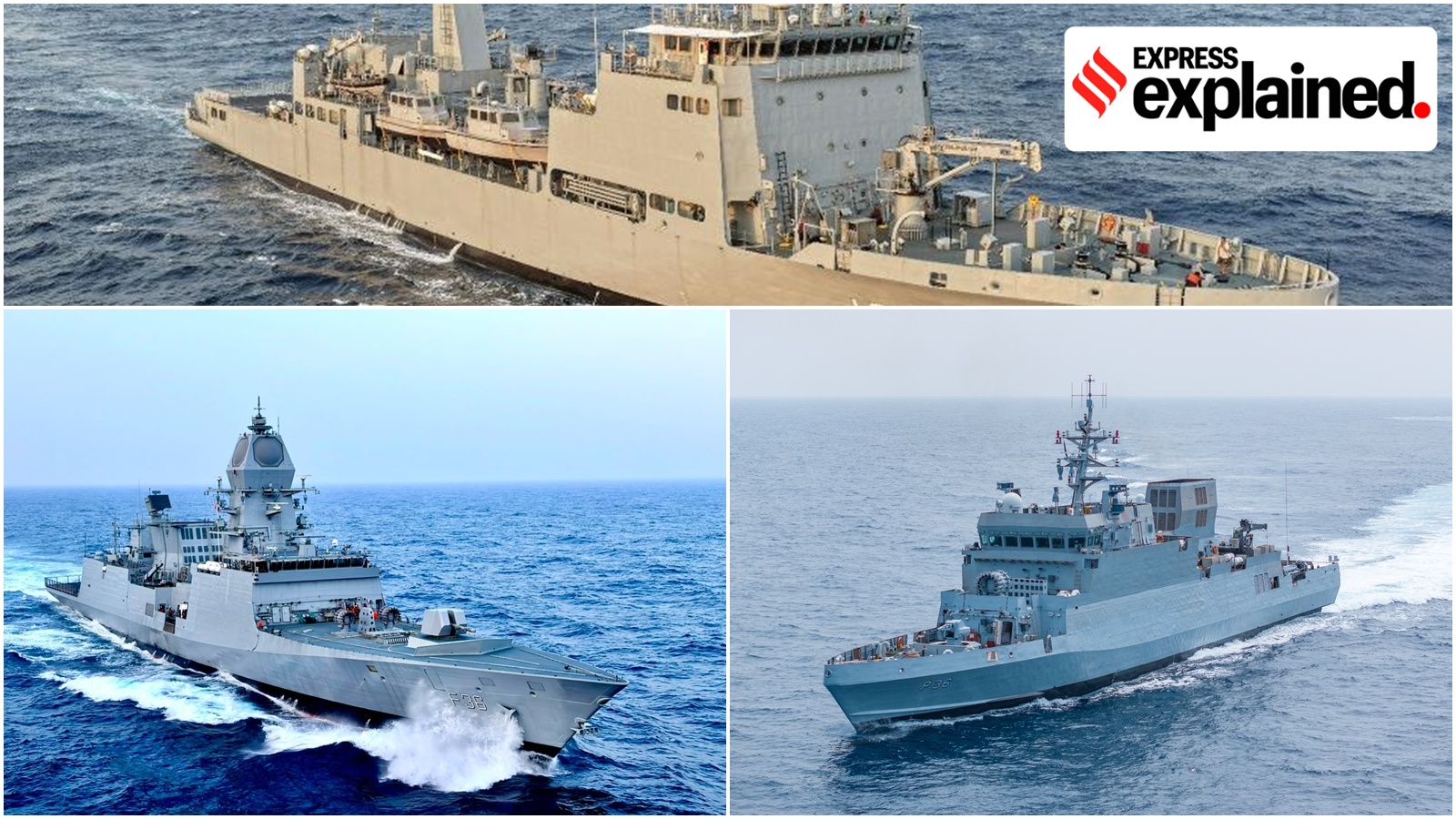
The Indian Navy inducted three ships today (June 21) — one that can fight far out at sea, one that can map the sea, and one that can hunt submarines close to the coast. Prime Minister Narendra Modi presided over the commissioning of INS Dunagiri, INS Sanshodhak, and INS Agray in Kolkata, adding to the steady inducting of new vessels into the Indian Navy since January 2025.
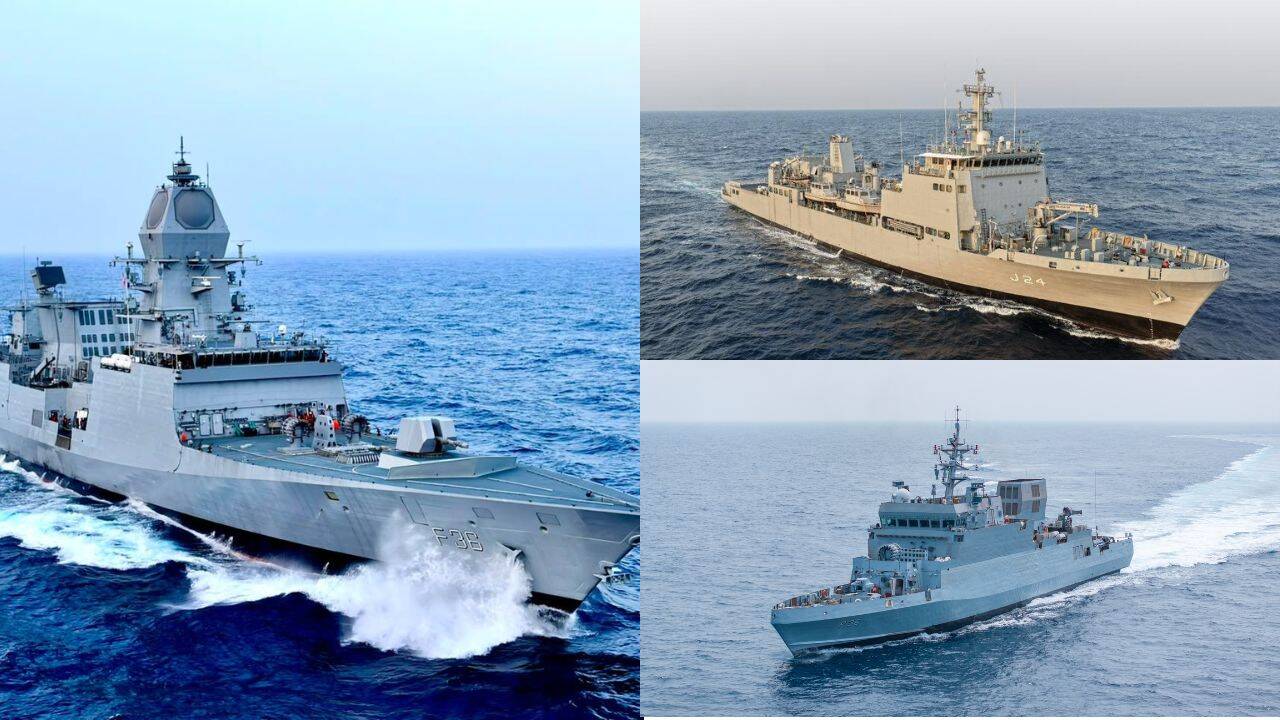
The three vessels — the Brahmos-armed stealth frigate INS Dunagiri, the deep-water survey vessel INS Sanshodhak, and the Anti-Submarine Warfare Shallow Water Craft (ASW SWC) INS Agray — have been built by Garden Reach Shipbuilders & Engineers (GRSE) in Kolkata. According to the Ministry of Defence, the three together have more than 75 per cent indigenous content, and involve over 200 MSMEs.
What are the three ships inducted on June 21?
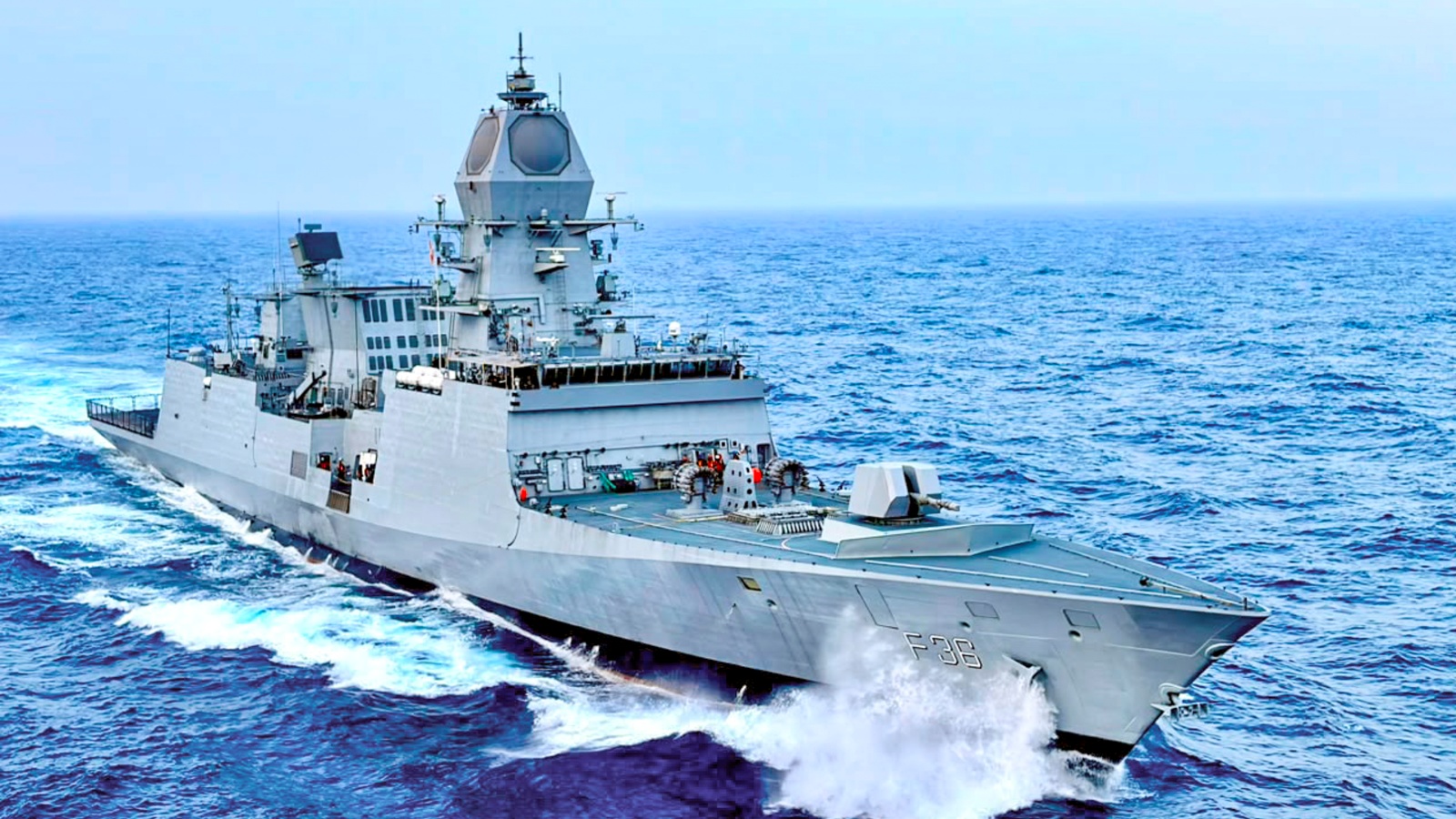
INS Dunagiri: The largest and most heavily armed of the three is INS Dunagiri. It is a frigate, which, in simple terms, is smaller than a destroyer but large enough to operate far from the coast.
It is part of the Navy’s Project 17A, under which a new generation of stealth guided-missile frigates are being built in India. The ‘stealth’ here does not mean complete invisibility, but means that it is harder to detect on radar and other sensors. Dunagiri carries weapons such as BrahMos surface-to-surface missiles and a medium-range surface-to-air missile (MRSAM) system, along with sensors including Multi-Function Surveillance, Track And Guidance Radar (MFSTAR), sonar, electronic warfare systems and anti-submarine weapons.
“At the strategic level, these multi-mission frigates are capable of operating in a ‘blue water’ environment — deep sea far from shore — dealing with both conventional and non-conventional threats,” a serving Navy officer said. Other vessels in the class are INS Nigiri, Himgiri, Taragiri, Udaygiri and Vindhyagiri.
INS Sanshodhak: This is a Survey Vessel — Large (SVL). Its job is to measure and map the sea: the depth of waters, seabed features, approach channels to ports, navigational routes, and oceanographic data. It is equipped with systems such as autonomous underwater vehicles, remotely operated vehicles and multi-beam echo sounders. These help the ship collect data from the surface and underwater.
“Warships and submarines do not operate in an empty blue space. They move through waters shaped by depth, seabed features, currents, reefs, channels, ports, underwater slopes and coastal clutter. Knowing this environment helps ships move safely, submarines plan routes, ports update charts, and forces prepare for operations. It also supports civilian needs such as safe shipping, disaster relief, ocean research and coastal development,” said a Navy officer who has served on survey ships.
Story continues below this ad
Sanshodhak is the last ship of the Sandhayak-class of SVLs. The contract for four SVLs was signed in October 2018. The other ships of this class are INS Sandhayak, INS Nirdeshak and INS Ikshak, commissioned in February 2024, December 2024 and November 2025.
INS Agray: The third vessel, INS Agray, is the smallest of the three but has a highly specialised role. Put simply, it is a submarine-hunter designed for coastal waters. Agray belongs to the Arnala-class, a class of smaller warships built specifically to detect and attack submarines in shallow waters near the coast, ports, naval bases and important sea approaches. Agray carries lightweight torpedoes, indigenous anti-submarine rocket launchers and sonar systems.
The word often used for coastal waters is littoral, which simply means waters close to the shore. “Coastal waters are difficult places to find submarines. They are noisy, busy and cluttered. Fishing boats, merchant ships, seabed features and coastal activity can make submarine detection harder than in the open ocean. That is where ASW-SWCc such as Agray come in,” said an officer.
This matters because submarines are among the most difficult military platforms to detect.
What is the larger message behind commissioning them together?
Story continues below this ad
The importance of Sunday’s ceremony is that the three ships add three different capabilities at once. “Together, they reflect the Navy’s balanced approach to capability development, strengthening blue-water operations, enhancing maritime domain awareness, and securing coastal waters against evolving threats,” the Navy has said in a statement.
As the Indian Ocean becomes more contested, with both China and Pakistan increasing their naval presence, and India’s maritime responsibilities now stretch across the Arabian Sea, Bay of Bengal, island territories and the Indo Pacific, the triple-commissioning “is a sign of how the Navy is building capability in layers: big warships for distant operations, survey ships to understand the sea, and smaller submarine-hunters to guard coastal waters,” said an officer.
It is also an industrial signal. That three different kinds of ships, with different missions and technologies, can be built domestically and commissioned together shows the growing maturity of India’s naval shipbuilding ecosystem.
View original source — Indian Express ↗
Related stories

Times of India
PoliticsJun 21, 2026 · 1 min
'Development, security, prosperity linked to sea': PM Modi commissions 3 naval ships
Times of India
Indian Express
NewsJun 19, 2026 · 1 min
PM Modi to commission 3 indigenously built naval ships in Kolkata on June 21
Indian Express
Times of India
NewsJun 20, 2026 · 1 min
INS Dunagiri, Sanshodhak, Agray: Navy to commission 3 indigenous warships and survey vessel
Times of India

The Punch
NewsJun 4, 2026 · 1 min
NLNG awards contracts for three new vessels
The Punch