Indian Express
Behind Japan’s 4 goal-glut: Forwards encouraged to have ‘ego’, like anime hero
Even as the Cristiano Ronaldo opinion-tsunami rages over this World Cup, Japanese football is excited about the dawn of what they call the ‘Egoists’. A 4-0 win over Tunisia, was evidence of what had shifted.
Creator of the hit anime series Blue Lock, Muneyuki Kaneshiro, said last month, “We are waiting for serious egoists who aim to win the World Cup.” His illustrating artist Yusuke Nomura went a step further, saying, “We look forward to applications from all ego-driven people who believe, “I am the world’s best striker!”
For surely anybody that watches football understands that a striker needs to be obsessed with scoring goals. What else is there – new Japan’s neo-egoists from the world of anime and manga, ask.
ALSO READ | Curacao’s Eloy Room, goalkeeper without a club, just broke a World Cup record
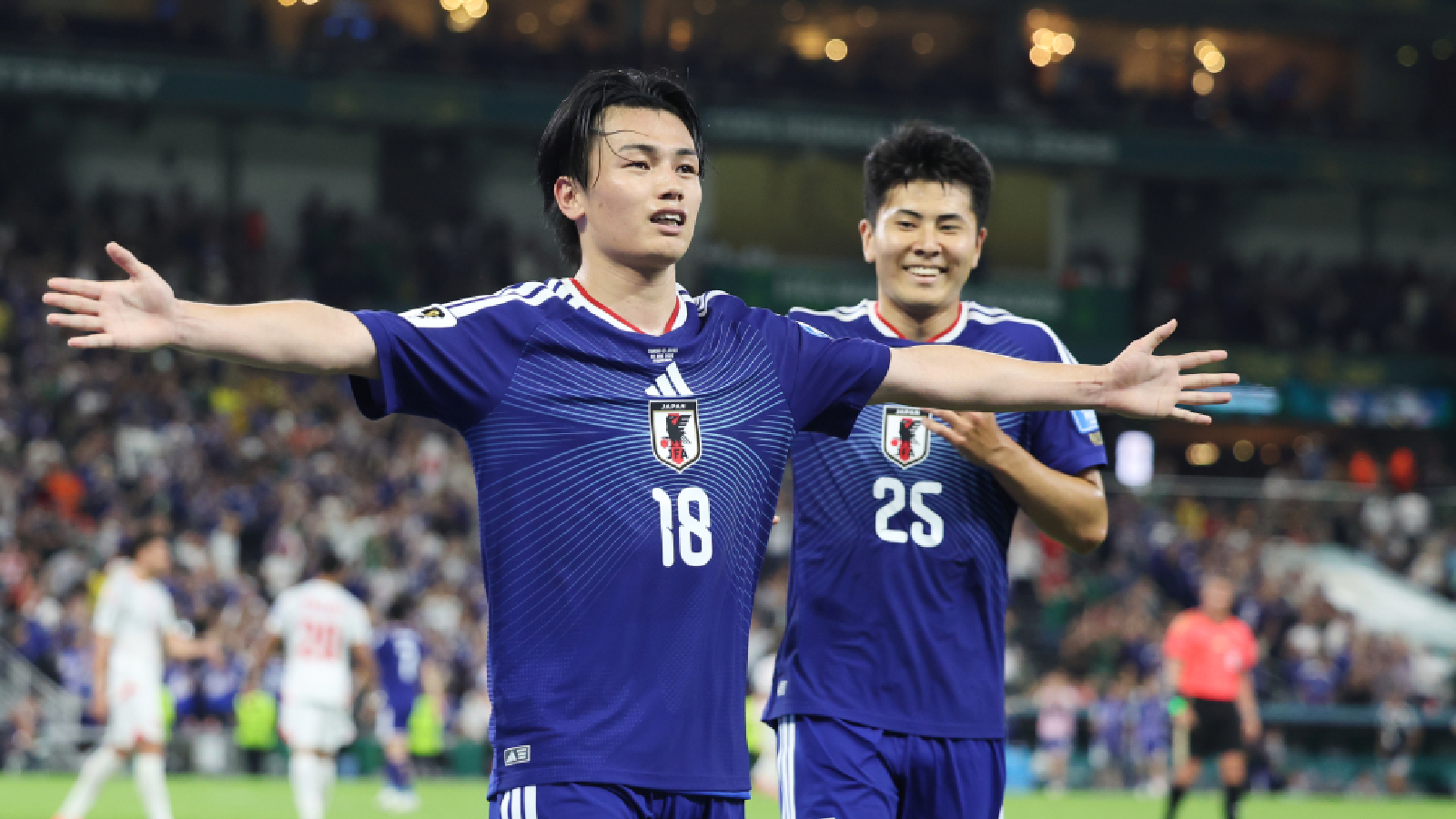
Playing Tunisia late on Saturday, Japan made history as the first Asian country to score 4 goals. And these came from confident, unapologetic strides in the box. While Daichi Kamada needed simply to divert Keito Nakamura’s delivery goal-wards in the 4th minute, it was the poster boy of the new-age, striker Ayase Ueda, who didn’t think twice from the edge of the box, cheekily catching defender Montassar Talbi splayed in a half-step before sending a drive through his legs, to make it 2-0.
Japan’s top-scorer in qualifying, Ueda doubled his count in the 86th when he leapt in the air to Kaishu Sano’s flick and lobbed a header over a pretty-tall defender. Earlier, the designated poaching-forward Junya Ito had struck a solo-run and shot coolly, collecting a pass from Ueda. It was yet another shrugging off the bashfulness that held Japan back, in front of the goal.
The country that gave the world Captain Tsubasa – who is even on Messi’s tattoo sleeve – has been rethinking their football heroes for a few years now: Do Japanese minds need to be reprogrammed to create a striker who doesn’t apologise for taking a shot?
Story continues below this ad
Japan’s top-scorer in qualifying, Ueda doubled his count in the 86th when he leapt in the air to Kaishu Sano’s flick and lobbed a header. (AP Photo)
The Zeyad Football youtube channel delves into a cultural concept of Waa – where harmony and extreme teamwork culture brought in loyalty but “killed selfish instinct that a true striker needs to finish.” Blue Lock was that intense, dark-tinged anime where the protagonist, Yoichi Isagi, is the striker who learns to be ruthless and “have a massive ego in front of the goal.” In other unspoken words, to be selfish.
The Japanese Football Association (JFA) in fact are said to have collaborated with Blue Lock creators since 2024, to alter the deep cultural bashfulness in their mindset, as the team seeks to shatter the Round of 16 ceiling. Artist Nomura would recently explain, “The egoists we imagined may also exist in this real world. No, I am sure they do!” The occasion was a formal announcement of a collaboration of Blue Lock plan with JFA for a project, “Future Camp”.
Besides tapping into Blue Lock’s reach in USA, South Americas, Concacaf and with Liverpool in England, and act as talent hunt for Japanese-heritage players abroad, the series aims to propagate the cartoon’s themes of “individual awakening and the passion to become the best in the world.” The World Cup only needs to wind up and JFA will be at Great Park in Irvine, Orange County, California, scouting for players born between between January 1, 2010, and December 31, 2011.
It’s a wild synthesis of read-meets-real, given Blue Lock’s plotline starts out at a very real inflection point in Japanese football history: defeat at the 2018 World Cup to Belgium in the dying seconds after leading 2-0. Kodansha Publishing USA describes the story: “As Japan’s team struggles to regroup, but what’s missing? An absolute Ace Striker, who can guide them to the win. The Japan Football Union is hell-bent on creating a striker who hungers for goals and thirsts for victory, and who can be the decisive instrument in turning around a losing match…”
Story continues below this ad
In this team, Ayase Ueda is seen as the ruthless No 9 – physical, aggressive in the air and clinical. Having done all the right things in football development since beating Brazil at 1984 Olympics, and patiently putting in the structure, and allowing Tsububasa to work his slow charm, Japan was ready for the next step.
It all started in their exit in Russia, as the 2018 defeat had stung – terribly. Belgium had scored 2 goals in 6 minutes, and proceeded to procure a turnover relayed by Thibaut Courtois to Kevin de Bruyne. It came from a nervy corner kick by Japan, and has since received the Rashamon treatment from Japan, as a NHK documentary “14 seconds of Rostov” which premiered on December 8, 2018, within 6 months of the loss.
Made on a budget of 500,000 euros, the documentary spoke to over 50 people – Japanese and Belgian players, former coaches, to analyse what all possibly had gone wrong. These were visceral dissections, where players volunteered to return to those 14 seconds and threadbare their hearts about those excruciating seconds resulting in a 2-3 loss.
ALSO READ | Deniz Undav: From machine operator at factory to Germany’s World Cup hero
Story continues below this ad
Besides coach Noshino, all the characters involved – Maya, Makoto, Nishino, Renki, Yuto, Hiroki, besides Courtois, Lukaku, De Bruyne, Meunier, Shazley, and Roberto Martinez and Capello were interviewed by 4 filming units, as the veil dropped to renew vulnerability, Min.news wrote.
Whether it is Makoto Hasebe wondering if he lost possession because he was too relaxed, or former coaches dreading inevitability of Belgians scoring pointing to lack of self-confidence in Japanese, the docu zooms into split-seconds to tease out perspectives from inside and outside. Did Japan not believe it had stamina for more than 90 minutes? Was De Bruyne’s marker distracted? Did Brlgium see spaces on field that Japan didn’t? How significant was De Bruyne sprinting off at 30.1 kph? Every detail is wrenched out of the past – not to villainise, but look for what was overlooked.
Slow, sad sunsets and a timer clocking down to 14 seconds teem in the film. It’s how Japan does football — break down what went wrong and reflect, and then manifest through Manga, for a playing mindset that can get past the dark day of 2 July of 2018.
View original source — Indian Express ↗
Related stories

CNA
SportsJun 21, 2026 · 1 min
Panama, Croatia face pivotal World Cup clash in Toronto
CNA

CBC
SportsJun 21, 2026 · 1 min
Iran vs. Belgium: In L.A.'s 'Tehrangeles,' the World Cup weighs heavily on those who fled
CBC

The Guardian
SportsJun 21, 2026 · 1 min
Sweat, tears and camaraderie as 20,000 runners take on world’s largest ultramarathon
The Guardian

ESPNcricinfo
SportsJun 21, 2026 · 1 min
Bangladesh bat first, make three changes in search of consolation win
ESPNcricinfo