Indian Express
Yellow alert for Mumbai as monsoon arrival nears, water woes to continue
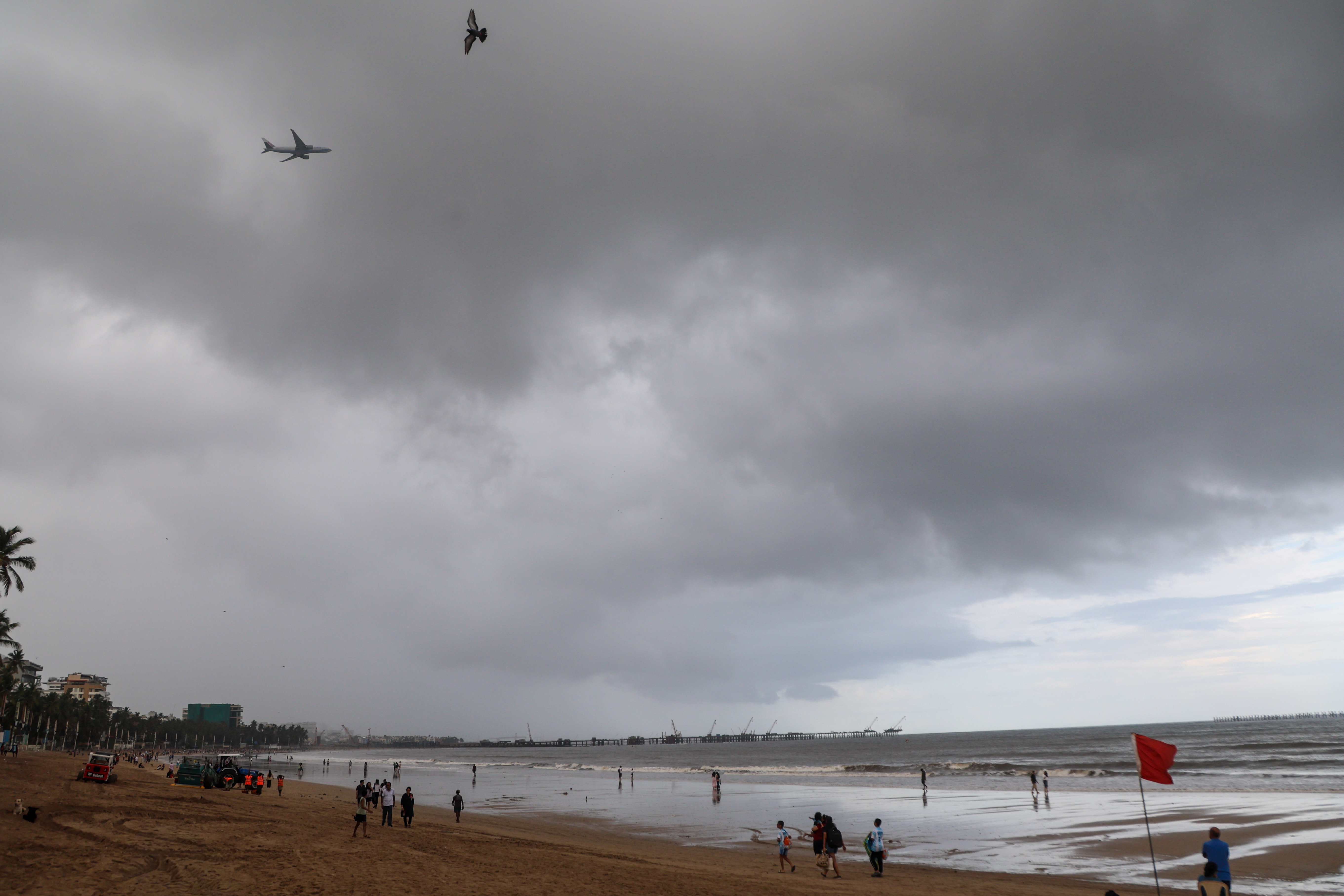
This alert indicates the possibility of moderate rainfall, accompanied by lightning, thunderstorms, and gusty winds up to 40 km/h. In addition to Mumbai, yellow alerts have also been issued for the districts of Thane, Palghar, Raigad, and Sindhudurg in Maharashtra.
Talking to The Indian Express, IMD officials said that sporadic rain is expected to continue until June 23, the anticipated date for the monsoon’s arrival in Mumbai.
“At present, the state is getting set for monsoon onset; as a result, we are witnessing these kinds of spells of sporadic rains. This phenomenon is absolutely normal, and we are hoping that monsoon rains will make landfall by June 23,” said Sushma Nair, scientist at IMD Mumbai.
Recent data indicate that several areas in Mumbai received rainfall, including Worli (25 mm), Ghatkopar (24 mm), Lower Parel (21 mm), Chembur (20 mm), and Mankhurd (16 mm). Additionally, the IMD data reveals that Mumbai’s minimum (night) temperature decreased by 3 degrees following the rainfall.
On Sunday morning, the night temperature was recorded at 25.8 degrees Celsius at the IMD’s Santacruz observatory, while the Coastal observatory at Colaba recorded 26.7 degrees Celsius. In comparison, the minimum temperature at both stations on Saturday, June 20, was 28.6 degrees Celsius.
The monsoon was expected to arrive in Mumbai on June 11. However, due to the El Niño phenomenon, a global climatic event known for disrupting typical wind and atmospheric patterns, the onset of the monsoon in Mumbai was delayed. As a result, Mumbai and several other Indian cities have been experiencing a heat wave and high humidity since March 2026.
Story continues below this ad
Mumbai’s water scarcity to continue
Officials have stated that these rains will not affect the catchment areas of the seven lakes that supply water to Mumbai. As an island city, Mumbai relies on these seven lakes—Tulsi, Vihar, Tansa, Bhatsa, Modak Sagar, Upper Vaitarna, and Middle Vaitarna—for its daily water supply.
The catchment areas of these lakes fill during the monsoon, providing a year-round water supply to households and establishments via pipelines and water tunnels.
While Tulsi and Vihar lakes are located in Mumbai’s Sanjay Gandhi National Park (SGNP), the other five lakes are distributed across the Thane, Nashik, and Palghar districts.
“As of now, rain is only predicted along the coastline of Maharashtra. Since these lakes are located deep in the hinterland, the chances of their catchment areas receiving substantial rainfall do not seem favourable at this time,” Nair said.
Story continues below this ad
According to the Brihanmumbai Municipal Corporation (BMC), on June 21 (Sunday), Mumbai’s water stock was at 8.68 per cent of its total capacity, amounting to 1.25 lakh million litres out of 14.47 lakh million litres. Additionally, records indicate that there was no rainfall in the catchment areas of these lakes in the previous 24 hours.
On June 21, 2025, Mumbai’s lake level was at 25.87 per cent, while on June 21, 2024, it was at 5.31 per cent.
IMD yellow alert: June 21-June 24
Districts under yellow alert: Mumbai, Thane, Palghar, Raigad, Sindhudurg and Ratnagiri.
What to expect?
Light to moderate rains accompanied by thunderstorms, lightning and gusty winds (30-400 kmph)
When will monsoon rains arrive – June 23
Mumbai’s water stock at a glance
Story continues below this ad
Total water stock of Mumbai: 14.47 lakh million litres
Current stock: 1.25 lakh million litres or 8.68 per cent
Lakewise stock
Upper Vaitarna: 0
Modak Sagar: 23.8 per cent
Tansa: 3.04 per cent
Middle Vaitarna: 0.34 per cent
Bhatsa: 7.99 per cent
Vihar: 41.25 per cent
Tulsi: 8.6 per cent
View original source — Indian Express ↗
Related stories

France 24
TechnologyJun 21, 2026 · 1 min
Sailors trapped in Hormuz strait, dodging drones and rationing food
France 24

TechRadar
TechnologyJun 21, 2026 · 1 min
How to watch Spain vs Saudi Arabia: Free Streams & TV Channels for FIFA World Cup 2026
TechRadar

Lovin Malta
TechnologyJun 21, 2026 · 1 min
Watch: Sea Rangers Forced To Step In After Boat Blasts Music Near Protected St Paul’s Island
Lovin Malta

TechRadar
TechnologyJun 21, 2026 · 1 min
What is the release date for Avatar: The Last Airbender season 2 on Netflix?
TechRadar