The Guardian
A Melbourne woman lost $646,035 to a romance scam. Should banks and dating apps be forced to refund victims like her?
They met the way many modern couples do.
On his Hinge profile, the man had a “nice smile”, says Jane*, a Melbourne woman in her 30s. When they matched in May 2025, she thought he seemed like “just generally a nice person”.
By the time Jane, who has autism and a learning disability, realised she was being scammed, she had sent $646,035 to the man she had fallen in love with. The man is believed to have used a fake name but the Guardian is calling him Joe.
A couple of months before Jane started talking to Joe, the Albanese government passed what it described as the “world’s toughest anti-scam laws”. But the laws will not be functional until 2027 and consumer advocates don’t expect them to apply to dating apps even though they consider them a vector for scams.
Jane’s bank won’t refund her the money. Earlier this year, when she challenged the decision at the Australian Financial Complaints Authority (AFCA), it sided with the bank.
“It makes me really sad, and my mum,” Jane says. She cries when she talks about learning the British passport Joe showed her was fake, and when she discloses the total sum of her crushing financial loss.
‘I thought I could really trust him’
Jane isn’t alone in her devastation: in the past 18 months, Australians have lost more than $37m in the 4,767 romance scams reported to authorities. Like Jane’s, most of them began online.
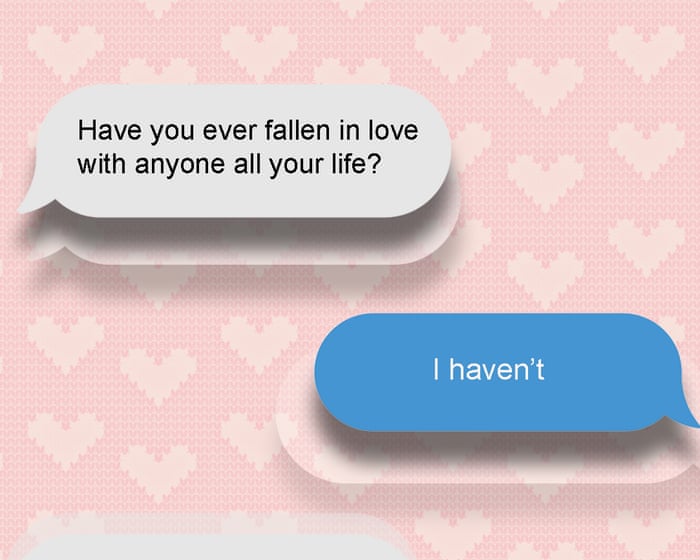
The day after they started talking on Hinge, Joe asked Jane to move the conversation on to WhatsApp. Their messages, seen by Guardian Australia, show how she was manipulated. After she confided in him that she’d never been in a relationship, even though she’d always deeply desired one, he said: “So I will be the first person you ever fall in love with.”
Meta, WhatsApp’s owner, was contacted for comment.
Joe claimed to be a Fifo worker who would move to Melbourne when his contract was up. He told her he saw a future with her that involved cooking for her, an overseas honeymoon and children. He told her he loved her.
Joe I see myself with you and our future kids in our beautiful home, spending quality time together
Jane Haha and yeah thats nice and family holidays you forgot to add that
He also told her he needed money. He said it was an emergency, that he needed work equipment and he would pay her back with 50% interest.
“I thought that I could really trust him,” Jane says. “He said, ‘I’m not the kind of bad person that would do this.’”
Dr Kate Gould, a senior researcher and neuropsychologist at Monash University, says humans have a “basic need” for love and connection, which means “we are very open to someone’s interest in us”.
Gould says even though romance scams are very emotionally destructive, dating platforms have a very difficult task in trying to vet who’s genuine and who’s not.
But, she says, “as a society, we would want them to be really focused on trying to ensure that anyone they offer through their dating platforms is a real person and not a criminal who’s trying to emotionally and financially harm us”.
A Hinge spokesperson said its parent company, Match Group, continued to invest in new technologies to protect users across its platforms, which include Tinder and OKCupid.
In March, Hinge rolled out its “Face Check” verification technology in Australia, intended to confirm new users are real people.
After multiple delays, Australia’s anti-scam laws are now due to come into effect on 31 March 2027. The government won’t confirm which entities they will apply to other than to say the sectors covered will be banks, telcos and “key” digital platforms: social media, paid search engine advertising and direct messaging services.
A spokesperson for the assistant treasurer, Daniel Mulino, said the government would “not hesitate to bring additional sectors into scope where needed”.
Meg Dalling, a policy expert at the Consumer Action Law Centre (Calc), says there are “obviously still some really significant gaps in the coverage of the laws”.
Labor’s laws differ from the UK’s policy of making banks reimburse scam victims for much larger sums of money.
The Australian laws will impose obligations on “designated” sectors to prevent, detect, report and disrupt scams, but the government is only proposing automatic reimbursements of up to $3,000. Labor has promised a dispute resolution mechanism for larger amounts but have yet to detail how this will work.
The cost is likely to be evenly split between the relevant entities, such as the banks sending and receiving the disputed transactions and the telecommunications company or digital platform where the scam was initiated.
Based on the draft codes of the laws, which the government is still consulting with industry on, Dalling says it’s “very difficult to say” whether Jane’s outcome would have changed even if the new framework had been in place when she was scammed, because the new laws aren’t prescriptive enough.
“It’s still totally reliant on industry to determine what they think is appropriate,” she says.
Mulino declined to comment on Jane’s case, including whether the forthcoming laws would have helped her.
‘A devastating financial and personal loss’
At her scammer’s instruction, Jane set up an account with ING, which wasn’t her usual bank. She wired him the money in 41 transactions, some as large as $20,000, to two cryptocurrency trading platforms, which her lawyer, Nufar Gofman from Calc, says are known for being used for scams.
Jane and her advocates believe ING had multiple opportunities to detect and intervene before her loss escalated.
ING wouldn’t comment directly on Jane’s case, but said it was “optimistic” the scams prevention framework would improve coordination between organisations to “help identify criminals earlier”.
As her relationship with the scammer continued, Jane grew suspicious and asked Joe for more proof of his identity. He sent her a screenshot of his bank account, which, like his photos and passport, turned out to be fake.
Joe Babe i already sent you my passport what other thing are you requesting for? You already know everything i’m telling you is real
Jane I honestly just wanted to make sure that i was really talking to you i belive that you are a real honest person
Joe I have more than enough to pay you back my love
The more information she asked for, the more wildly Joe’s tale escalated. In his last message on 13 August 2025, he claimed to be going to prison.
Jane had given him everything, and he never responded to her again.
Joe This is a multi million contract if this gets terminated I will lose over 9.7 million USD and i will go to jail, please
Joe I will pay you back double of what you’re borrowing me okay
After ING declined to refund her any of her money, Jane made a complaint to Afca, the financial services ombudsman.
Afca handed down its determination in March, in which it acknowledged Jane had suffered a “devastating financial and personal loss”.
But it said it would not be appropriate to require ING reimburse her because the bank was “not on notice the disputed transactions were related to a scam, and processed the disputed transactions as instructed”.
Jane’s lawyers argue Afca failed to consider ING’s legal obligations to provide due care and skill or an efficient, honest and fair financial service.
Afca told the Guardian it could only assess complaints against current laws and codes.
“We have consistently said that today’s scam complaints are being assessed against laws and codes that were not designed with the sophistication of modern scams in mind,” a spokesperson said.
*Not her real name
View original source — The Guardian ↗
Related stories
Bloomberg
BusinessJun 21, 2026 · 1 min
FDA to Review Easing Restrictions on Peptides
Bloomberg
Dawn
BusinessJun 21, 2026 · 1 min
'Peace requires give and take': US-Iran talks underway in Burgenstock with mediators Pakistan, Qatar
Dawn

CNBC
BusinessJun 21, 2026 · 1 min
Pixar's 'Toy Story 5' lassos biggest opening weekend in franchise history with $160 million haul
CNBC

The Hindu
BusinessJun 21, 2026 · 1 min
Ukraine's battlefield shift has not solved its humanitarian crisis, IRC says
The Hindu