
Philippine Daily Inquirer
BSP extends relief to crisis-hit banks
MANILA, Philippines – The Bangko Sentral ng Pilipinas (BSP) has agreed to give banks that are hit hard by the Middle East war-induced surge in bond yields a time-bound leeway to manage paper losses that will otherwise erode their capital strength.
This new regulatory relief waives the mark-to-market requirement for peso-denominated government securities (GS) from April to December this year, for as long as the banks will move the battered GS holdings from a trading portfolio to the basket that will be held until maturity.
READ: BSP offers loan relief amid energy crisis
Article continues after this advertisement
This can uplift banks that have seen a sharp decline in the valuation of GS holdings.
FEATURED STORIES
BUSINESS
BUSINESS
BUSINESS
“This relief is afforded in view of the impact of the [Middle East] conflict on market yields and asset valuations,” said a BSP Memorandum No. 2026-027 issued by the BSP on June 19.
Typically, mark-to-market losses from GS holdings gnaw on the capital adequacy ratio (CAR) and common equity tier (CET) 1 ratio of banks and quasi-banks because such paper losses are deducted from the computation of capital.
Since the start of the Middle East crisis, local bond yields have shot up by about 200 basis points.
This means that older bonds that carried lower yields before the war erupted now fetch a lower price in the market.
Article continues after this advertisement
As such, losses from GS holdings classified as financial assets at fair value through other comprehensive income (FVOCI) will hit the CAR and CET1 of banks.
FVOCI assets are marked to market value, but the unrealized gains or losses are recorded under equity instead of profit or loss until they are sold.
Article continues after this advertisement
The new regulatory relief gives banks the option to reclassify FVOCI holdings as held to collect (HTC) assets or those kept until maturity, thus avoiding the costly mark-to-market requirement that comes with the portfolio that is meant for active trading.
However, the banks and quasi-banks are still required to continue reporting the actual unrealized FVOCI losses in all other financial reports.
Realized and unrealized losses, including impairment losses, must be reported in full, the BSP said.
Retroactive application may be implemented on the April and May 2026 capital figures, the BSP memo said.
The banking community has been abuzz with talks about the mark-to-market waiver in recent weeks.
Industry sources said some bank CEOs and treasurers sought assistance from regulators, citing unforeseen headwinds from the Middle East crisis.
But such a regulatory relief drew mixed reaction, with some raising concern that HTC could become a hiding place for poorly performing assets.
“Those who are prudent in managing their risk are being penalized,” said one senior official at a big bank. “Will such an accommodation be a precedent every time there’s a crisis?”
Meanwhile, the memo also noted that for banks availing of the regulatory relief, the BSP “may impose limitations” on their participation in select central bank liquidity facilities. This is seen to temper concerns on moral hazard.
Your subscription could not be saved. Please try again.
Your subscription has been successful.
“But using the word ‘may’ means it could be yes, or it could be no. They should be clear. Is it allowable or not? It’s very subjective,” the banker said. INQ
View original source — Philippine Daily Inquirer ↗
Related stories

RNZ
PoliticsJun 21, 2026 · 1 min
Mixed reactions to fishing flip in several Pacific waters
RNZ

Straits Times
PoliticsJun 21, 2026 · 1 min
Ramiro Valdes, lauded as hero of Cuban revolution, dies at 94
Straits Times
South China Morning Post
PoliticsJun 21, 2026 · 1 min
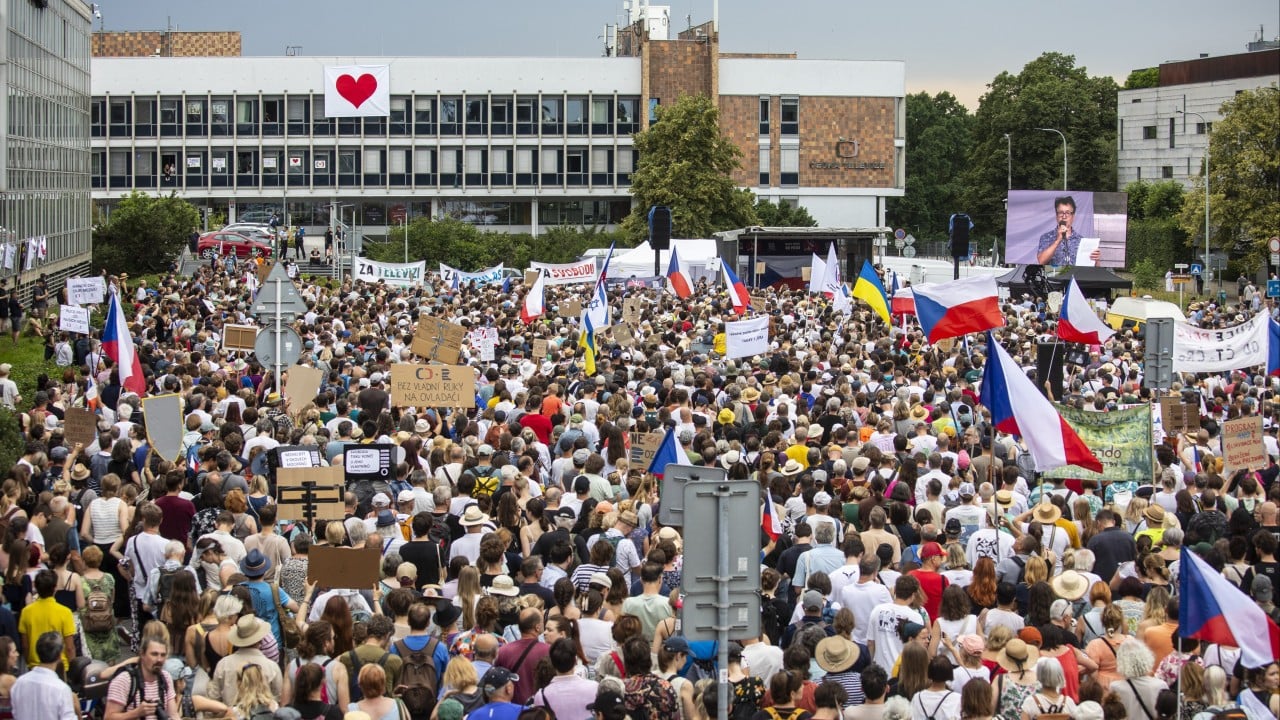
Thousands rally in Prague against government’s public broadcasting overhaul plan
South China Morning Post

The Hill
PoliticsJun 21, 2026 · 1 min
Mike Lee: Senate GOP must do ‘hard work’ to pass SAVE America Act
The Hill