Philippine Daily Inquirer
Philippine Daily Inquirer··3 min read
PH swung back to dollar surplus in May
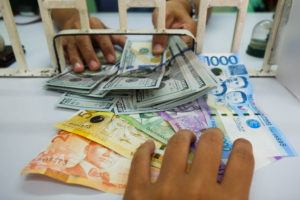
MANILA, Philippines – The Philippines swung back to a dollar surplus in May, snapping seven straight months of deficits as pressures on the country’s external position showed signs of easing.
Latest data from the Bangko Sentral ng Pilipinas (BSP) showed that the country’s balance of payments (BOP)—which accounts for the country’s transactions with the rest of the world—posted a $131-million surplus in May, marking the first time dollar inflows outpaced outflows since October 2025.
READ: PH dollar deficit swells to over one-year high on Middle East crisis
Article continues after this advertisement
This helped narrow the cumulative deficit for the first five months of the year to $7.28 billion from $7.4 billion in the January-April period.
FEATURED STORIES
BUSINESS
BUSINESS
BUSINESS
According to the BSP, the year-to-date deficit was largely due to the continued trade deficit and outflows from foreign portfolio investments, but was partly offset by remittances, foreign borrowings, trade in services and foreign direct investments.
Still, the cumulative deficit was 25.19 percent wider year-on-year and had already reached about 93 percent of the central bank’s full-year deficit estimate of $7.8 billion.
The surplus was also not enough to boost the country’s buffer against external shocks, as gross international reserves () slipped to $103.99 billion—the lowest level since January 2025’s $103.27 billion and well below the central bank’s year-end projection of $111 billion.
But the reserve level remained sufficient to cover 6.7 months’ worth of imports of goods and payments of services and primary income. It was also enough to cover nearly four times the country’s short-term external debt based on residual maturity.
Article continues after this advertisement
Carlo Asuncion, chief economist at UnionBank of the Philippines, said the first surplus of the year appeared to have been supported by large public-sector foreign exchange inflows alongside steady structural sources of dollar earnings.
“This suggests that pressures on the country’s external accounts may be starting to ease, although not yet signaling a full turnaround,” he said, noting that the surplus should be viewed more as a “tactical improvement” than a structural shift.
Article continues after this advertisement
“From a macro perspective, the result reinforces that the Philippines’ external position remains supported by resilient FX inflows and adequate reserve buffers, but underlying vulnerabilities—particularly the structural trade deficit—persist,” he added.
Echoing this sentiment was Robert Dan Roces, group economist at SM Investments.
“For businesses and investors, the message is that external liquidity remains intact and immediate balance-of-payments risks have softened. The bigger question is whether trade, tourism, remittances and investment inflows can keep pace as global uncertainty remains elevated,” he said.
The country’s external position had come under pressure following the escalation of the conflict involving the United States, Israel and Iran. The tensions drove up global oil prices, forcing net energy importers like the Philippines to spend more dollars on fuel imports.
It also pushed investors toward safer assets, triggering a sell-off in Philippine equities and sending the peso to record lows beyond 61 to the dollar.
The BSP has projected the BOP deficit to widen further to $8.5 billion, equivalent to 1.6 percent of gross domestic product, in 2027.
Your subscription could not be saved. Please try again.
Your subscription has been successful.
However, some of these pressures may begin to ease after the United States and Iran signed a memorandum of understanding aimed at ending over three months of war. INQ
View original source — Philippine Daily Inquirer ↗
Related stories

ESPN
SportsJun 21, 2026 · 1 min
Spain have Lamine Yamal back -- and they finally l...
ESPN

ESPN
SportsJun 21, 2026 · 1 min
Serena to play in Wimbledon singles as wild card
ESPN

France 24
PoliticsJun 21, 2026 · 1 min
What's the state of the Strait?
France 24
CNA
SportsJun 21, 2026 · 1 min
Portugal seek sharper edge against Uzbekistan after blunt World Cup start
CNA