ABC News
ABC News··5 min read
Preserving lesbian history, one portrait at a time
When Stacey Bennett came out at 14, she felt alone.
"It was terrifying given there were no lesbian role models for me to look up to," she says.
Today, the Geelong-based portrait artist is making sure future generations don't ever feel like she did.
Bennett, who lives in Victoria with her wife and two children, has just completed an ambitious and deeply personal project: painting portraits of 100 lesbians from across Australia.
"If there were 100 lesbians profiled for me as a 14-year-old, I would have taken comfort in their stories," she says.
Through her Lesbians of Australia series, she is documenting lives that have often been overlooked, creating an archive that celebrates the diversity and resilience of queer communities.
What began as an artistic idea has evolved into something much larger.
Art as a tool of connection
"I started researching lesbians throughout history, particularly closeted women from old Hollywood, and I realised how difficult so many of those stories were to find," Bennett says.
"Then I had this thought: there are countless important stories right here, right now, across Australia — stories that could be at my fingertips."
She started posting callouts online and painting the people who responded.
"[It] slowly turned into this huge archive of lesbian lives that contain the complexities of identity, relationships, grief, love, humour and resilience," she says.
"The motivation has always been visibility.
"But since meeting all these amazing people and spending hours painting each face, it's become more about celebrating our community and sharing stories that people can connect to."
An artist from an early age, Bennett studied a Bachelor of Illustration in her twenties.
"I was constantly painting," she says. "It was then that I began to explore how colour, marks and composition could communicate emotion."
"I want lesbians and queer people to feel seen with the same tenderness and complexity that's shared with me when I sit with them for an hour and listen to them speak about their lives."
Lesbian identity can be complex
For Bennett, the word "lesbian" itself carries significance.
"To me, the term lesbian carries history, community, rebellion, tenderness and identity all at once," she says.
"I also think the word is evolving. The conversations we're having around gender and identity are more nuanced than ever, and I think there's room for complexity within the label."
She deliberately created a space for anyone who felt connected to the term.
Before putting brush to canvas, Bennett spends time getting to know each participant, often through long video calls discussing identity, relationships and life experiences.
"Sometimes those conversations are emotional and we both cry," she says. "Other times they're fun, chaotic or wildly unexpected."
Capturing authenticity
During these conversations, she photographs her subjects, searching for moments of authenticity rather than carefully staged poses.
"I want to capture someone mid-thought, remembering an old love, laughing at themselves, or reflecting on what being a lesbian has meant in their life," she says.
"I use expressive marks, layered inks and oil pastels to build feeling into the portrait. I'm less interested in perfect realism and more interested in capturing someone's essence."
Among the 100 portraits she has painted over the last two years, Bennett has many stand-outs.
One is Cecily, an 83-year-old woman whose reflections on love and loss moved her deeply.
"After our conversation, I sobbed to my wife," she recalls.
Born in 1941, Cecily shared memories of her relationship with Margaret, her partner of more than 40 years. Before meeting Margaret, she had built a life with a husband and children, but finding her partner later in life changed everything.
When Margaret developed dementia, Cecily became her carer and remained by her side until her death.
"She spoke with such tenderness about Margaret's courage to keep going," Bennett says.
"Cecily spoke about remembering both the joyful memories and the painful ones. To her, every memory was a testament to the depth of the love they shared. This has changed the way I think about the hard times in life."
The project has also introduced Bennett to voices from a variety of communities across Australia.
In Lightning Ridge, New South Wales, she met Tiarnie, a 24-year-old Kamilaroi and Murrawarri woman navigating life as both a lesbian and Indigenous person.
Tiarnie spoke candidly about the pressures of moving between different worlds and the criticism that can accompany those experiences.
"She explained that she changes the way she speaks depending on who she's talking to, not because she's hiding herself, but because she's trying to connect with the person in front of her," ," Bennett says.
Despite her age, Bennett was struck by Tiarnie's insight.
"I asked her how she thought we might bring such a divided nation together," Bennett says.
"She was thoughtful for a while, and then said, 'I'm sure there are moments where we can come together beyond race, but I think they're fleeting. It's a bit like happiness, it's real and beautiful when it's there, but it's not a permanent state'."
Celebrating lesbian diversity
Another participant, Jane, described growing up as "the goth kid who never quite fit in", Bennett says.
"At 19, she began transitioning and found support from her mum, dad and the queer community around her, who helped make that journey feel possible."
"What stayed with me was her comfort with uncertainty," Bennett says.
"She spoke about how people often expect definitive answers around identity, but that she's learnt to find peace in not needing to have everything perfectly figured out."
After nearly two years of conversations and portraits, Bennett says the project has changed her profoundly.
"It's taught me to listen to understand more than ever before," she says.
Since completing the milestone of 100 portraits, Bennett hopes the collection will serve as both an historical record and source of connection.
"I hope this body of work is seen as a celebration of lesbian lives in all their complexity," she says.
"More than anything, I hope people can read these stories, connect with them, and feel a little less alone."
View original source — ABC News ↗
Related stories

ESPN
SportsJun 21, 2026 · 1 min
Spain have Lamine Yamal back -- and they finally l...
ESPN

ESPN
SportsJun 21, 2026 · 1 min
Serena to play in Wimbledon singles as wild card
ESPN

France 24
PoliticsJun 21, 2026 · 1 min
What's the state of the Strait?
France 24
CNA
SportsJun 21, 2026 · 1 min
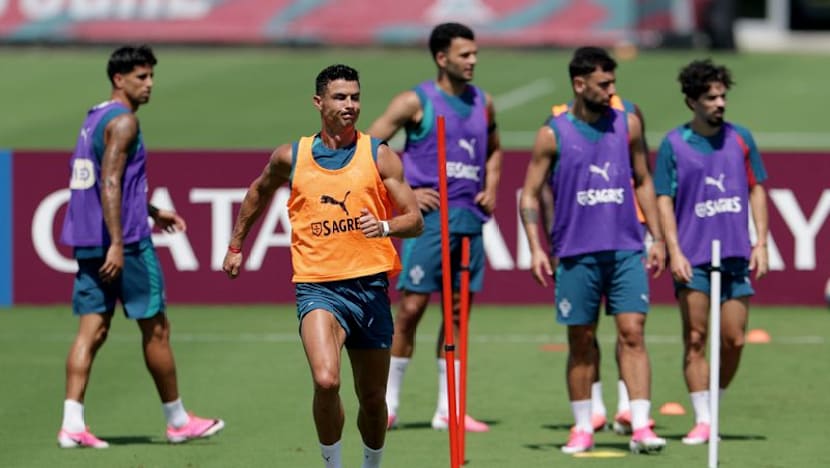
Portugal seek sharper edge against Uzbekistan after blunt World Cup start
CNA