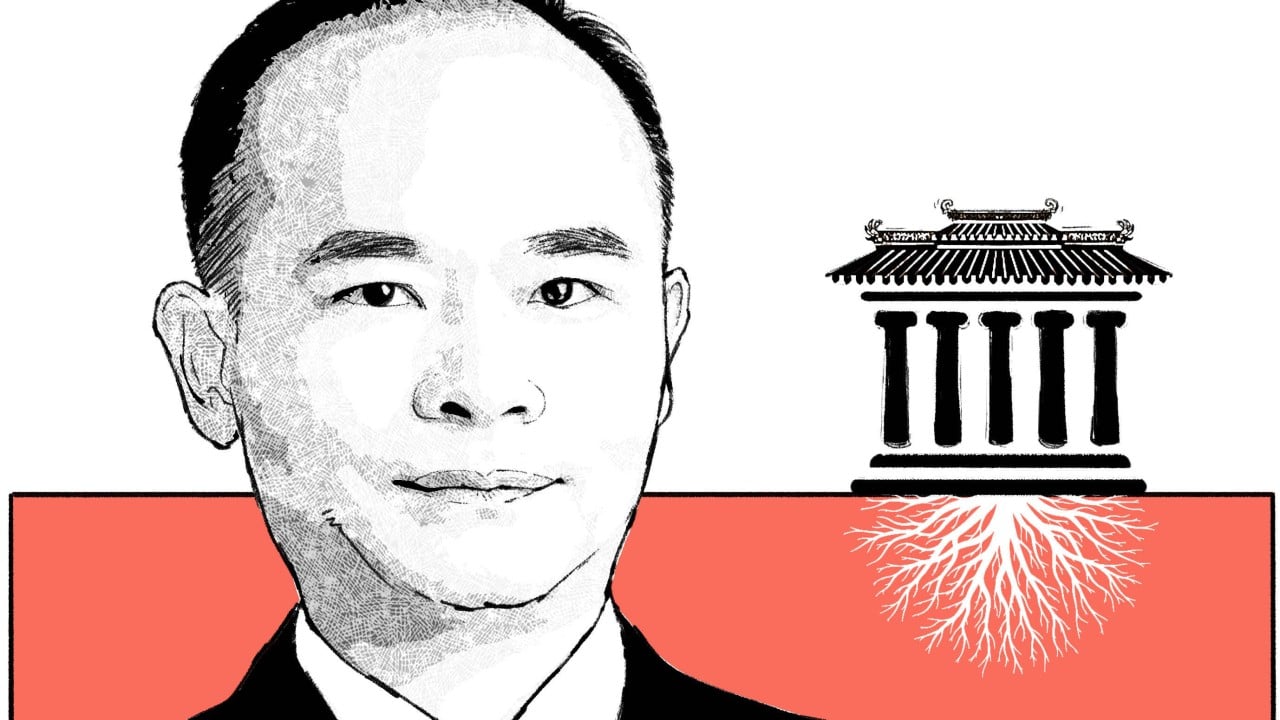
Nie Huihua on the non-Westernness of Chinese government and the challenge to innovation
Nie Huihua, a professor of economics at Renmin University, discusses how an effective understanding of China’s development requires a shift from Western-centric frameworks to an integrated perspective that recognises how formal institutions, informal grass-roots mechanisms and cultural collectivism couple to create a self-consistent and adaptive governance system.
You received economics training at Harvard, but your current research and public writing focus on grass-roots governance in China. When it comes to understanding China, what do you think is most lacking in how Western mainstream economists study the country? What gap are you hoping to fill?
First, I believe that when viewing things through a strictly Western framework, many phenomena become incomprehensible because the Western framework is only one perspective. I can summarise the Chinese and Western systems as two different perspectives. The Western system is more like a bottom-up electoral system, where governments are elected level by level and serve taxpayers. However, China’s system is more like a top-down accountability system, where if you’re not performing well, higher authorities can hold you accountable, similar to ancient supervision and inspection systems. In terms of operational effectiveness, it’s currently difficult to say which system is better or worse in certain aspects. For example, regarding promoting economic growth and maintaining social stability, objectively speaking, each has its advantages and disadvantages. Ten years ago, the advantages of the Western system were very evident. But in the past decade, taking the United States as an example, this system has also encountered some problems. Of course, this doesn’t mean China’s system has no problems. What I’m saying is that this perspective allows us to see issues more objectively and clearly.
FULL EVENT: Opening ceremony of China’s National People’s Congress
Second, under the Western perspective, there may be a particular emphasis on rule of law, political systems and democracy. However, many East Asian countries are so-called low-text countries. Many of their social operational rules are not so formal or not explicitly written down, but instead they rely on implicit clauses and informal institutions. I call this “incomplete contracts”: many things are not formal, and the development of political systems depends on informal institutions. In Western countries, formal institutions are very important in governance. In the East, not only in daily life but even in a nation’s governance, there are many informal institutions. For example, during the Ming and Qing dynasties, at the county level, strictly speaking, only the county magistrate was an imperial official appointed by the court. All others were not and needed to be hired by him personally. He needed to find his own advisers, hire his own servants, recruit his own task runners. This entire set of informal institutions supported him. [Chinese social historian] Qu Tongzu wrote a book, Local Government in China under the Qing, in which he called the Qing dynasty (1644-1911) government at the county level a “one-man government”. A government with only one person as an imperial official, a civil servant with official status – this is simply unimaginable in the West. But this Eastern power maintained long-term rule, relying precisely on the coupling of formal and informal institutions.
The third thing I want to mention is cultural differences. The US and Europe may emphasise individualism more. But in many Eastern countries, including China, Vietnam, Singapore, Malaysia, there is a stronger collectivist thinking. In conclusion, whether it’s systems, informal institutions or cultural differences, they all make it difficult to understand many phenomena or address many issues if we view them purely from a Western standpoint. So, I wrote this book hoping to integrate these things into it.
View original source — South China Morning Post ↗
Related stories

Clark rides roller coaster to 2nd U.S. Open crown

UNC cools off Arkansas to force decisive Game 3
Iraq's plan to stop Mbappé? Ask to play 3 keepers