Indian Express
Indian Express··14 min read
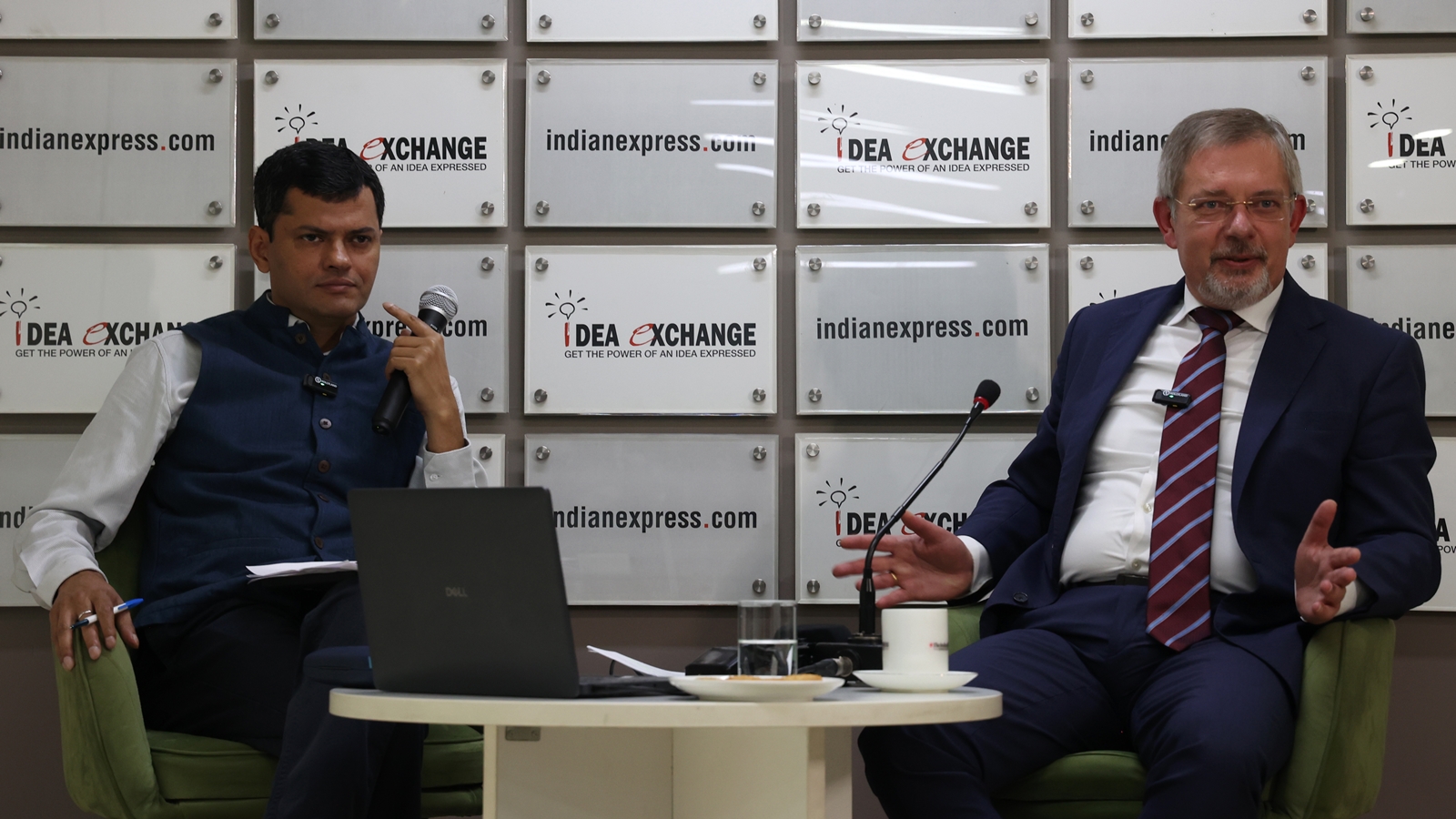
Russian Ambassador Denis Alipov
Denis Alipov, the Russian Ambassador to India, on the solid foundation of the India-Russia relationship, the impact of Western sanctions on defence exports and its continued conflict with Ukraine. He was in conversation with Shubhajit Roy, Diplomatic Editor, The Indian Express
Shubhajit Roy: You are among the first generation of diplomats from post-Soviet Russia to join the Foreign Service. Could you give us a broad overview of how India–Russia relations have evolved over the course of your four postings and where they stand today?
India and Russia have been close friends since before India’s independence, with the Soviet Union supporting India’s decolonisation efforts. Our relationship is built on a remarkably stable foundation. While we may differ on minor issues, we have never disagreed on matters of major international importance or on issues affecting our respective national interests.
Today, one of the key priorities in our bilateral dialogue is addressing the trade imbalance by increasing Indian exports to Russia in order to ensure stable, balanced and mutually beneficial economic ties. India is an indispensable strategic partner for Russia, just as Russia remains an indispensable strategic partner for India.
Shubhajit Roy: How has India’s position on the war in Ukraine evolved over the last four years?
India’s position has remained consistent because it deeply understands the underlying context. For decades, Russia sought to establish a common security framework with the United States, Europe and NATO through dialogue, but those efforts ultimately failed.
Russian Ambassador Denis Alipov (right) with Shubhajit Roy, Diplomatic Editor, The Indian Express (Photo by Renuka Puri)
Following the dissolution of the Soviet Union, NATO disregarded Russia’s security concerns and continued to expand eastwards. Like any self-respecting nation, we cannot accept infringements upon our core security interests or allow an openly hostile neighbour to become established on our borders.
Story continues below this ad
A lasting settlement will require both sides to accommodate each other’s security interests. Otherwise, the conflict is likely to continue.
On India’s Russian oil imports | ‘Russian oil has been advantageous for India over the past several years. We continue to offer competitive prices. If India chooses to reduce imports from Russia, we will simply redirect those supplies to other markets’
Shubhajit Roy: Last year, President Trump claimed he could end the war, yet there has been no resolution. What is the principal stumbling block?
Unlike his predecessor, Joe Biden, President Trump has demonstrated a genuine interest in resolving the conflict. However, the uncompromising position adopted by many European countries on Ukraine remains a significant obstacle.
We are now in an indirect confrontation with the NATO alliance, which was created to counter the Soviet Union and has historically maintained an adversarial position towards Russia. We cannot allow Ukraine to become a NATO member and serve as a permanent source of security threats on our borders.
Story continues below this ad
Furthermore, the Nazi nature of Ukraine leadership, issues such as the ban of the Russian language, restrictions on the Russian Orthodox Church and the overall discrimination against Russian-speaking communities in Ukraine remain matters of serious concern for us. Until these fundamental issues are addressed, the conflict is unlikely to come to an end.
Russian Ambassador Denis Alipov (right) with Shubhajit Roy, Diplomatic Editor, The Indian Express (Photo by Renuka Puri)
Shubhajit Roy: India has a deep defence relationship with Russia. How has the war in Ukraine affected defence exports to India?
I do not believe it has had a serious impact on our defence cooperation.
For many years, we have moved beyond a simple supplier–buyer relationship towards a model based on co-production and co-development. Only a few days ago, I spoke at a seminar marking the 25th anniversary of the BrahMos joint venture. Two-and-a-half decades later, India has institutionalised the principle of self-reliance in defence through the Make in India initiative.
On Indians in Russian military | ‘At present, there are no Indian citizens serving in the Russian armed forces. We stopped accepting Indian volunteers approximately two years ago following a request from the Indian government’
Story continues below this ad
We are proud to have been pioneers in what has now become a central pillar of India’s defence policy. BrahMos missiles, Su-30MKI aircraft, T-90 tanks and Kalashnikov rifles are all examples of this approach.
We are keen to expand cooperation through new projects. Deliveries of the S-400 system are proceeding according to the mutually agreed schedule. Four of the five regiments have already been delivered, and we expect to complete the contract by the end of the year.
Russian Ambassador Denis Alipov
Shubhajit Roy: There is some concern that, because of Russia’s growing proximity to China, India’s relationship with Russia could be tested in the event of a conflict between India and China. Are these concerns justified?
We will never allow our relationship with China to affect our ties with India, and vice versa.
Story continues below this ad
Russia maintains independent and self-sustaining relationships with both China and India, as well as with many other countries. India remains one of the highest priorities in our foreign policy and economic engagement.
While our relations with China have expanded significantly, we would like our cooperation with India to be equally broad and intensive, and we have been entirely consistent on that point.
On Ukraine’s strikes in Russia | ‘We have responded in kind. On the battlefield, Russia is advancing gradually but steadily across all sectors of the front line. The defeat of Russia, on which Ukraine and Europe continue to place their hopes, is objectively impossible’
India is a pragmatic and business-oriented country, although it has at times approached certain areas of cooperation with caution. Nevertheless, we have continued to make progress, which reflects India’s desire to diversify its economic partnerships.
We see growing willingness to expand cooperation across a wide range of sectors, including industry, agriculture, energy, nuclear power, defence, space, culture, humanitarian exchanges and labour mobility.
Story continues below this ad
Russian Ambassador Denis Alipov (right) with Shubhajit Roy, Diplomatic Editor, The Indian Express (Photo by Renuka Puri)
Ritu Sarin: Could you provide an update on two aspects of India–Russia trade relations? First, the contract for 120 Vande Bharat trains that Russia is expected to supply, and second, the delay in Gazprombank commencing operations in India.
We have been awaiting the issuance of a licence for Gazprombank by the Reserve Bank of India. The delay is not on the Russian side.
More broadly, we are keen to expand our financial relationship, including by increasing the presence of Russian banks in India and encouraging more Indian banks to operate in Russia.
As for the Vande Bharat project, we won the contract and the work is proceeding according to schedule. The first prototype is expected by the end of this year.
Story continues below this ad
Anil Sasi: Has the conflict in West Asia exposed the limitations of American security guarantees? And does that in any way overlap with Russia’s concerns about NATO expansion?
NATO is, in our view, an outdated organisation that should be dismantled.
Our assessment is that the United States has failed as a security provider for the Gulf countries and made a serious mistake by attacking Iran.
We also observe a broader shift in global attitudes towards the United States. Its position as the sole dominant global power is weakening. President Trump’s current emphasis on domestic priorities suggests a reduced interest in maintaining claims to global dominance, which, in our view, would be beneficial for the international system.
Story continues below this ad
Russian Ambassador Denis Alipov (right) with Shubhajit Roy, Diplomatic Editor, The Indian Express (Photo by Renuka Puri)
Shubhajit Roy: Many would argue that Iran has been one of Russia’s key partners, particularly given its supply of Shahed drones. Russia is therefore also a significant actor in the region. Is the current situation a test case of whether Russia can push back against American influence as a security guarantor in the Middle East?
We have no intention of imposing ourselves on the Middle East or replacing any other external power in the region. However, we do have legitimate interests there, and we are determined to defend them.
Russia has long been a member of the Quartet on the Middle East peace process, which has regrettably been sidelined in recent years, particularly following the emphasis placed on the Abraham Accords. We continue to believe that the Palestinian issue can only be resolved on the basis of a two-state solution.
The region to Russia’s south is of considerable strategic importance to us. I would not say that we have been as actively involved in efforts to end the conflict involving Iran as countries such as Pakistan, Qatar and several other Gulf states. Nevertheless, we have made proposals to both Washington and Tehran and offered assistance, including with regard to the storage of enriched uranium.
Those proposals were not accepted. President Putin has discussed the possibility of Russian involvement in resolving the crisis with both President Trump and the Iranian leadership. Russia remains ready to assist whenever our help is required.
Anil Sasi: How do you explain Ukraine’s ability to reclaim territory and conduct strikes deep inside Russia?
Ukraine has intensified its drone attacks, and we have responded in kind.
On the battlefield, Russia is advancing gradually but steadily across all sectors of the front line. The basic reality is that the defeat of Russia, on which Ukraine and some European governments continue to place their hopes, is objectively impossible.
Europe’s attempt to wear Russia down economically has also failed. We possess a significantly higher threshold of endurance. Europe is not prepared to put everything at stake, whereas Russia is.
It should also not be forgotten that Russia is a nuclear power. We retain the right to use nuclear weapons if the existence or territorial integrity of the Russian state is threatened.
P. Vaidyanathan Iyer: European economic pressure has pushed Russia closer to China. How do you view this growing reliance?
Our trade with China was expanding well before 2022.
At the same time, we remain determined to deepen our economic relationship with India, although the response from the Indian side has been more cautious.
The assumption that Russia’s relationship with China should automatically be viewed as a sensitive issue for India is fundamentally mistaken. A broader and more diversified economic partnership between Russia and India would help alleviate such concerns.
P. Vaidyanathan Iyer: Do you see significant reluctance on India’s part when it comes to expanding trade with Russia?
Not on the part of the government.
The business and financial communities have naturally been more sensitive to the impact of sanctions, and we understand that. India’s economy is deeply integrated into global trade and financial networks. India would not wish to sacrifice its relations with the United States and Europe for the sake of its relationship with Russia.
My point is that Western sanctions interfere in what should be a bilateral relationship between Russia and India. These are matters that do not concern third parties. We see this as a manifestation of a neo-colonial mindset—the notion that others know better than India what India’s interests should be.
Such pressure tactics are illegitimate and should be rejected.
Flora Swain: There have been reports of Indian nationals and North Korean soldiers participating in the war in Ukraine on Russia’s side. What safeguards are in place to prevent foreign nationals from being recruited into the Russian military?
Russia has faced demographic challenges for more than three decades. That is a long-term issue and is unrelated to the conflict in Ukraine.
At present, there are no Indian citizens serving in the Russian armed forces. We stopped accepting Indian volunteers approximately two years ago following a request from the Indian government.
In fact, Russia has never operated a programme specifically designed to recruit foreign nationals. Those foreign citizens who serve in the Russian military do so on a voluntary basis.
Sukalp Sharma: Given the uncertainty surrounding sanctions and India’s purchases of Russian oil, do you expect current import levels to be maintained once the latest US sanctions waiver expires? And how do you assess India’s continued purchases of Russian crude following sanctions imposed on companies such as Rosneft and Lukoil?
I cannot predict the precise volumes of Russian oil that India will purchase in the future, either with sanctions in place or without them.
What is clear is that Russian oil has been economically advantageous for India over the past several years, particularly after Europe increased its purchases of Middle Eastern crude, which had previously been one of India’s principal sources of supply.
We continue to offer oil at competitive prices, and India will always be welcome to purchase it. If India chooses to reduce imports from Russia, we will simply redirect those supplies to other markets.
We are comfortable with either outcome. Nevertheless, Russian oil remains among the most competitively priced options available. As of May this year, Russia accounted for approximately 38 per cent of India’s total crude oil imports.
Shubhajit Roy: Before that, Russia accounted for less than one per cent of India’s imports.
Sanctions should be understood for what they are: a political instrument of pressure. They should be rejected.
There is another, less obvious but equally important point. Even if a political settlement in Ukraine is eventually reached, sanctions may remain in place for a considerable period. Waiting for them to disappear would only damage Russia–India cooperation over the long term.
Neither Russia nor India wants that outcome.
Russia remains, and will continue to remain, one of India’s principal partners. Nuclear energy, defence and space cooperation are among the key pillars of our relationship.
Rosatom is the world’s leading nuclear energy company. We have worked successfully with India for many years, even without legislation such as the SHANTI Act, while fully accommodating India’s positions on safety, liability and regulatory conditions.
We are also engaged in extensive discussions on artificial intelligence and large language models. Russia and India cannot rely exclusively on technologies developed in either the United States or China, and both countries are investing heavily in developing their own capabilities.
Sukalp Sharma: G7 sanctions and the oil price cap have led to what Western governments describe as Russia’s “shadow fleet”. Critics have raised concerns about the age of these vessels, safety standards, the disabling of AIS transponders and ship-to-ship transfers. How do you respond?
These are artificial pretexts.
The term “shadow fleet” is used because many of these vessels are not insured through Western providers such as Lloyd’s. They are insured by Russian, Indian and other non-Western insurers and should therefore be regarded as part of a normal commercial fleet.
This is yet another example of double standards being applied in order to single out political opponents.
The actions recently taken by Britain and France are unacceptable. Russia has begun escorting certain vessels and tankers with naval ships in order to prevent such incidents.
The vessel detained recently in the English Channel was not sailing under the Russian flag. It may have been carrying Russian oil, although I cannot say whether the cargo was destined for India.
In our view, such actions amount to a form of piracy that Britain appears to have revived.
Amrita Nayak Dutta: India is considering additional S-400 systems, a fifth-generation fighter aircraft and potentially the manufacture of the Su-57 in India. What is the status of these discussions? Could the war in Ukraine affect supply chains, and how will the RELOS agreement strengthen defence cooperation?
We are in discussions on all of these promising projects.
The RELOS agreement is a standard arrangement that India has concluded with a number of countries. It provides for mutual logistical support, including maintenance, repair and rest facilities for military personnel operating in each other’s territories.
There is nothing particularly unique about this agreement between Russia and India. India has entered into similar arrangements with other partners.
Harikishan Sharma: The conflict in West Asia has disrupted fertiliser supplies and affected some of India’s traditional sources. Has Russia stepped in to fill the gap, and do you expect fertiliser exports to India to continue increasing?
Russia currently supplies approximately one-fifth of India’s fertiliser requirements, including urea and other products. Naturally, these volumes fluctuate depending on market conditions and other factors.
As I understand it, demand in India has increased because of disruptions linked to the conflict in West Asia, as well as changes in domestic production and allocation patterns.
We are prepared to maintain current supply levels and, where possible, increase them, while taking into account Russia’s own domestic requirements and production capacity.
Dheeraj Mishra: You mentioned that the conflict in West Asia affected the Vande Bharat project. Could you elaborate? And as India expands its high-speed rail network, is Russia interested in similar cooperation in that sector?
In the case of the Vande Bharat project, there has only been a minor and mutually agreed postponement of the prototype delivery, amounting to roughly four months.
The train is being manufactured in India using domestic components and supplies. From what I have heard, the crisis in West Asia may have had some indirect impact on the project, although we hope that any such effects are now behind us.
Ravi Dutta Mishra: What is the current status of rupee–rouble trade and Sberbank’s operations in India?
We already have a functioning mechanism for conducting transactions in national currencies—roubles and rupees—and Sberbank is making full use of it.
Indian banks should also take greater advantage of these opportunities and of the bilateral mechanisms that have been established to expand trade in national currencies.
Sberbank has maintained an active presence in India and continues to expand its activities. It is also involved in projects related to artificial intelligence, the digital economy, digital solutions and education.
Harish Damodaran: You referred to the substantial trade imbalance between India and Russia. In which sectors could India increase exports in order to help narrow that gap?
The opportunities are extremely broad.
They include textiles, agricultural products, tea—which India has traditionally exported to Russia in significant quantities—as well as buffalo meat and marine products.
Labour mobility is another area with considerable potential. There are also opportunities in higher value-added exports, including industrial and household machinery.
Before the conflict in Ukraine, the Russian market was supplied partly by domestic producers and, to an even greater extent, by European manufacturers. Today, a large share of the consumer goods available in Russia comes from China.
The question is: why not India?
India possesses all the necessary capabilities to compete successfully in these sectors.
Sandip Das: What is the status of the proposed two-million-tonne urea joint venture with Uralchem?
The project remains on track and will ultimately be implemented.
Once completed, it will make a significant contribution to meeting India’s agricultural requirements and further strengthen cooperation between our two countries in the fertiliser sector.
View original source — Indian Express ↗
Related stories
Dawn
NewsJun 22, 2026 · 1 min
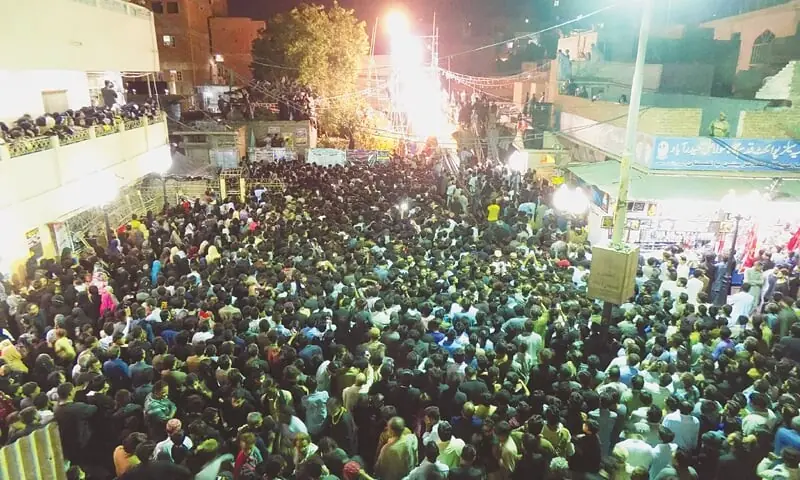
14 hurt after vehicle crashes into tent outside DHA imambargah in Karachi
Dawn
Dawn
BusinessJun 22, 2026 · 1 min
WITH the signing of a memorandum of understanding between the US and Iran, an interim deal has been agreed
Dawn
Bloomberg
BusinessJun 22, 2026 · 1 min
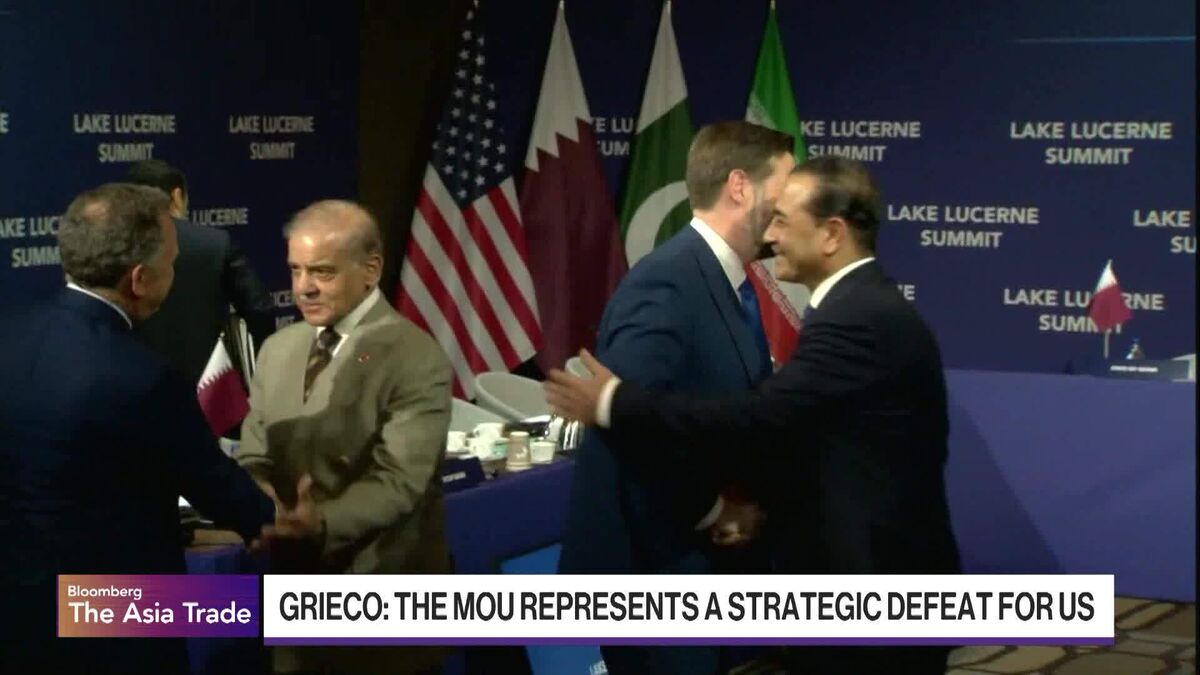
Iran Deal 'Strategic Defeat' for US: Defense Analyst
Bloomberg
ABC News
SportsJun 22, 2026 · 1 min
From sleeping in his car and no 'plan B', Paro now has shot at history
ABC News