ABC News
Video shows moment Iran walks out of peace talks with JD Vance
High-level peace talks between the United States and Iran hit an early snag when one of the Iranians representatives abruptly left the room while the Americans were taking their seats.
US Vice President JD Vance entered the room at Switzerland's Lake Lucerne summit and was taking his place at the negotiation table when a video showed him watching the men sent by Tehran walk away from that portion of the meeting.
The two sides are being mediated by Pakistan and Qatar at the talks. The video also shows the Pakistani Prime Minster Shehbaz Sharif and Army Chief Field Marshal Asim Munir watching as Iranian Foreign Minister Abbas Araghchi removes himself from the room.
Earlier, Mr Sharif and Mr Munir greeted Mr Araghchi and Speaker of Iranian Parliament Mohammad Bagher Qalibaf, but this was the moment representatives from all sides were to be seen in a room together.
Ahead of the event, analysts had told the ABC that "direct US-Iranian optics at that level are always politically radioactive in Iran" and the regime "will therefore try to choreograph the image very carefully".
Mr Vance even made comments that these talks were historic due to the seniority of the people present, himself as the second-highest office holder in the US included.
From the video taken inside the room, this is what we have learnt about what happened.
Inside the room
With a memorandum of understanding already signed between the US and Iran, the hope was that this session would mark the beginning of more concrete negotiations.
The two sides have agreed to a 60-day timeline to arrive at a peace deal, albeit giving themselves the option of a mutually agreed-upon extension.
Mr Vance, followed by Donald Trump's son-in-law Jared Kushner — who does not hold an official role in the US administration but is called the "special envoy for peace" — and Middle East envoy Steve Witcoff, arrived in the room at Bürgenstock Resort in Stansstad first.
The US delegation's entrance was marked by the flash of multiple cameras as they made their way to Pakistani Prime Minister Shehbaz Sharif and Army Chief Asim Munir.
Pakistan has played a critical role in the Iran-US negotiations to end the war because it enjoys a friendly relationship with both sides. Munir's status as a powerful military figure with ties to Iran's Revolutionary Guards commanders has been particularly useful.
Video from Reuters shows Mr Vance, as well as White House advisors Jared Kushner and Steve Witkoff being welcomed into the room by the Pakistani officials.
Mr Vance warmly shakes each man's hand before making his way over to a set of tables set up for the meeting. The tables are marked with each nation's flag, and appear to denote a seating order of: US, Qatar, Pakistan and Iran.
Video shows the vice president finding his seat in the back corner of the room as Mr Witkoff and Mr Kushner exchanged words with Mr Sharif and Mr Munir.
There were a lot of leaders in the room, but not the man deferred to by the US delegation.
"President Trump is well aware that it would not be a good look for him to be there," said Jessica Genauer, a conflict expert at the University of New South Wales.
"This is incredibly significant because that would make it look like he's probably conceding too much to the Iranian regime and there wouldn't really be an equal counterpart to meet him there."
From there, the video shows the Pakistani Prime Minister welcoming Mr Araghchi with open arms, before something shifts.
The two men talk and shake hands and all appears to be going well. But as Mr Araghchi moves slightly to the side, he looks up to where the press pack appear to be waiting across the room.
He turns his head slightly and looks directly at the Reuters camera on his right before turning around and walking back the way he came. He is followed by another member of the Iranian delegation and there appears to be an impromptu conference of the men near to the door.
Mr Sharif appears confused and concerned. He clasps his hands and waits to see how this moment will unfold.
For a few seconds, Mr Vance and a high-ranking member of the Iranian regime were in the same room at the same time in front of waiting cameras.
From an angle supplied by Associated Press, we can see that Mr Vance had been behind the negotiation table watching on as Mr Araghchi greeted Mr Sharif and likely saw the moment slip away and the Iranian foreign minister leave the room.
After Mr Araghchi stepped back, he conferred with colleagues and then the group left the room.
Video shared by Emirati analyst and researcher Amjad Taha picks up the scene from there and shows more of the confusion around the moment the Iranians leave the room.
As the camera zooms in on Mr Vance, who was talking near his seat in the corner of his room, he appears visibly concerned by the Iranian delegation's walk out.
He approaches Mr Sharif and Mr Munir shortly afterwards and the three men are seen talking before someone chimes in with a question: "How are the talks going so far, Mr Vice President?"
Mr Vance smiles and responds: "Great, thank you."
Trump issues threats
US and Iranian sources provided separate accounts of the discussions in Switzerland, according to Reuters.
Just as the two sides were set to meet, Mr Trump took to Truth Social with a threat, saying "we'll hit Iran very hard again, just like we did last week, only harder!!!" unless it stopped "their highly paid PROXIES in Lebanon," referring to the militant group Hezbollah.
He also gave an interview to Fox News on Sunday, saying if Iran closed the Strait of Hormuz, the US would "blow the s*** out of them."
Mr Trump's "verbal threats" were cited as a reason behind Iran's snub at the negotiations in Switzerland by Iran's state media.
"At the same time as the talks began in Switzerland, Donald Trump published a message on X in which he repeated his threats and remarks against Iran," Iran's state news agency IRNA said.
A US diplomat involved in the talks told Reuters, "the Iranians never left and are still here meeting and negotiating deep into the night," earlier.
"We've talked about the strait, Lebanon, nuclear issues, and details of implementing the MOU, among other topics,"' the diplomat said.
Iranian state media initially said the talks had entered a "difficult phase", but Araghchi was more upbeat about its progress later in the night, tweeting that "major progress" had been made to end the conflict in Lebanon.
He added the first real test would be the so-called "Lebanon de-confliction cell".
Andreas Krieg, a senior lecturer at King's College London, said the "Lebanon language" in the Iran deal was important.
"The United States cannot literally commit Israel to ending the war in Lebanon if Israel is not a formal party to the agreement," he said.
"What Washington can do is commit to use leverage over Israel, alter the military and diplomatic environment, and make Lebanon part of the broader de-escalation package.
"For Iran, even that is useful because it internationalises Israeli conduct in Lebanon and gives Tehran a way to claim it defended the Axis politically without ordering Hezbollah into a ruinous escalation."
A statement released by the Qatari foreign ministry said the technical talks would continue for the rest of the week.
View original source — ABC News ↗
Related stories

Euronews
PoliticsJun 22, 2026 · 1 min
Europe Today: Starmer set to step down as US-Iran talks and Moldova summit unfold
Euronews

RNZ
PoliticsJun 22, 2026 · 1 min
Police investigating suspected breaches of sanctions against Russia
RNZ
SBS News
PoliticsJun 22, 2026 · 1 min
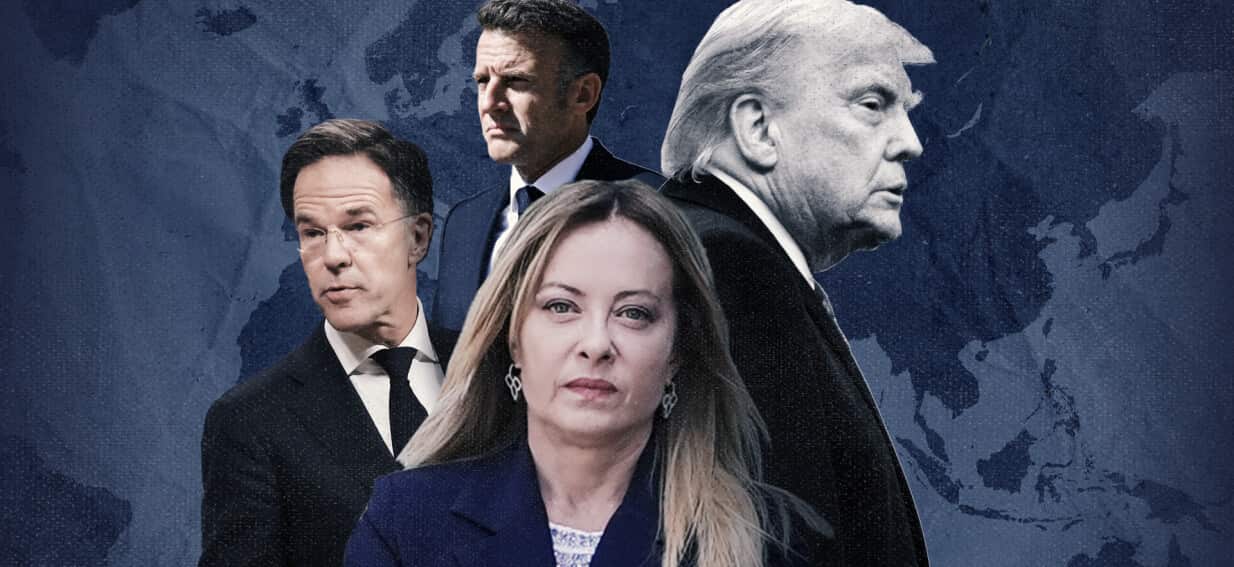
Europe's 'Trump whisperer' was its bridge to the White House. Now that bridge is cracking
SBS News

TASS
PoliticsJun 22, 2026 · 1 min
Ukraine loses 9,500 troops, mercenaries in special military op zone in past week — expert
TASS