Indian Express
NEP will fail if it doesn’t reach every affiliated college
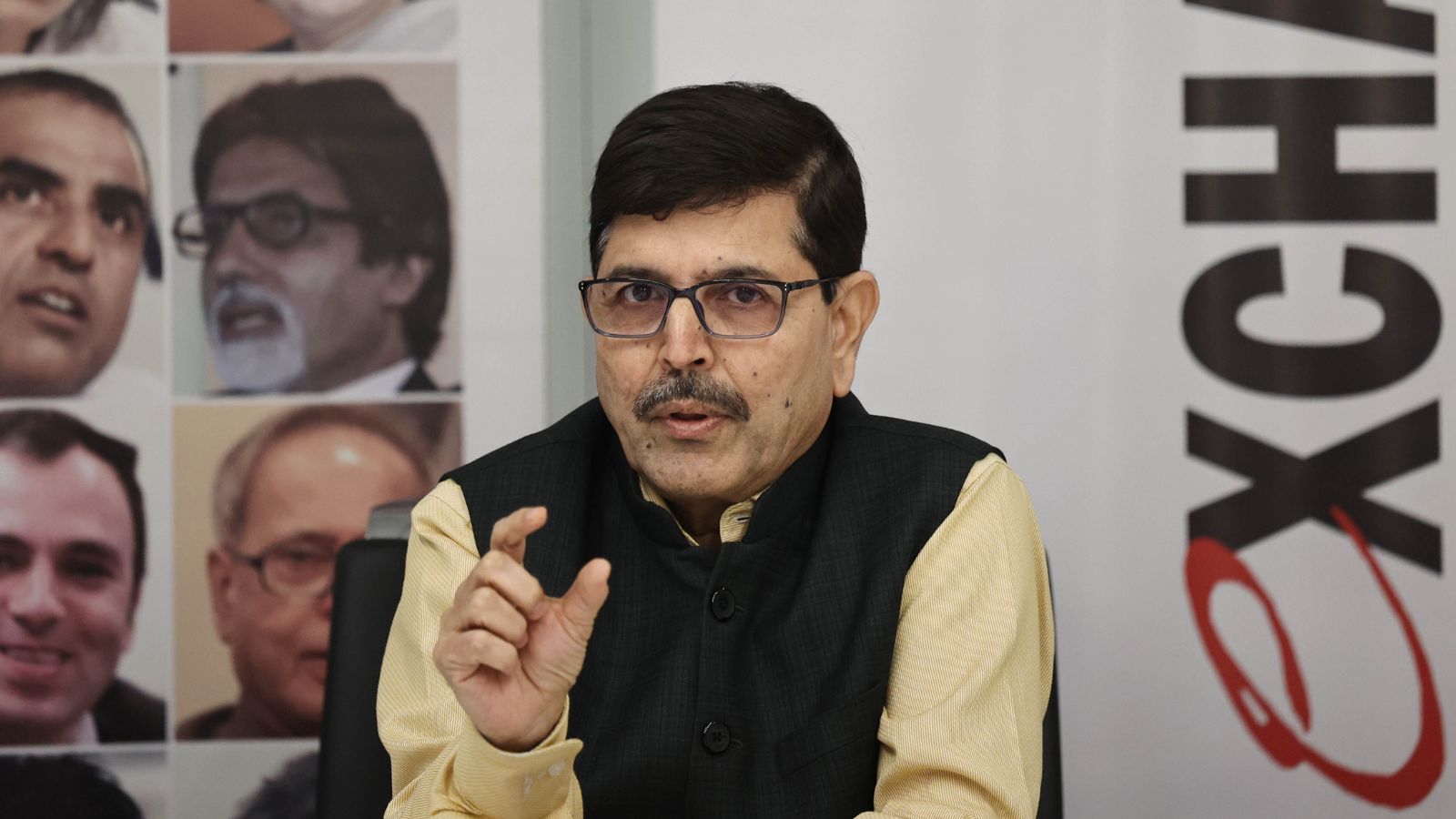
As Maharashtra’s higher education sector undergoes significant changes, universities are grappling with challenges ranging from implementation of National Education Policy (NEP) and faculty shortage to improving research quality and securing resources beyond public funding and adapting to growing presence of private and foreign universities. In a conversation with The Indian Express, University of Mumbai Vice-Chancellor Prof Dr Ravindra Kulkarni discussed the opportunities and challenges shaping state public universities today. Amid the ongoing debate over CBSE’s On-Screen Marking (OSM) system, Kulkarni also shares lessons from the university’s nearly decade-long experience with digital process of evaluation.
Maharashtra is leading in NEP implementation and you have played a key role in the process. What do you think is the biggest challenge in NEP implementation?
The biggest challenge in implementing NEP lies in the large number of affiliated colleges under public universities. Since the policy places significant emphasis on undergraduate education, the challenge is to make it truly aspirational while ensuring academic flexibility, multidisciplinary learning and an interdisciplinary culture.
The real task is not designing policies but ensuring they reach every affiliated college and are implemented in the right spirit. This requires continuous engagement with all stakeholders — students, colleges, managements and even schools from where prospective students come. Otherwise, the NEP risks becoming merely a curricular framework.
This challenge is particularly significant for the University of Mumbai, which has more than 900 affiliated colleges spread across seven districts. Any change in curriculum structure, academic regulations or new initiatives must be communicated effectively across this vast network.
To address this, we created and strengthened the cluster system, which was initially used for conducting examinations. Under this model, affiliated colleges are grouped into 106 clusters, including separate clusters for arts, science, commerce, engineering and pharmacy colleges. Each cluster consists of seven to eight colleges and is coordinated by a lead institution, usually an A-grade, A+ grade or autonomous college. Many universities across the country are now exploring similar cluster-based systems.
Despite this, there is still large-scale unawareness among stakeholders about the NEP, especially regarding the new four-year undergraduate structure. Many students also question why they should pursue an additional year when they can seek higher education or employment after a conventional three-year UG degree. What would you say to them?
Students need to understand the advantages of the four-year honours programme, which has been designed with a strong employability focus. Under this structure, students complete one internship in the third year and another mandatory internship in the fourth year, while also gaining deeper subject knowledge. The programme includes elective and minor courses, allowing students to acquire skills in emerging fields and graduate with stronger professional profiles.
Story continues below this ad
A second major benefit is global academic alignment. Earlier, students seeking admission to master’s programmes abroad had to complete an additional year of postgraduate study in India to meet the requirement of four years of education after Class 12. The four-year honours degree now places Indian students at a globally comparable qualification level.
Thirdly, the programme offers greater specialisation, enabling students to develop deeper expertise in their chosen discipline.
Whenever a new system is introduced, some aspects may not be fully clear to all in the beginning. However, we must learn from the implementation process, address issues as they arise, and continue refining the system based on those experiences.
One of the important attractions of the NEP is the possibility of creating tailor-made combinations of courses… Do you think our higher education system is capable of allowing that kind of flexibility?
Story continues below this ad
This is one of the major mental barriers we need to overcome. A key objective of the NEP is to break academic silos and promote interdisciplinary learning and flexibility. However, institutions, faculty, students and managements have long been accustomed to traditional structures, making implementation challenging.
Such barriers can only be removed gradually through sustained efforts and successful examples. Universities must take the lead in demonstrating how flexibility can work in practice. One example is our collaboration with the College of Engineering (COEP) in Pune. Many engineering students aspire to appear for competitive examinations that require knowledge of subjects such as political science, history and geography. Under the new framework, COEP students can simultaneously pursue a second degree from Mumbai University in humanities or social sciences while continuing their engineering education.
Mumbai University has been using On-Screen Marking (OSM) since 2016 and is among the few institutions with long experience of the system. Based on that experience, what do you think may have gone wrong with the CBSE implementation?
I cannot speak particularly about CBSE’s OSM as its implementation is at a much larger scale, and I have not seen its system in operation. However, I can explain the challenges that generally arise in OSM. In OSM, the first stage is scanning answer sheets and converting them into digital records for evaluation. Since answer books can run into 30 or more pages, the scanning process must be fully integrated. Any mismatch or cross-mixing of pages can create serious problems. To address this, we use multiple identification layers, including barcodes, student identification and attendance tracking, ensuring that every answer sheet remains linked to the correct student and can be traced easily.
Story continues below this ad
Even a small software error can become significant when lakhs of answer sheets are involved. Therefore, OSM requires near-perfect accuracy. The system must not only ensure correct scanning but also present answer sheets properly to evaluators.
The second challenge is evaluation management. Since answer sheets are anonymised and distributed digitally, the software must monitor evaluators’ progress and allocate work efficiently. At the same time, it must ensure that no question is left unevaluated. The software should be able to flag unevaluated answers before marks are submitted. Students also need to follow prescribed formats, such as writing question numbers correctly, so that responses can be identified accurately.
Over the years, we have strengthened our system by addressing issues as they emerged. Our current accuracy is above 99 per cent.
There is a question now as to whether CBSE should have waited another year or conducted more pilot runs before implementing the system. In your experience, how did Mumbai University approach OSM?
At the varsity, OSM was introduced in 2016. Although our challenges were not exactly the same, the transition was not easy. Ideally, such reforms should be implemented in phases, but at the time the university adopted the system across all courses in one go to enhance transparency, confidentiality and reduce human intervention.
Story continues below this ad
It was one of the toughest years for the varsity, with its reputation at stake. The subsequent leadership then had to take efforts to bring the university back on the right path and restore its reputation. It worked towards building complete confidence in OSM, and over time we strengthened it.
Safety and reliability of the software is the most important aspect, in addition to proper training of staff. If the software is robust and the staff are well-trained, OSM is the best approach for evaluation.
Despite various efforts at digitalisation to eliminate human intervention in the evaluation process and ensure transparency, a recent paper leak once again brought the spotlight back on issues within the examination system. How do you view this incident?
The incident was, in fact, detected immediately because of the digital process itself. In a digital delivery system, if something goes wrong—for example, when a photograph of a question paper is found in circulation—it can be traced through the barcode printed on it. It was because of this system that we could verify that a leak had actually occurred.
Story continues below this ad
Those involved were immediately terminated and a police complaint was filed. It is also important to note that this incident occurred in the University’s Centre for Distance and Online Education (CDOE), which until now functioned separately and has only recently been brought under the University’s overall examination system. As the CDOE is now completely integrated into the main examination framework, we will be able to provide stronger support through our own permanent faculty members.
The paper leak case showed the involvement of an insider, particularly a contractual staff member against whom a police complaint was also filed. The University is largely dependent on contract employees. How do you plan to tackle this?
The shortage of faculty has been one of our major challenges. Against a sanctioned strength of 364 teaching positions, only around 120 faculty members are currently in service. This gap has emerged because there was virtually no recruitment for nearly a decade while faculty members continued to retire.
We have now received permission to take up recruitment. The process has already begun and is expected to be completed by August. We expect to fill around 136 faculty positions. Once these appointments are made, the University will be in a much stronger position and will be able to rely primarily on regular faculty members rather than ad hoc arrangements.
Story continues below this ad
Do you believe universities are receiving sufficient government support, or should they increasingly generate their own resources?
There is always scope for greater public investment in higher education. At the same time, it is important to recognise the support being provided through various government initiatives. For example, under PM-USHA, several universities in Maharashtra have received substantial grants through the 75:25 funding model shared by the Centre and the state. Some universities have received funding of up to Rs 100 crore. The government has also supported specialised centres of excellence in areas such as quantum computing and artificial intelligence. In addition, the Maharashtra government is considering dedicated research funding mechanisms for state universities.
While government support is increasing, universities cannot rely solely on public funding if they aspire to compete with leading institutions. They must diversify their resources through industry partnerships, research grants, alumni engagement, CSR contributions and philanthropy. The IITs provide a useful benchmark in this regard. Universities must therefore encourage faculty to actively engage with industry, research and innovation.
At a time when public universities in the state are facing multiple challenges, Maharashtra is also witnessing the growth of private universities and the entry of foreign universities. In such a competitive environment, how will state universities remain relevant and survive?
Story continues below this ad
One of the greatest strengths of state universities is that they provide education to the masses, including students who may not come from a strong economic background.
Across India, more than 600 public universities cater to nearly 90 per cent of students in higher education. Out of roughly 4.5 crore students pursuing higher education, the overwhelming majority are enrolled in public institutions. Centres of excellence such as IITs cater to a select segment of students. State universities have a different responsibility — we are committed to providing opportunities to the masses.
The real challenge is not competition for enrolment. Private and foreign universities are not targeting the same student population. Our objective is to ensure that common students receive affordable higher education of the highest possible quality. And this requires us to become more innovative in raising resources through industry partnerships, research funding, alumni support, philanthropy and other public sources.
View original source — Indian Express ↗
Related stories

TechRadar
TechnologyJun 22, 2026 · 1 min
Forget the cheap knock-offs, my favorite super-stylish backpack changed how I survive events across the world
TechRadar

TechRadar
TechnologyJun 22, 2026 · 1 min
I test audio kit and these are the 3 Bluetooth speakers I always reach for — and the only ones I'd recommend in 2026
TechRadar

AllAfrica
TechnologyJun 22, 2026 · 1 min
South Africa: South Africa Waits As United States HIV Funding Faces Axe
AllAfrica

TechPana
TechnologyJun 22, 2026 · 1 min
How a Visa Setback Became a Turning Point for Nepal’s Mountain Photographer Sandip Sharma
TechPana