CNA
CNA··3 min read
India looks to build global brands around yoga
Asia
Many Indians see yoga as a way of life rather than a consumer activity, posing a challenge for companies seeking to build brands around the wellness phenomenon.
New: You can now listen to articles.
This audio is generated by an AI tool.
22 Jun 2026 02:00PM
MUMBAI/NEW DELHI: For many Indians, yoga is not reserved for studios, retreats or subscription memberships.
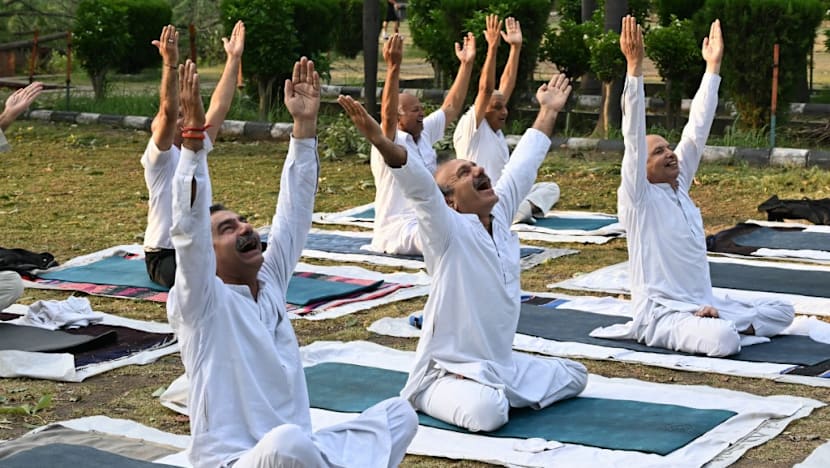
The centuries-old Indian tradition is commonly practised in parks, schools and community spaces, and its accessibility is often cited as a key reason for its popularity.
More than a decade after the United Nations adopted an India-backed resolution declaring Jun 21 as the International Day of Yoga, the occasion is marked around the world through mass events and public celebrations.
This year, Prime Minister Narendra Modi led the main event in Kolkata, while yoga sessions were held across the country and at events organised by Indian missions overseas.
Yoga's global popularity has spawned an industry spanning apparel, wellness apps and corporate programmes.
But building businesses around the practice is not always straightforward in India, where analysts say many practitioners continue to view yoga as a way of life rather than a consumer activity.
That has not stopped entrepreneurs from trying to build globally recognised brands around the tradition.
BEYOND THE YOGA MAT
For many practitioners, one of the first purchases linked to yoga is simple: comfortable clothing.
“You don’t need much to do yoga apart from open space. But you do need proper clothing – something that can stretch as you do your poses. It helps you do yoga well,” said Mumbai resident Ritu Tiwari.
That demand has created opportunities for local brands such as Yamayoga, an Indian activewear label that positions itself around values often associated with yoga, including sustainability and a connection with nature.
“The whole idea (is) about sustainability and everything comes from being connected to mother nature and of course, also as a yoga practitioner,” said the company's creative director Santoshi Shetty.
The growth of India's digital commerce sector has made it easier for smaller wellness brands to reach consumers directly. Yoga tourism is also helping firms find customers beyond India.
Visitors from around the world travel to the country each year for teacher-training courses, retreats and wellness programmes. For companies like Yamayoga, some of those visitors become long-term customers after returning home.
“A lot of people come here for teacher training and those also become our customers. They also find us when they go back. They want to buy (from) us again. That gives us good exposure and also a global audience,” said Yamayoga founder Sushant Sukhija.
“I don't think any other sport or activity exists in a way that so many people from around the world would come here to learn it and go back to their country to teach it.”
A GLOBAL MARKET, BUT SMALLER DOMESTIC INDUSTRY
India has successfully exported yoga as a cultural practice.
Industry estimates put the global yoga market in the tens of billions of dollars, with further growth expected in the coming years. India's domestic yoga market, by comparison, is estimated at around US$5 billion to US$7 billion.
Analysts say one reason India's yoga industry remains relatively small is cultural. For generations, yoga has been viewed as something that does not require specialised equipment or services.
That gap has prompted questions about how Indian firms can transform a cultural tradition into internationally recognised commercial brands.
Modi has frequently spoken about what he calls a "new yoga economy" encompassing tourism, retreats, apparel, equipment, trainers and corporate wellness programmes.
Analysts say future growth will likely depend on how businesses connect yoga with broader lifestyle and technology services.
“We need to really be clear on how we combine the lifestyle and effects into something which is an overall business proposition,” said Arpita Mukherjee, a professor at the Indian Council for Research on International Economic Relations, a New Delhi-based think-tank.
“Then you have to also go into other modern services.”
That could include fitness-tracking wearables, wellness applications, nutrition services and travel experiences built around yoga and healthy living.
But analysts say that will require strong design, efficient distribution networks and the ability to scale.
For Indian entrepreneurs, the challenge now lies in building yoga brands that can travel as far as the practice itself.
Source: CNA/mp(ca)
Related stories

ESPN
SportsJun 22, 2026 · 1 min
Transfer rumors, news: PSG to compete with Man Uni...
ESPN

OnlineKhabar
PoliticsJun 22, 2026 · 1 min
Elderly woman dies of snakebite in Jhapa
OnlineKhabar

OnlineKhabar
PoliticsJun 22, 2026 · 1 min
Literacy rate reaches 82.1 per cent in Bagmati Province, poverty rates fall below national figures
OnlineKhabar

VnExpress
NewsJun 22, 2026 · 1 min
Indian men swap $182,000 diamond with fake stone in Singapore
VnExpress