Indian Express
Indian Express··4 min read
Jewellery thefts and the Irani gang: How impersonators targeted Delhi’s elderly
On the evening of October 23 last year, Ashish Mishra, a lanky 19-year-old from Central Delhi’s Pahadi Dhiraj, received a phone call from his employer’s son.
Mishra worked as a cash collector for Praveen Gupta, a local businessman with shops in Chandni Chowk and Karol Bagh. Gupta’s son, Vasu, asked him to come to Chandni Chowk, from where Mishra and another employee, Mohammad, travelled to Karol Bagh to collect cash.
Near a Vijay Sales store around 5 pm, a man handed Mishra a bag containing Rs 18 lakh. Mishra left on foot.
“Near a church on DBG Road, two men on a bike stopped me. They said they were from the Crime Branch and wanted to check my bag,” Mishra later told police.
They were not policemen. The duo, dressed in t-shirts and jeans — most special unit police officers dressed in civilian clothes — were members of the ‘Irani’ gang.
Two more men soon arrived on a Bullet motorcycle. “They slapped me, snatched the bag, and fled towards Anand Parbat,” Mishra told the police.
For the Delhi Police, the DBG Road incident was one of several cases in which men posing as Crime Branch officers intercepted victims and fled with cash or jewellery.
Story continues below this ad
In August 2025, just 10 minutes away in Prasad Nagar, a 76-year-old woman, Shanti Bajaj, was targeted in a similar manner. While travelling in an auto from her flat to her daughter’s nursing home, three men on a bike stopped her.
“They claimed to be from the Crime Branch, warned me about rising thefts in the area, and snatched my gold jewellery before fleeing,” she told police.
Police records show that in 2024 alone, at least four such cases were reported in Delhi, all following a similar script.
As investigators began probing these incidents collectively, they traced them to an alleged interstate ‘Irani’ gang that had been operating for over a decade.
Story continues below this ad
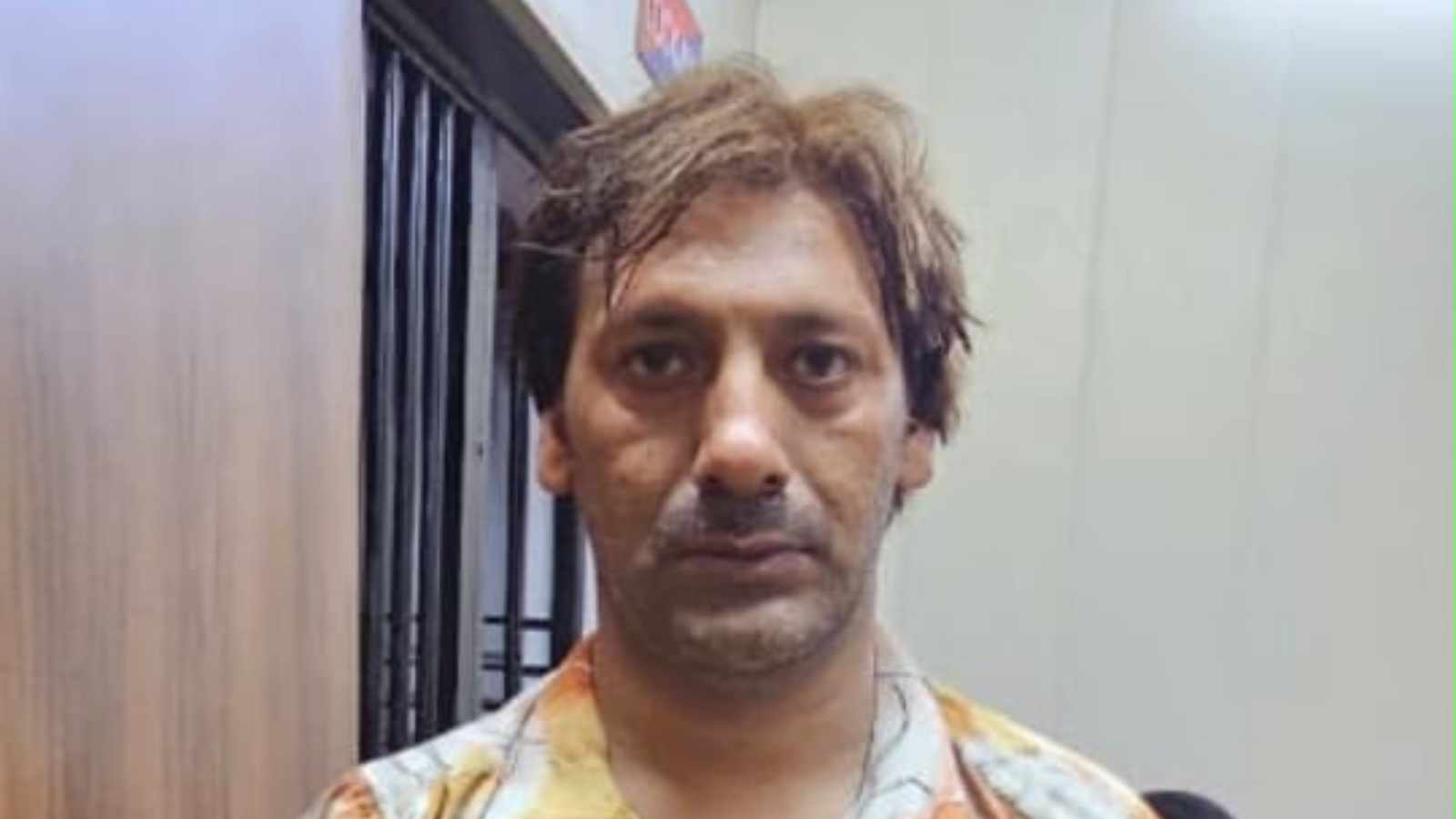
Their probe, police said, eventually led them to Nasir Hafeez Khan, 48, known as ‘Irani’ in Old Delhi circles.
Kingpin lands in police net
Nasir was arrested on January 3 this year by the DBG Road police station team in connection with Mishra’s case. Police said he has more than 38 criminal cases registered against him across Maharashtra, Delhi, Haryana and other states.
He was earlier booked under the Maharashtra Control of Organised Crime Act (MCOCA) in Mumbai and remained in judicial custody till 2024.
In June, Delhi Police invoked the MCOCA against Nasir, alleging he headed a network that repeatedly impersonated Crime Branch officers to carry out organised robberies and snatchings across Delhi and several states.
Story continues below this ad
“He has had a base in Delhi since 2014, after he married a woman from Daryaganj. After he was released on bail, he came back again. On October 23, 2025, along with his associates, he committed a robbery of Rs 18.84 lakh in DBG Road, Delhi,” said DCP (Central) Rohit Rajbir Singh.
“Nasir was finally arrested by a team from the DBG Road police station on January 3. This month, the MCOCA was invoked by the Delhi Police against him,” added DCP Singh.
After the DGB Road robbery, police said Nasir had fled to Nagpur where he executed two back-to-back robberies, and then to Ajmer, where he conned an elderly woman into giving him 100 gms of gold jewellery in December.
Nasir and the gang
Nasir is from Maharashtra. He was born in Kalyan, a suburb near Mumbai. His alias, police said, comes from his association with what investigators have dubbed the ‘Irani’ gang — a gang of robbers whose members often add ‘Irani’ to their names to signal allegiance.
Story continues below this ad
Police stressed the gang has no link to the Irani community, whose ancestors migrated to India around the 16th century from the vast swathes of deserts spread across Balochistan and Iran.
Gang members have been traced to parts of Ambavali, Mumbra and Beed in Maharashtra, Bengaluru and Bidar in Karnataka, Bhopal in Madhya Pradesh and Andhra Pradesh.
One of their trademarks, police said, is their appearance: stout, well-built men in tailored clothes, often wearing tinted aviators.
Nasir’s appearance, police said, also fit the template: fair complexion, sharp features, and medium-length brown hair parted in the middle.
Story continues below this ad
“The gang was active around 2015, when they began targeting elderly women in South India and Maharashtra. They wore safari suits and posed as police officials,” an officer said.
“They would talk about a murder or rising crime and advise elderly people to wrap their jewellery instead of wearing it.”
They would take the jewellery from the elderly person, pretend to wrap it for safekeeping, and hand it back. The bundle, however, contained stones instead of gold, the officer said.
“In 2016 and 2017, they carried out brazen snatchings in Andhra Pradesh, Maharashtra and Karnataka. They travelled across states on their bikes, carried out snatchings in a particular area, and then immediately rode across the border to another state,” said a police officer.
Story continues below this ad
In April 2024, police said two gang members were arrested in Nagpur after allegedly travelling nearly 900 km to Odisha, carrying out six snatchings in quick succession, and riding back to Nagpur.
—
caption: Nasir Hafeez Khan, 48, is known as ‘Irani’ in Old Delhi circles, said police. (Express Photo)
View original source — Indian Express ↗
Related stories

ESPN
SportsJun 22, 2026 · 1 min
Transfer rumors, news: PSG to compete with Man Uni...
ESPN

OnlineKhabar
PoliticsJun 22, 2026 · 1 min
Prime Minister Balen clarifies remarks on border dispute
OnlineKhabar

Straits Times
PoliticsJun 22, 2026 · 1 min
Unloved and directionless, UK's Starmer quits after just two years
Straits Times

VnExpress
NewsJun 22, 2026 · 1 min
Vietnam's richest man Pham Nhat Vuong takes on Hanoi's $49B metro projects
VnExpress