Indian Express
Cape Verde held Uruguay. A nation of 525,000 is two points from the knockouts
4 min readKolkataJun 22, 2026 02:18 PM IST
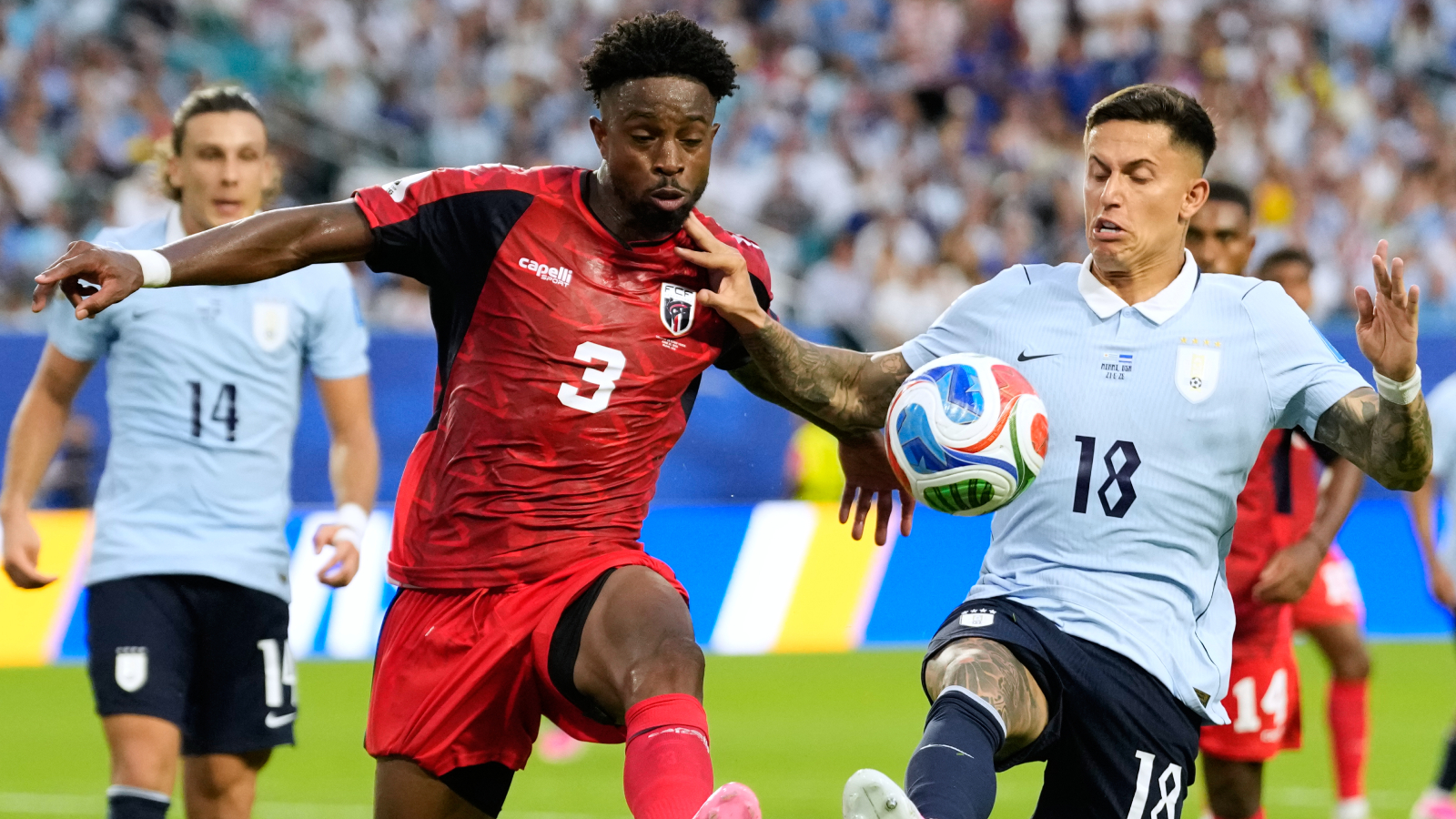
Cape Verde held Uruguay to a 2-2 draw in the FIFA World Cup 2026 match in Florida. (CREDIT: AP)
On October 13 last year, the Cape Verde government declared a half-day holiday so the nation could watch their team play Eswatini. Cape Verde won 3-0. They haven’t stopped since. Jose Maria Silva, the national director of state protocol, said qualification for this World Cup was the third defining moment in Cape Verde’s history, after Independence Day and the first multiparty elections of 1991. On Sunday in Miami, they held Uruguay, two-time world champions, to a 2-2 draw. They have not lost a match at this World Cup. They may not be finished.
This is a team built from scattered people. Kevin Pina grew up in Praia before his family left for Brockton, Massachusetts, a kid in a diaspora, playing football where he could find it, until a former Cape Verde captain named Carlos Morais spotted him on the street and convinced his father to send him back. Portuguese clubs Casa Pia and Benfica both rejected him. He found his way to Krasnodar in Russia, where in 2024-25 he won the league. Centre-back Roberto Lopes had a different route entirely. Born in Dublin to an Irish mother and a Cape Verdean father, he was playing for Shamrock Rovers and working in finance when a LinkedIn message arrived in 2018, written in Portuguese, a language he didn’t speak. He assumed it was spam. Nine months later a follow-up came in English. He said yes immediately. The team’s motto is ten islands, one nation, one dream. The squad is that motto made flesh.
Rodrigo Bentancur fouled Telmo Arcanjo just outside the box in the 21st minute and collected a yellow card. Pina placed the ball 34 yards from goal, found a gap in Uruguay’s wall and drove it into the bottom corner. The Uruguay defence stood still. Pina ran, eyes welling, teammates piling on. It was only the second direct free kick scored at this entire World Cup. He had done something similar at AFCON 2024 against Mozambique, a long-range strike from outside the box that few outside Cape Verde would have noticed. On the biggest stage he did it again. After the 0-0 draw with Spain, he had told Sport-Express: “I really wanted to score, first and foremost for my daughter. I need to try again — if I score, I’ll dedicate the goal to her and my wife.” On Sunday the next game arrived. “I am so proud,” he said.
Uruguay levelled twice, the second through Agustin Canobbio six minutes into first-half injury time, with Luis Suarez watching from the stands. It looked decisive. It wasn’t. Helio Varela came off the bench, seconds after coming on, intercepted a loose pass from Mathias Olivera and slotted past Fernando Muslera, stranded off his line. Varela is 24, born in Almada, plays for Maccabi Tel Aviv. He had never scored for Cape Verde before. “I had dreamed of this, but I never imagined it would happen this way,” he said. “Scoring my first goal for the national team on my World Cup debut is incredible. I have no words.”
In goal, Vozinha held his shape through Uruguay’s relentless second-half pressure. He is 40 years old, started playing professionally at 25, has spent his career moving between Angola, Moldova, Cyprus, Slovakia and Portugal. Six days earlier he had made seven saves against Spain and cried when he heard the final whistle. His mother couldn’t get a visa for that match. By Miami she was in the stands. Muslera started in the other goal. Two goalkeepers in their 40s starting a World Cup match. It had never happened before.
Marcelo Bielsa said afterwards: “The result, I think, was quite deserved.” Cape Verde’s coach Pedro Leitao Brito put it another way: “Once you’re on the pitch, a lot of things become equal.”
This is a country of 525,000 people, ten islands in the Atlantic, which did not concede a single goal at home across the entire qualifying campaign. When the fixtures were announced in December, few gave them a point. They play Saudi Arabia next. Win that, and they are in the knockout rounds.
View original source — Indian Express ↗
Related stories

Rio Times
SportsJun 22, 2026 · 1 min
Uruguay’s Missing Spine: The Number Behind Two World Cup Draws
Rio Times

Portugal Resident
SportsJun 22, 2026 · 1 min
Sporting CP announce two more friendlies in the Algarve
Portugal Resident
BBC Sport
SportsJun 22, 2026 · 1 min
Madueke's remarkable season - from petition to World Cup starter
BBC Sport
Al Jazeera
SportsJun 22, 2026 · 1 min
Cairo erupts in celebration after Egypt’s first ever win in a World Cup
Al Jazeera