Times of India
Times of India··9 min read
The new missile order: How India is changing the way it builds its precision arsenal
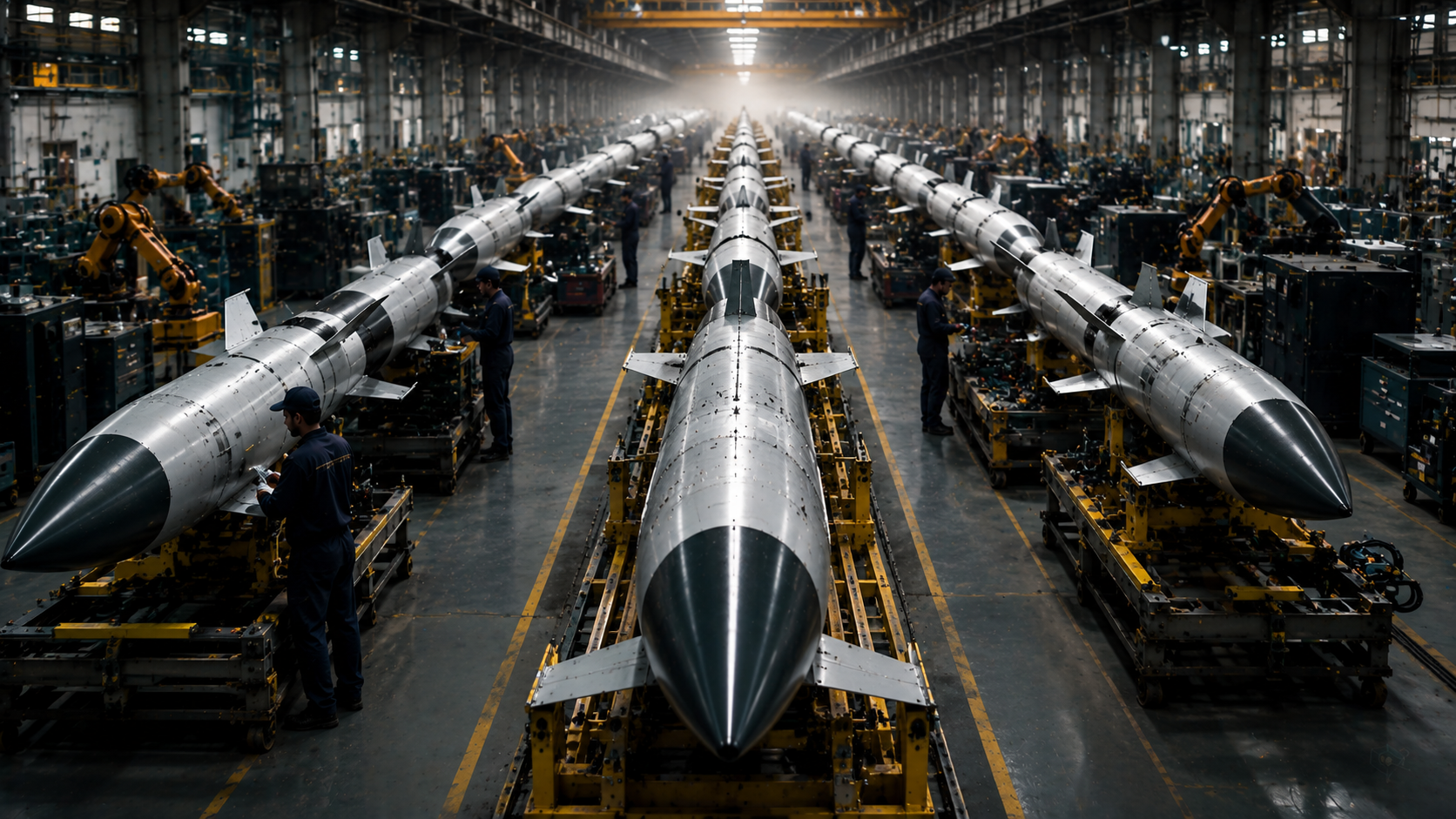
Missiles are no longer niche assets reserved for select targets. (Generative image)
For decades, India's missile ecosystem operated through a centralised template whereby the Defence Research and Development Organisation (DRDO) designed missiles, Bharat Dynamics Limited (BDL) manufactured them and the armed forces inducted them.
Not anymore.The formula is now being virtually rewritten with the draft Defence Acquisition Procedure (DAP) 2026. The DAP is the Ministry of Defence's blueprint for how the armed forces acquire weapons, military platforms and defence technologies.
How India Is Reshaping Its Missile Industry by Bringing in Private Companies
The proposed policy opens tactical missile production to private industries, ending BDL's exclusive hold over a segment that has become increasingly central to modern warfare.The move may appear to be an industrial reform, but its implications run much deeper as it reflects a growing belief within the government that future wars will be won not only by possessing advanced missiles, but by developing, upgrading and producing them at scale.The change also signals a broader shift in India's defence industrial strategy. Instead of keeping the missile production in a water-tight bubble, the government is attempting to build a larger and more competitive missile manufacturing ecosystem involving public sector undertakings, private industry, startups and specialised suppliers.
From Monopoly To Ecosystem
Why missiles matter more than ever
To understand the significance of this shift, it helps to begin with the weapon itself. Tactical missiles are short- to medium-range guided weapons designed for precision strikes against specific military targets such as enemy positions, command centres, radar installations, air-defence systems and armoured formations.Unlike strategic ballistic missiles associated with nuclear deterrence, tactical missiles are intended to shape the battlefield during conventional conflict.
Recent wars have reinforced their importance.From Ukraine to West Asia, modern militaries have relied heavily on precision-guided weapons to disable critical infrastructure, suppress air defences and strike high-value targets from standoff distances. Precision strike capability is increasingly becoming one of the defining features of contemporary warfare.For India, which faces two nuclear-armed adversaries and increasingly complex security challenges, the demand for tactical missile systems is expected to grow substantially in the coming years.
Why now?
Part of the answer lies in the lessons emerging from contemporary conflicts. The wars in Ukraine and West Asia have demonstrated that modern militaries consume precision-guided munitions at rates far higher than many planners previously anticipated.Missiles are no longer niche assets reserved for select targets. They are increasingly becoming consumable instruments of warfare, used repeatedly to suppress air defences, destroy logistics hubs, disrupt command networks and shape battlefield conditions.
Why The Change Now
The challenge, therefore, is no longer limited to developing sophisticated missiles. It is also about producing enough of them, replenishing stockpiles quickly and introducing upgrades at a pace that keeps up with evolving threats.A production system dependent on a single dominant manufacturer can struggle to meet those demands. A broader industrial base offers greater resilience, surge capacity and flexibility.The draft DAP 2026 reflects this thinking. The document repeatedly emphasises speed, scalability, competition, indigenous innovation and industrial depth as key objectives for the coming decade.
The old missile model
For most of the post-liberalisation era, India's missile production followed a relatively centralised structure. DRDO developed missile systems, while BDL emerged as the principal production agency responsible for manufacturing and delivery.The arrangement provided state control over sensitive programmes and helped build a domestic missile capability at a time when private industry lacked the expertise, infrastructure and technological depth required for complex weapons production.
The Old Missile Model
The model delivered important successes. Systems such as Akash, Nag, Astra and several other missile programmes benefited from a tightly controlled development and manufacturing chain anchored by DRDO and BDL.However, that model was designed for a different era — one in which production volumes were lower, technological change was slower and the number of capable defence manufacturers was limited.
The New Missile Order
Today, the strategic environment is changing faster than procurement systems were originally designed to accommodate.
What DAP 2026 changes
The draft DAP 2026 is unusually explicit about the direction of procurement. It argues that India's defence sector must move beyond merely manufacturing equipment within the country and instead focus on indigenous design, co-development and ownership of intellectual property.The document repeatedly stresses transparency, fair competition, self-reliance and industrial innovation as guiding principles for future acquisitions. Within this framework, the missile sector is being opened through the Development-cum-Production Partner (DcPP) model.
What DAP 2026 wants
Under this arrangement, DRDO works directly with selected industry partners to develop, test and eventually produce a system. The process includes prototype development, design finalisation, field trials, technical evaluation and eventual production.At least four private firms—Adani Defence & Aerospace, Bharat Forge, ICOMM and Solar Defence and Aerospace Limited—have reportedly been selected as partners for tactical missile programmes.Importantly, public sector undertakings such as BDL and Bharat Electronics Limited (BEL) are not being removed from the process. In several projects they continue to participate alongside private firms.The reform therefore represents not a replacement of the existing model but an expansion of it.
Why the government is changing course
The DAP provides several clues about the government's thinking. The document repeatedly argues that the primary challenge in defence acquisition is no longer budgetary limitation but technological obsolescence. It warns that modern technologies are evolving faster than traditional acquisition cycles can accommodate.The draft also places strong emphasis on competition, indigenous design ownership, innovation and the creation of a resilient defence industrial base.Taken together, these principles suggest that the government increasingly views monopoly production structures as insufficient for future requirements.
Key missile programmes being opened
When a single manufacturer serves as the default production agency for an entire class of weapons, bottlenecks can emerge. Scaling production becomes harder. Development cycles may lengthen. Innovation can become concentrated within a limited number of institutions.A wider supplier base allows the government to distribute risk, leverage different technical strengths and accelerate development across multiple programmes simultaneously.The reform also aligns closely with the broader Atmanirbhar Bharat initiative. In defence, self-reliance is increasingly being interpreted not as reliance on a few public-sector entities but as the creation of a broad and resilient industrial ecosystem.
A new opportunity for private industry
For India's private defence sector, the opening is potentially transformative. Until recently, many private firms participated largely as suppliers of components, subsystems, electronics and specialised manufacturing services.Under the new framework, they are being given opportunities to move into co-development, system integration and production roles that were traditionally associated with state-owned enterprises.
That does not mean the government is handing over sensitive missile programmes without safeguards.The DcPP framework requires companies to pass through prototype development, trials and technical evaluations before production orders are awarded. The armed forces, DRDO and acquisition authorities remain deeply involved throughout the process.The barriers to entry remain high. What has changed is that qualified private companies are now being given a pathway to participate.
Where BDL fits now
Despite the headline, this is not a story about BDL becoming irrelevant. If anything, the company remains one of the most important pillars of India's missile manufacturing infrastructure.It possesses decades of production experience, established testing and integration facilities, quality-control systems and close working relationships with the armed forces.
What changes for BDL
The reform does not represent a vote of no confidence in BDL.
Rather, it reflects a recognition that no single company, public or private, can realistically support the scale of missile requirements India may face over the next two decades.Instead of serving as the sole production gateway, BDL is increasingly becoming one major participant within a broader ecosystem.That distinction is important because it reflects a fundamental shift in philosophy. The government appears willing to judge producers increasingly on capability and performance rather than ownership alone.
The ballistic missile question
The tactical missile reform may not be the end of the story. Defence secretary Rajesh Kumar Singh has publicly indicated that the time may be right to involve private industry in ballistic missile production as well. If that happens, it would mark an even more consequential change.Ballistic missile programmes have historically remained among the most sensitive elements of India's strategic architecture, with development and production concentrated within DRDO and defence public sector undertakings.
Tactical vs Strategic Missiles
Opening even parts of that ecosystem to private participation would suggest growing confidence in the maturity of India's defence industry and its ability to handle technologically complex and strategically sensitive programmes.It would also indicate that the current reforms are not limited to tactical missiles but form part of a much broader transformation of India's defence manufacturing landscape.
The rocket force factor
Discussions within the military regarding the possible creation of a dedicated rocket force add another dimension to the reform.Such a force would likely require substantial inventories of tactical and quasi-ballistic missiles capable of delivering precision strikes across a range of operational scenarios. Building and maintaining those inventories would create production demands significantly larger than traditional procurement patterns.Meeting those requirements through a single production agency would be difficult. Industrial diversification, therefore, becomes not merely a policy preference but a strategic necessity.The government's growing emphasis on scalability in defence production suggests that future force structures are influencing procurement policy today.
What the armed forces stand to gain
For the armed forces, the primary benefits are likely to be resilience, flexibility and scale.A broader industrial base reduces dependence on any single manufacturer and lowers the risk of delays caused by production bottlenecks or capacity constraints. It also creates opportunities for faster upgrades and technological adaptation as multiple firms compete to improve performance.Perhaps most importantly, it increases the country's ability to expand production rapidly during periods of crisis.As India's missile inventory grows and operational requirements become more demanding, production capacity may become as important as technological sophistication.
The risks
The transition is not without challenges. More participants do not automatically translate into better outcomes. Expanding the supplier base can create coordination difficulties, quality-control concerns and integration challenges.
Some companies will inevitably require time to acquire the industrial discipline associated with complex weapons manufacturing.The draft DAP appears conscious of these risks, alongside competition and innovation, it places considerable emphasis on accountability, technical evaluation, quality assurance and lifecycle support.The government's objective is therefore not deregulation, but managed competition under tighter oversight.
A larger industrial bet
At its core, this is not merely a story about missile production, but about how India intends to organise its defence industry in the coming decades.DAP 2026 places extraordinary emphasis on indigenous design, intellectual property ownership, co-development, exportability and industrial depth. The underlying assumption is that military power in the future will depend not only on possessing advanced weapons, but also on maintaining a domestic ecosystem capable of designing, producing and upgrading them continuously.
That is why the end of BDL's monopoly matters.
What India Hopes To Gain
It reflects a belief that strategic self-reliance is no longer best achieved through a handful of protected institutions. Instead, the government is betting that a wider network of public and private firms, operating under common standards and greater competition, can deliver faster, more scalable and more innovative outcomes.In that sense, the end of BDL's monopoly is not really a development about one company losing exclusivity but about how India intends to fight, deter and sustain future conflicts.DAP 2026 suggests that the government no longer sees missile production as the responsibility of a single state-owned manufacturer. Instead, it is attempting to build an entire missile-industrial ecosystem — one capable of designing, producing and upgrading weapons at the speed demanded by modern warfare.Whether that bet succeeds will shape not only India's defence industry, but also the future credibility of its military power.
View original source — Times of India ↗
Related stories

ESPN
SportsJun 22, 2026 · 1 min
Aiyuk shouts 'Go Commanders' in latest video
ESPN

ESPN
SportsJun 22, 2026 · 1 min
Who's next at Michigan? Potential candidates to re...
ESPN

The Punch
NewsJun 22, 2026 · 1 min
Iran conflict sends Canada inflation to two-year high
The Punch
The Punch
NewsJun 22, 2026 · 1 min
SERAP urges FG to release Sowore, drop charges
The Punch