Indian Express
Before Messi, there was Miroslav Klose. A carpenter from small-town Germany
5 min readJun 22, 2026 07:45 PM IST
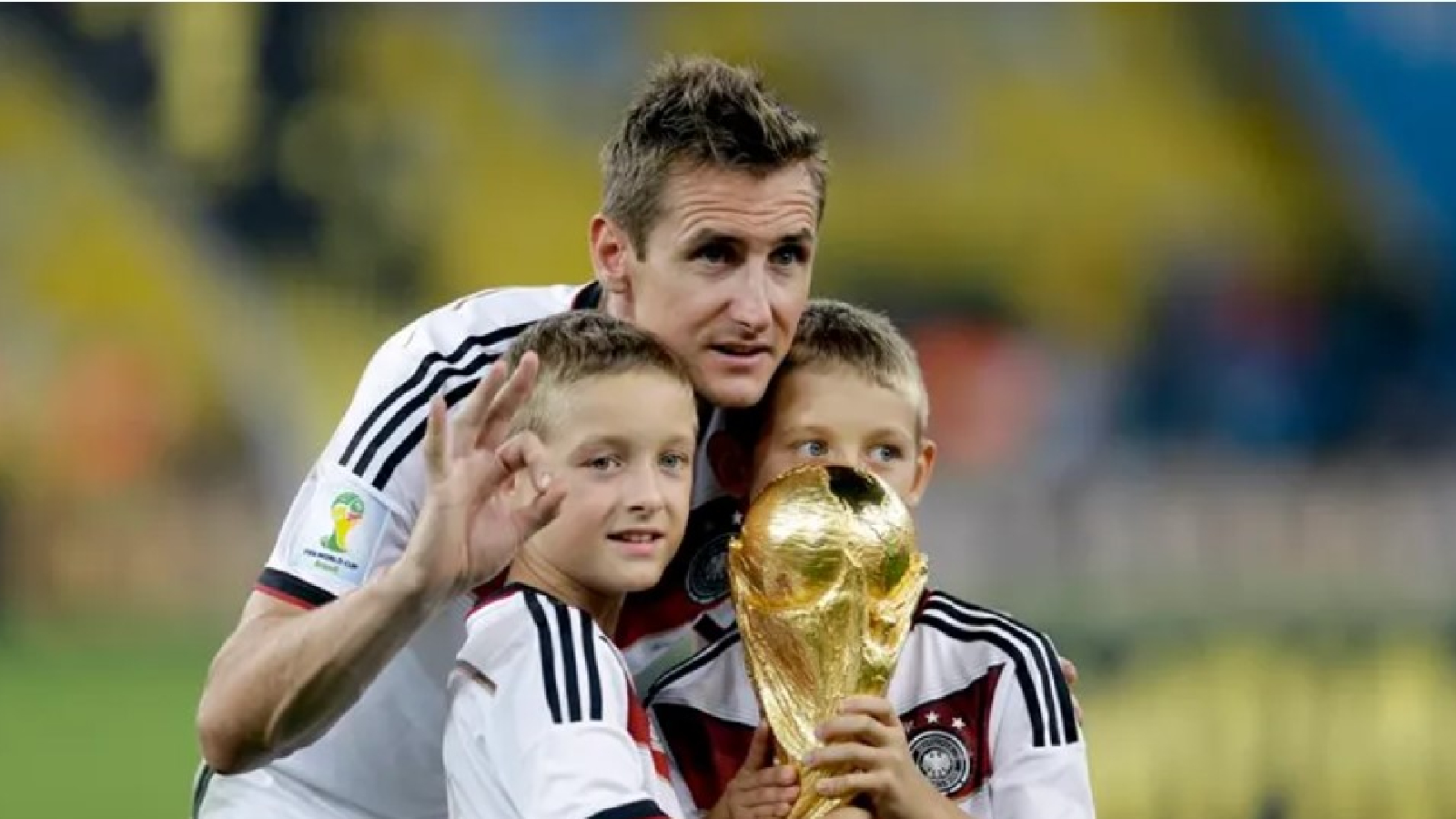
Klose retired from international football in the final he helped Germany win, seventy-one goals from a hundred and thirty-seven caps, a tally that stood alone at the top of the world game for twelve years. (AP/File)
Miroslav Klose knew two words of German when he arrived in Kusel in 1986. He was eight. His father had been playing professional football in France, in Burgundy, since leaving Poland the year Miroslav was born in Opole. Now the family was settling for good, in a small town in Rhineland-Palatinate, and the boy who would one day score more World Cup goals than anyone in the history of the game could not yet ask for directions to school.
He learned the language the way he learned most things in those years, slowly, on the ground, without anyone watching closely enough to notice it was happening. He played for SG Blaubach-Diedelkopf, a club in West Germany’s seventh division, the level where nobody scouts anyone. By day he trained as a carpenter. Sawdust on his hands, sawdust in his hair, a trade he was good enough at that football remained, for a long stretch of his adolescence, the hobby rather than the plan.
He did not turn professional until he was twenty, with FC Homburg’s reserves, an age by which most strikers destined for greatness have already been earmarked for it. Klose had not been earmarked for anything. Then came Kaiserslautern, then a Bundesliga season in 2001-02 in which the goals kept arriving, and Rudi Volker, assembling his squad for the World Cup in Korea and Japan, decided to take the carpenter along.
What happened next made him famous in a way nobody, least of all Klose, had planned for. Five goals, all of them headers, a hat-trick in an 8-0 demolition of Saudi Arabia. Twice he marked the goals with a full somersault, a front-flip he had practiced for years, and Germany gave him a nickname for it: Salto-Klose.
He did it again in 2006, on home soil, scoring five more and winning the Golden Boot. By then the carpenter’s apprentice had become German Footballer of the Year, a Werder Bremen forward worth watching with or without a ball anywhere near him. Bayern Munich signed him in 2007 and he won two league titles before moving to Lazio in 2011, where he would score five in a single game against Bologna, the first man to do that in Serie A since 1986.
The honesty arrived in increments, almost as if he could not help it. At Bremen in 2005, Klose chased a ball into the penalty area, went down under a challenge from Bielefeld goalkeeper Mathias Hain, and the referee pointed to the spot. Hain got a yellow card. Klose got up, went to the referee, and told him the decision was wrong. The penalty was cancelled. He was handed a fair play award for it afterward and seemed almost irritated to be praised for behaving the way he thought everyone should behave anyway. Seven years later, in Lazio colours, he scored with his hand against Napoli, walked straight to the referee, and told him. The goal was chalked off. No card. A handshake instead. Off the pitch the same logic applied. At Lazio he lowered himself into an ice bath after every training session. The younger players refused. When they saw him collecting the bags of balls at the end of sessions, they asked why he bothered. He could not understand the question.
By 2012 he had also made a decision about his knees: no more somersaults. Thirty-four years old, two years from another World Cup, and the body had started sending him invoices for the acrobatics. He kept the discipline, mostly. In Brazil in 2014, equalising against Ghana for his fifteenth World Cup goal to draw level with Ronaldo, the flip came out anyway, one last time, because some habits outlive the resolutions made against them. Three days later, against the hosts, in a 7-1 that altered how an entire country remembers a single football match, he scored his sixteenth. A collision in the build-up had left him unable to get off the ground properly, so the record-breaking goal of his life was marked with a slide onto his knees instead.
Story continues below this ad
Germany won the tournament. Klose retired from international football in the final he helped them win, seventy-one goals from a hundred and thirty-seven caps, a tally that stood alone at the top of the world game for twelve years.
He coaches now, at Nurnberg in Germany’s second division. Tonight in Dallas, Lionel Messi plays Austria with the record his for the taking. One goal and Klose’s twelve years at the top of the list are over.
Asked about it before the tournament began, Klose said only that the record was always going to fall to someone, and that he was glad, if it had to be anyone, that it might be Messi. Somewhere in that sentence is the same boy who once talked a referee out of a goal nobody else would have given back.
View original source — Indian Express ↗
Related stories

ESPN
SportsJun 22, 2026 · 1 min
Aiyuk shouts 'Go Commanders' in latest video
ESPN

ESPN
SportsJun 22, 2026 · 1 min
Who's next at Michigan? Potential candidates to re...
ESPN

ESPN
SportsJun 22, 2026 · 1 min
Northwestern's Carsello gets injunction to play
ESPN

ESPN
SportsJun 22, 2026 · 1 min
Collins to receive posthumous ESPYS Ashe award
ESPN