The Guardian
Good luck, Andy Burnham – you’ll need more than a smile and a better bus service to succeed in No 10 | Simon Jenkins
The toppling by his colleagues of Britain’s prime minister is humiliating, not only for Keir Starmer but for parliamentary democracy. It is a rejection of the electorate, which chose a party with Starmer at its head, and of Labour’s manifesto of less than two years ago, all in favour someone who, until last week, had not been an MP since 2017. Andy Burnham’s sole claim to Downing Street is that he is currently preferred by most Labour MPs. Two years ago, the same was true of Starmer. What has gone so wrong?
The reason Britain is now about to have its seventh prime minister in 10 years is rooted in the House of Commons’ behaviour as a frequently whimsical appointments board. Those sent to Westminster are entitled to do as they choose, but in recent history they have undertaken to honour the pledges given to their voters at election time. Starmer in 2024 presented a moderate Labour programme and has been struggling to enact it, often against a backdrop of hostile economic forces and declining public services. He could at least reasonably expect loyalty from his MPs.
When Starmer has crossed swords with his backbenchers, it has usually been over welfare. In these clashes he has usually compromised in the end. He suffered bruising criticism for his decision to appoint Peter Mandelson, an associate of Jeffrey Epstein, and recently faced a crisis over defence spending. But these upsets are normal. They have been the rough and tumble of modern government for decades, notably for Margaret Thatcher, John Major and eventually Tony Blair. There is no suggestion that Starmer himself is guilty of gross misdemeanour or default of duty in office. He has represented his nation with dignity and caution abroad.
In these circumstances, most MPs in a governing party would normally take a deep breath and support their leader for at least a term of office. Labour has good reasons to do so because what granted the party its exceptional Commons majority was not a leftward swing in public opinion. It was in large part because of the rise of Reform UK. This split of the rightwing popular vote rendered the divided Tories unelectable. Labour has every interest in Reform’s continued success. The one thing the party should not do is appear as disunited as the Conservatives.
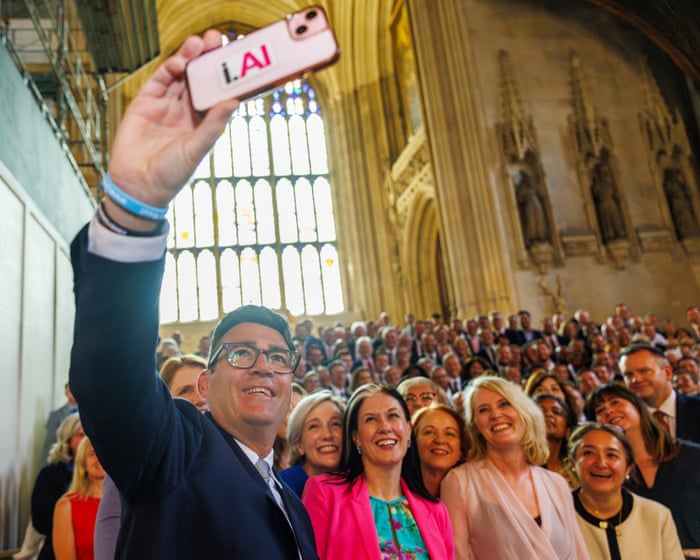
Yet at this moment, Labour is far from being a grand movement for national reform. Its nakedly ambitious MPs instead view politics as a game of snakes and ladders. They spend their energy not debating policy or the national interest but on Westminster conspiracies and corridor gossip. When he resigned as health secretary last month, Wes Streeting gave the impression that he thought becoming leader was worth more than completing his NHS reforms, although he is now backing Burnham. Burnham thinks a smile and more buses for Manchester qualify him for Downing Street.
All western democratic leaders are facing a seismic challenge. Starmer is not alone. Britain’s previous prime minister, Rishi Sunak, reflected this week that each of the G7 leaders at his last summit in 2024 were sorely unpopular. Only two are still in office. Across Europe, populist movements on the left and the right are surging, ostensibly on the political negativity of social media platforms. Centrist politics is under concerted threat.
Burnham’s “programme”, as yet mandated solely by voters in his Makerfield constituency, is a bundle of headlines. He wants to “give people a bit more money” as well as that turgid vacuity, “change”. Change from what to what? Always fiercely ambitious, he has run twice for leader in the past, but was soundly beaten first by Ed Miliband and then Jeremy Corbyn. His reputation as an innovative mayor of Greater Manchester is arguably unearned. The leader of the city’s council, Bev Craig, was, according to some, the economic brains behind the operation. Burnham can mainly take credit for running buses.
The reality is that Britain’s government now faces yet another period of uncertainty, hesitation and weakness. If elected, Burnham’s popularity and personal warmth could conceivably motivate public sector reform and economic regeneration. Perhaps he might hit it off with Donald Trump. Much will depend on who is in his cabinet and private office. He will be in desperate need of experienced help.
The nation must hope he succeeds in finding it. For the present we can only deplore the treatment the Labour party has meted out to Starmer, and wish him well in his premature retirement.
Simon Jenkins is a Guardian columnist
Do you have an opinion on the issues raised in this article? If you would like to submit a response of up to 300 words by email to be considered for publication in our letters section, please click here.
View original source — The Guardian ↗
Related stories

The Hill
PoliticsJun 22, 2026 · 1 min
Ukraine is finally setting the terms for Russia — so should the US
The Hill

CBC
PoliticsJun 22, 2026 · 1 min
Jimmy Kimmel announces longtime Trump adversary Rosie O’Donnell to guest host during two-month hiatus
CBC

The Hill
PoliticsJun 22, 2026 · 1 min
Federal judge quashes Trump DOJ subpoenas aimed at Minnesota’s Walz, Frey
The Hill

The New York Times
PoliticsJun 22, 2026 · 1 min
Taliban Officials to Head to Brussels for Talks on Afghan Deportees
The New York Times