Indian Express
Indian Express··3 min read
US-Iran set up Lebanon ‘deconfliction cell’. Can it deliver peace
3 min readNew DelhiUpdated: Jun 22, 2026 10:38 PM IST
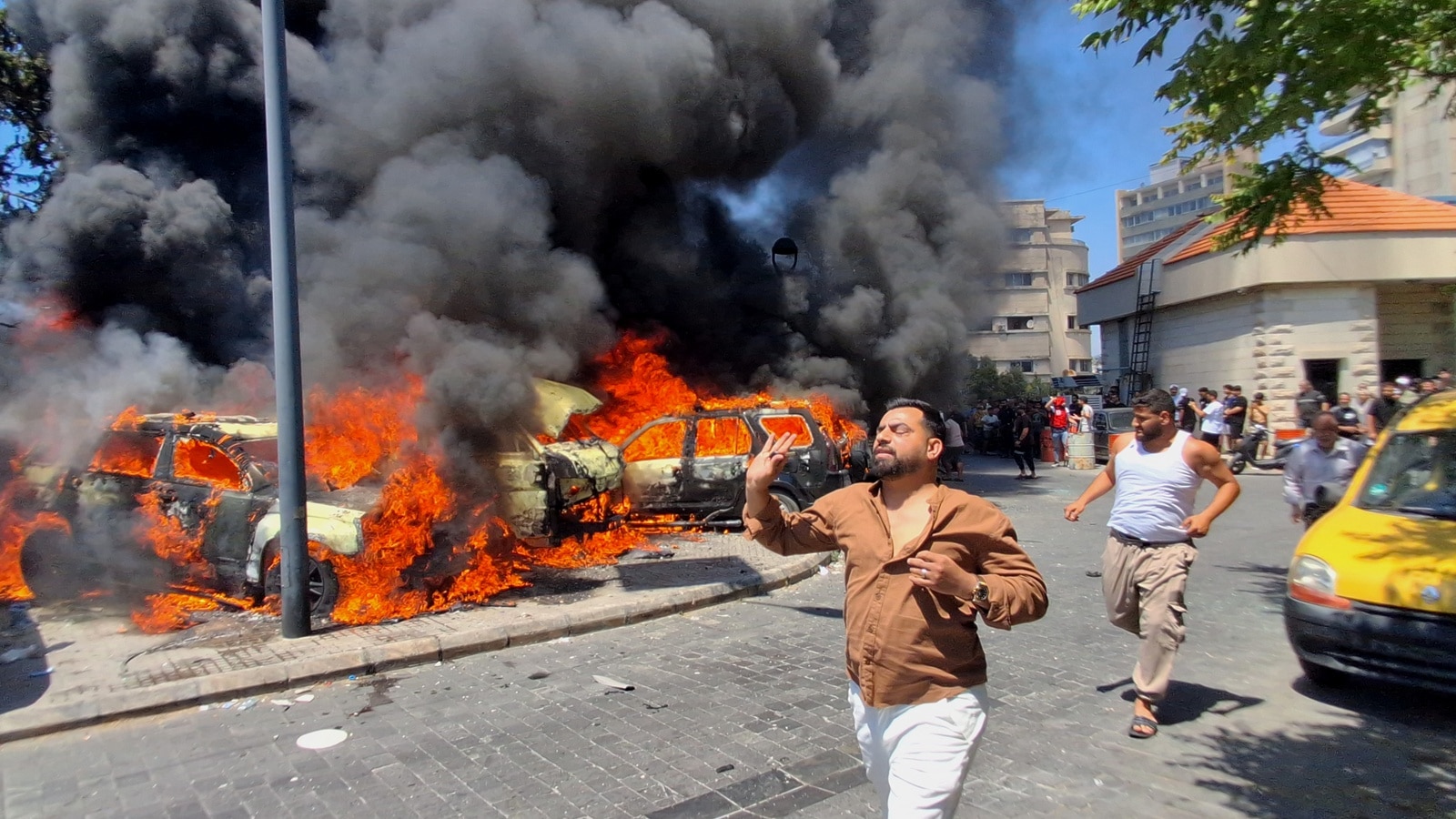
People run in front of burned cars that were attacked in an Israeli airstrike in the southern port city of Sidon, Lebanon. (AP Photo)
After the first full day of talks between the US and Iran in Switzerland, negotiators agreed on Sunday to establish a new “deconfliction cell” for Lebanon in order to ensure a ceasefire on all fronts in the region and uphold the requirements in the memorandum of understanding (MoU) signed last week.
Framework for a permanent peace deal
The negotiations in the Bürgenstock resort in Obbürgen, which is being led by Pakistan and Qatar, acknowledged that the US and Iran have agreed on “a roadmap towards reaching a final deal within 60 days” and described the ongoing process as “encouraging progress”.
Iran’s Foreign Minister Abbas Araghchi (left) and Parliamentary Speaker Mohammad Bagher Ghalibaf (right) during high-level US talks, at the Bürgenstock Resort in Obbuergen, near Lucerne, in Switzerland. (Photo: X/@IRNAEnglish)
Addressing strategic confusion in Beirut
The move to create a “deconfliction cell” for Lebanon comes days after contradictory statements and confusion regarding ceasefire terms in Beirut as Israeli military continued its offensive in southern Lebanon.
Tripartite operations for cessation of hostilities
After the first day of talks in Switzerland, Tehran and Washington consented to create the “deconfliction cell” involving Iran, the United States, and Lebanon to “ensure adherence to the termination of military operations in Lebanon,” the New York Post reported, citing the joint statement released by Qatar and Pakistan.
Testing the sincerity of the peace process
Iran’s Foreign Minister Abbas Aragchi said it would be the “first real test” of the negotiations to ensure a ceasefire is followed in Lebanon, as the Israeli military continued its strikes in Beirut, CBS News reported.
.@VP: I would describe the progress on Lebanon as “very good progress.”
“We want a regional ceasefire… we’ve been, I think, very good at setting up what we’re calling a deconfliction mechanism… when things happen, the sides are actually talking to one another.” pic.twitter.com/kXqavkyJkl
— Rapid Response 47 (@RapidResponse47) June 22, 2026
Israel’s exclusion and military coordination issues
Notably, Israel is not a part of the joint statement mechanism where the “deconfliction cell” is being established for Lebanon, and it remains unclear if Prime Minister Benjamin Netanyahu has agreed to the idea.
A spokesperson for Israeli PM Netanyahu’s office, David Mencer, said, “Israel is not a party to this (memorandum of understanding) or of the negotiations with Iran,” CNN reported.
Story continues below this ad
The aim to establish a “deconfliction cell” for Lebanon is to reportedly prevent the Israeli military from inadvertently clashing with the Lebanese military.
The Israeli Defense Forces (IDF) had said earlier this month that movement in the Lebanese region “requires coordination” after a general and several officers of Lebanon’s military were killed in Israeli military’s strikes.
The Express Global Desk at indianexpress.com which delivers authoritative, verified, and context-driven coverage of key international developments shaping global politics, policy, and migration trends. The desk focuses on stories with direct relevance for Indian and global audiences, combining breaking news with in-depth explainers and analysis.
A major focus area of the desk is US immigration and visa policy, including developments related to student visas, work permits, permanent residency pathways, executive actions, and court rulings. The Global Desk also closely tracks Canada’s immigration, visa, and study policies, covering changes to study permits, post-study work options, permanent residence programmes, and regulatory updates affecting migrants and international students.
All reporting from the Global Desk adheres to The Indian Express’ editorial standards, relying on official data, government notifications, court documents, and on-record sources. The desk prioritises clarity, accuracy, and accountability, ensuring readers can navigate complex global systems with confidence.
Core Team
The Express Global Desk is led by a team of experienced journalists and editors with deep expertise in international affairs and migration policy:
Aniruddha Dhar – Senior Assistant Editor with extensive experience in global affairs, international politics, and editorial leadership.
Nischai Vats – Deputy Copy Editor specialising in US politics, US visa and immigration policy, and policy-driven international coverage.
Mashkoora Khan – Sub-editor focusing on global developments, with a strong emphasis on Canada visa, immigration, and study-related policy coverage. ... Read More
Stay updated with the latest - Click here to follow us on Instagram
Tags:
Israel
Lebanon
Strait of Hormuz
US Iran tensions
View original source — Indian Express ↗
Related stories

BBC Sport
SportsJun 22, 2026 · 1 min
Derry City are off to the Tallaght Stadium to take on Shamrock Rovers
BBC Sport

The Punch
NewsJun 22, 2026 · 1 min
Security is everybody’s business — Police
The Punch

ESPN
SportsJun 22, 2026 · 1 min
Anchor Cohn retiring after 34 years at ESPN
ESPN
The Punch
NewsJun 22, 2026 · 1 min
Nigeria hosts over 100,000 refugees, asylum seekers – FG
The Punch