South China Morning Post
European Central Bank’s President Lagarde urges talks on yuan undervaluation
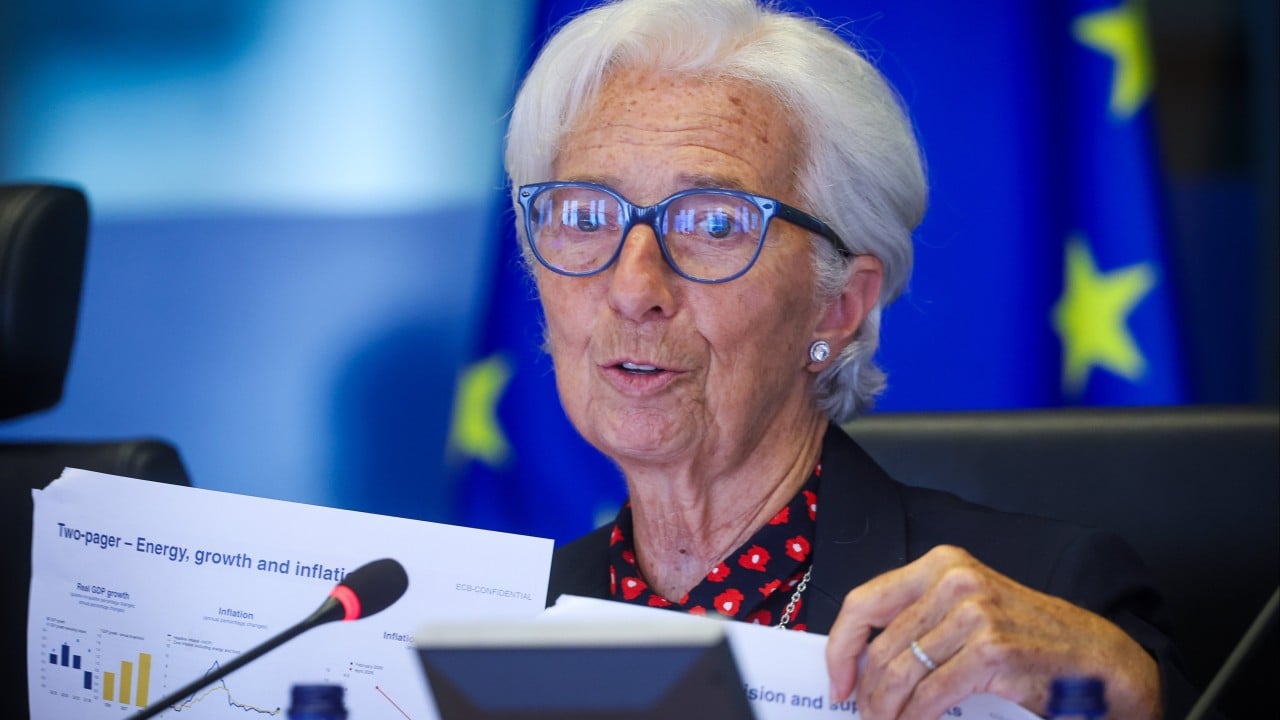
European Central Bank President Christine Lagarde on Monday urged global leaders to discuss undervaluation of the Chinese currency as a facet of the imbalances endangering the global economy.
China has consistently denied that it manipulates its currency for trade advantage but its surging trade surpluses are one of several macroeconomic mismatches worrying leaders of the Group of Seven (G7) nations who met last week in France, along with chronic US deficits and Europe’s underinvestment.
Europe has struggled to compete with China in sectors it used to dominate, such as high-end cars, partly due to Chinese goods being cheaper.
Lagarde cited International Monetary Fund research indicating that the Chinese currency, also known as renminbi, was 15 per cent to 16 per cent undervalued when its nominal exchange rate was adjusted for international differences in inflation.
“That’s the situation as it is, which justifies completely the fact that there has been, and I hope there will be, further discussions of excessive imbalances, which include a currency aspect to it, between the G7 leaders and beyond,” Lagarde told an event in Brussels.
Lagarde dismissed the notion of a new Plaza Accord to strengthen the yuan, however, saying the 1985 international deal to weaken the dollar was struck when “times were different”.
View original source — South China Morning Post ↗
Related stories

Stuff
BusinessJun 22, 2026 · 1 min
Former Federal Reserve Chairman Alan Greenspan dies at 100
Stuff

Rio Times
BusinessJun 22, 2026 · 1 min
The Quiet Music Pipeline Linking Brazil and Angola
Rio Times

Bloomberg
BusinessJun 22, 2026 · 1 min
Billions in SpaceX IPO Arb Trades Rattle ETFs
Bloomberg

CNBC
BusinessJun 22, 2026 · 1 min
Nvidia's stock struggles as Kalshi traders bet chip prices are coming down
CNBC