Times of Israel
Election officials push to label AI-generated political campaign materials
Election officials are seeking new safeguards against AI-generated political misinformation ahead of the Knesset election later this year, including a requirement that parties and other campaigners label election materials created with, or substantially altered by, artificial intelligence.
Under the proposal, campaign content would have to be clearly identified as having been generated or manipulated using AI. The measure would not prohibit the use of artificial intelligence in political messaging, but it is intended to increase transparency and prevent disinformation.
Presenting the proposal to the Knesset Constitution Law and Justice Committee on Sunday, Acting Central Elections Committee (CEC) Director-General Din Livneh said the measure was intended to address the growing use of AI in political campaigns and ensure voters can identify digitally altered content.
If the proposal is accepted and passed into law, violations could carry penalties of up to NIS 30,000 ($10,000) or six months in prison.
The proposal is part of a broader bill that also includes measures to ensure displaced voters can cast ballots and establish polling stations inside nursing homes and assisted living facilities, and other items to prepare for the upcoming elections, which must be held no later than October 27, 2026.
Get The Times of Israel's Daily Edition
by email and never miss our top stories
By signing up, you agree to the terms
During the committee hearing on the proposal, Likud MK Amit Halevi also called for installing cameras in polling stations, arguing that doing so would deter voter fraud. The suggestion drew sharp criticism from opposition lawmakers and election officials, with Democrats MK Gilad Kariv calling the idea “a direct attempt to undermine election integrity and suppress turnout.”
Livneh was similarly unenthused with the suggestion, and rejected claims of widespread voter fraud, insisting the existing safeguards were sufficient.
“There is no fraud in Israel. If it exists, it is on the margins,” he said. “I can refute these conspiracy theories, one after another.
In previous elections, Prime Minister Benjamin Netanyahu’s Likud party armed polling committee representatives with hidden cameras and placed them at polling stations in Arab communities throughout Israel. Critics argued it was a form of voter intimidation aimed at keeping Arabs from the polls.
With the pre-election campaign season heating up, there have already been several instances of politicians using manipulated or fake content to target their opponents.
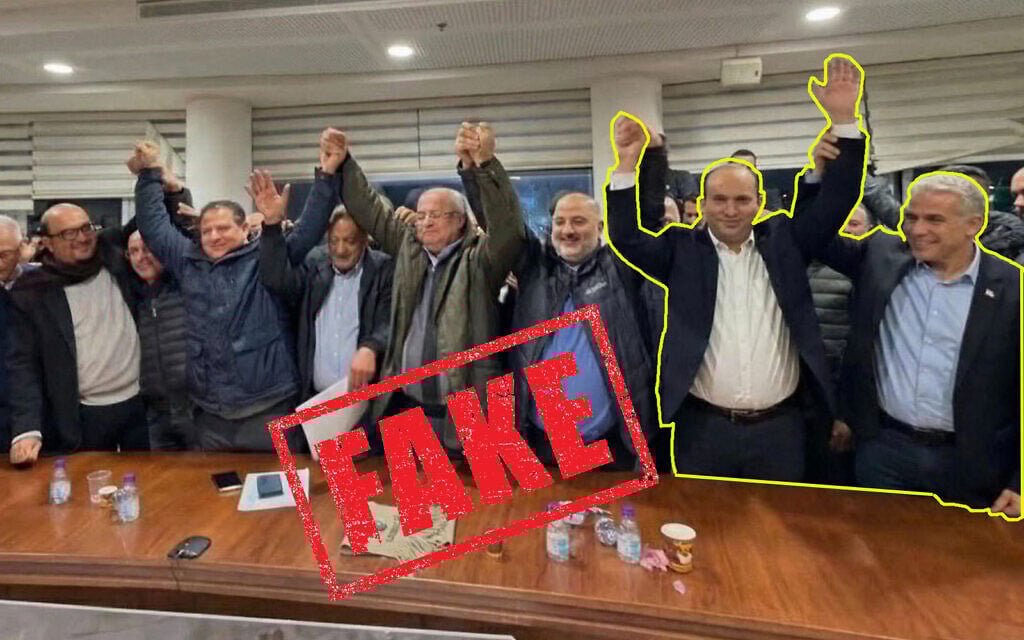
In February, the CEC ordered Likud to remove a manipulated image that appeared to show former prime ministers Naftali Bennett and Yair Lapid celebrating with Arab party leaders after they signed a deal that neither Bennett nor Lapid was part of or present for.
The committee also ordered Likud to cover Bennett’s NIS 8,500 ($2,800) fee for bringing his complaint.
The following month, the Democrats Party distanced itself from a left-wing atheist political activist who published an AI-generated video featuring the party’s logo and depicting several religious politicians removing their headscarves and letting down their hair, likening hair covering to “religious coercion.”
Top officials in Israel have also taken to uploading AI-generated or manipulated images on a semi-regular basis, including Netanyahu himself and Defense Minister Israel Katz. Netanyahu’s office has also come under fire for distributing official photos in which his wife Sara’s image has been heavily retouched, sometimes through AI technology, distorting the historical record and seemingly breaching important ethical guidelines.
The CEC announced in January that it was establishing a dedicated team in conjunction with the Shin Bet to examine concerns about AI influence on the election.
Outgoing CEC director Orly Adas, who will depart the body next month after 15 years at the post, warned at the time that the committee faced an uphill battle in combating the spread of false information online, saying it was “not feasible” for the committee to fully “clean up the online space of problematic and fictitious campaigns and content,” as fake information could just be reuploaded as soon as it is taken down.
Speaking at a Knesset committee hearing that same month, a representative of the Israeli Internet Association said social media platforms can and should do more to counter misinformation, and were choosing not to.
Times of Israel staff contributed to this report.
View original source — Times of Israel ↗
Related stories

VentureBeat
TechnologyJun 22, 2026 · 1 min
Alibaba's AI video model rises to No. 2 in global rankings, as OpenAI's Sora and ByteDance's Seedance fall away
VentureBeat

Engadget
TechnologyJun 22, 2026 · 1 min
iOS 27 beta 2 is out now, here's what's new
Engadget

Euronews
TechnologyJun 22, 2026 · 1 min
Honduras to buy Ukrainian drones to fight drug trafficking
Euronews

TechRadar
TechnologyJun 22, 2026 · 1 min
I've been scouring Amazon for discounts on its devices, but its selection of accessory deals is just as good
TechRadar